GE IS200IVFBG1AAA Isolated Voltage Feedback Calibrated Analog Input Daughter Board
1. Product General Overview
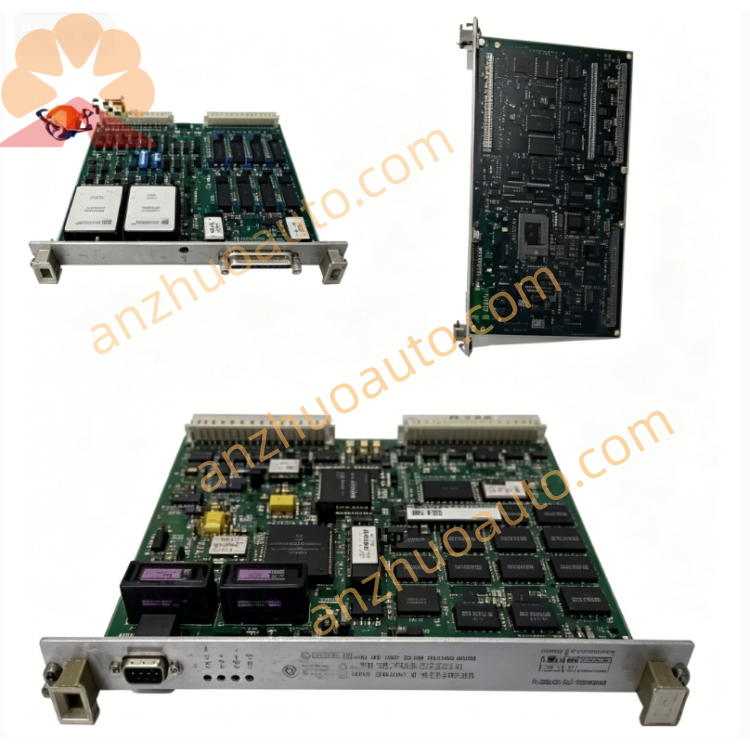
The GE IS200IVFBG1AAA is a factory-calibrated opto-isolated analog voltage feedback signal conditioning daughterboard exclusively designed for GE Mark VI integrated static excitation and turbine safety control systems for heavy-duty gas and steam turbine generator units. It belongs to the IS200IVFB dedicated isolated voltage feedback hardware series. The base hardware platform G1 represents first-generation single independent analog signal bank, and composite suffix AAA integrates three core factory upgrades: full multi-point voltage channel calibration, low-drift amplifier component screening, and slow wiring resistance drift diagnostic logic, acting as a cost-effective basic calibrated analog feedback module above uncalibrated IS200IVFBG1A baseline hardware.
This module serves as a fully galvanically isolated analog interface for DC voltage feedback signals extracted from static excitation stacks, generator field windings and auxiliary power monitoring circuits. It receives raw high-divider field voltage, auxiliary DC bus voltage and thyristor module monitoring voltage signals, converts wide-range raw voltage into standardized low-level analog signals readable by the Mark VI main CPU for closed-loop excitation voltage regulation, overvoltage/undervoltage protection and power system supervision. All voltage sampling channels complete standardized factory multi-point linear trimming, all gain, offset and range calibration parameters are permanently stored in onboard non-volatile memory, eliminating mandatory full-range field recalibration after rack power loss, module replacement or long-term continuous unit operation. Full hot-swap capability is fully validated for energized live Mark VI racks; insertion or removal of the module will not interrupt closed-loop excitation control, cause generator terminal voltage collapse or trigger false turbine emergency shutdown trips.
2. Suffix Nomenclature and Product Tier Differentiation
IVFB = Isolated Voltage Feedback, dedicated hardware for excitation and auxiliary DC voltage signal isolation, sampling and conditioning, separated from 4–20mA current input IS200ICIA boards, gate drive monitor IS200IGDM boards and dry contact digital input IS200ISBD boards within the complete Mark VI IS200 hardware ecosystem.
G1 = First-generation single isolated analog signal bank layout designed for single excitation stack voltage monitoring configuration.
Suffix Segment Breakdown
First A: Full factory multi-point precision calibration for all voltage sampling input channels; all linearity correction data locked into non-volatile memory to remove full manual field trimming requirements during commissioning or maintenance.
Second A: Low-drift precision amplifier screening to minimize long-term measurement offset drift under sustained high cabinet operating temperatures.
Third A: Baseline expanded diagnostic logic for continuous slow wiring loop resistance drift monitoring and graded early pre-warning output before resistance deviation distorts voltage measurement and protection logic.
Core Upgrade Advantages Versus Uncalibrated IS200IVFBG1A
Full factory calibration across full low-load, medium-load and full-load voltage operating curves; uncalibrated A version requires full manual trimming of every channel during site commissioning.
Tighter linearity tolerance for high-divider field voltage feedback loops, reducing generator terminal voltage regulation fluctuation under variable grid load conditions.
Built-in slow wiring resistance drift monitoring and graded pre-alarm output, a feature entirely absent on uncalibrated baseline hardware.
Extended thermal burn-in screening for all signal conditioning amplifiers to suppress long-term analog measurement drift under continuous cabinet heat exposure.
This AAA calibrated basic tier sits above uncalibrated IS200IVFBG1A hardware and below mid-tier ACC wideband filter modules and top-tier ADGE full diagnostic flagship boards. It is equipped with standard 1500V per-channel galvanic isolation, five-stage bidirectional transient surge suppression circuits, single narrowband power frequency LC EMI filters, general industrial-grade electronic components, and single-layer anti-mold conformal PCB coating. It is only suitable for inland power plants with moderate temperature ranges, normal humidity, low dust accumulation and average electromagnetic interference originating from excitation rectifier stacks and high-voltage switchgear. It lacks premium upgrades featured on higher-tier boards including 2500V reinforced isolation barriers, six or seven-stage wide-range surge suppression, wide-spectrum dual-frequency EMI filtering, triple anti-salt-fog anti-corrosion PCB coating, +75°C extended high-temperature resistant components, and long-term wiring insulation degradation and transducer drift trend logging functionality.
3. Core Functional Architecture
The IS200IVFBG1AAA consists of one fully isolated single analog signal bank with unified voltage signal conditioning partition. Independent opto-coupler isolation barriers completely separate low-voltage Mark VI control logic circuits and high-voltage excitation field wiring circuits to eliminate hazardous ground loop potential differences and electromagnetic cross-talk between multi-channel analog voltage sampling loops.
For voltage feedback signal processing: Raw high-divider DC voltage signals captured from generator field winding dividers, thyristor stack monitoring terminals and auxiliary DC bus pass through precision voltage divider networks, then enter opto-isolation circuits followed by factory-calibrated low-drift instrumentation amplifiers to generate standardized linear analog measurement data uploaded to Mark VI main CPU. Segmented factory-trimmed gain and offset logic guarantees consistent voltage conversion linearity across full measurement range, minimizing excitation voltage control error under fluctuating generator load conditions. The single narrowband LC EMI filter suppresses mild power frequency hum interference but cannot fully attenuate high-frequency thyristor commutation ripple noise generated during full-load excitation operation.
Standard 1500V channel-to-backplane galvanic isolation blocks destructive transient overvoltage spikes induced by thyristor stack switching and field wiring lightning surges, protecting the Mark VI main processing unit and adjacent I/O daughterboards from permanent circuit damage. Real-time multi-channel excitation field voltage, auxiliary DC bus voltage and power module monitoring voltage data are continuously uploaded to operator HMI and core excitation control logic, supporting multiple supervision functions: real-time full voltage system trending display, graded pre-warning outputs for abnormal pre-startup excitation circuit conditions, automatic overvoltage / undervoltage protective alarm activation, generator terminal voltage interlock logic and chronological recording of voltage transient disturbance events stored in medium-length onboard fault archives.
The 24/7 cyclic built-in self-test diagnostic suite contains two detection layers exclusive to AAA calibrated hardware. The first layer identifies permanent hard circuit faults including wiring open-circuit, signal loop short-circuit, signal over/under range deviation, amplifier aging drift, internal reference voltage offset and loose terminal lugs. The second unique layer continuously monitors slow analog channel loop resistance drift and generates early pre-alarm notifications for gradual wiring terminal degradation. This module cannot continuously record quantitative long-term data of intermittent high-resistance contact faults or store multi-month cable insulation degradation trend curves, which are reserved functions of mid-tier ACC and flagship ADGE suffix modules. All fault, transient disturbance and slow resistance drift pre-alarm events carry standard-resolution timestamps and unique independent channel identification tags, stored in non-volatile onboard memory for post-failure excitation system root cause analysis and standardized routine maintenance audit record storage.
4. Complete Technical Specifications
Ambient Operating Conditions
Continuous operating temperature range: -20°C to +70°C; storage temperature range: -50°C to +125°C; relative humidity 5% to 95% non-condensing. Single-layer basic anti-mold conformal PCB coating provides no heavy anti-salt corrosion resistance, so the module cannot be deployed at coastal power generation sites with persistent salt mist erosion. All surface-mount electronic components complete standard 72-hour full-temperature cycle thermal burn-in screening prior to factory shipment to minimize long-term amplifier measurement drift under unattended continuous cabinet operation.
Internal Power Supply Specifications
The module accepts dual wide-range rack DC power inputs of 12V and 24V, integrated with five-stage cascaded transient surge protection circuits to deliver comprehensive defense against reverse power polarity connection, input overvoltage, input undervoltage, and low-to-medium magnitude AC/DC field induction surges generated by auxiliary equipment switching and wiring lightning induction. Independent soft-start power control circuits are configured for each isolated analog channel to eliminate power-up transient noise cross-interference between separate voltage sampling loops.
Signal Channel Hardware Parameters
Single G1 isolated analog signal bank contains multiple opto-isolated DC voltage input channels, compatible with divided excitation field voltage, auxiliary DC monitoring voltage and power device monitoring voltage signals. All voltage sampling channels implement factory pre-calibrated segmented full-range gain scaling. Per-channel standard galvanic isolation withstands 1500V AC one-minute dielectric testing, with minimum insulation resistance reaching 1200 MΩ when tested at 500 VDC test voltage.
EMI filter performance delivers a minimum of 40dB single-band power frequency interference attenuation, fully compliant with basic IEC 61000-6-2 industrial electromagnetic compatibility standards. Mechanical shock and vibration resistance testing validates continuous 8g vibration tolerance across the 10Hz to 150Hz frequency band and single transient 25g shock pulse exposure with an 11-millisecond duration; optimized anti-crosstalk PCB trace routing and mechanical reinforcement structures resist long-term physical deformation induced by continuous turbine and generator foundation vibration.
Hot-swap hardware design uses independent per-channel soft-start power control circuits to maintain stable analog signal reference levels during live rack insertion and removal, eliminating temporary measurement signal loss and nuisance excitation voltage protection trip activation during on-site maintenance work. The minimum uninterrupted design service life reaches 100,000 hours of 24-hour continuous operation under nominal inland environmental operating conditions. A unified twelve-month global factory warranty covers all new original units and GE certified refurbished replacement modules.
5. Primary Industrial Application Scenarios
The GE IS200IVFBG1AAA calibrated isolated voltage feedback board is widely installed inside Mark VI excitation control racks located in static excitation power cabinet rooms, voltage divider transducer junction panel rooms, and main turbine-generator central control rooms at inland fossil power plants and combined-cycle gas turbine generation stations. Four core mainstream application categories are covered:
First, single-stack static excitation closed-loop voltage monitoring panels for steam turbines, collecting continuous generator field divider DC voltage signals to stabilize generator terminal output voltage and reactive power under fluctuating grid loads.
Second, gas turbine auxiliary DC power supervision racks, sampling auxiliary bus voltage signals to execute DC undervoltage/overvoltage auxiliary power protection logic.
Third, pre-startup unit excitation circuit integrity interlock enclosures, verifying valid voltage feedback loop continuity before turbine rolling, and outputting graded abnormal voltage condition pre-warnings to operators via the Mark VI HMI.
Fourth, grid-connected turbogenerator excitation voltage limit alarm control cabinets, initiating automatic field current reduction or excitation trip logic when field voltage exceeds safe operating thresholds under average inland electromagnetic interference atmospheric conditions.
Multiple IS200IVFBG1AAA modules can be configured within a single Mark VI safety rack to build a complete single-stack excitation voltage closed-loop monitoring architecture, including multi-channel DC voltage signal acquisition, voltage over/under limit protective interlock, and slow wiring resistance drift early warning functions. This architecture supports three critical unit operating phases: pre-startup excitation full-condition inspection, steady-state partial and full-load continuous generator operation, and emergency excitation voltage fault adjustment logic execution to prevent secondary damage to thyristor stacks and generator field winding insulation.
Factory multi-point full-channel calibration minimizes linearity deviation across low-load, partial-load and full-load excitation operating curves, while the single narrowband EMI filter reduces mild power frequency hum induced false voltage alarms under average EMI environments. This AAA calibrated module delivers balanced cost-performance for medium and large capacity turbogenerators with semi-annual scheduled maintenance cycles, where reinforced isolation, wideband filtering, and multi-month drift trend archive functionality of ACC/ADGE grade boards are not mandatory site requirements. The medium-capacity onboard fault log stores medium-duration voltage transient waveforms, permanent fault timestamps, and slow wiring resistance drift pre-alarm records to support structured predictive maintenance scheduling for voltage divider assemblies and long-distance shielded voltage feedback field wiring, alongside multi-layer post-excitation voltage trip root cause inspection workflows for power plant maintenance teams.
6. Mechanical Compatibility and Mandatory Installation Specifications
The mechanical outline dimensions, backplane pinout definitions, Mark VI safety parallel backplane communication protocol, and rack mounting interface of the GE IS200IVFBG1AAA are fully interchangeable with all variants within the IS200IVFB G1 single analog signal bank product series, including uncalibrated IS200IVFBG1A, mid-tier ACC advanced filter boards, and flagship ADGE full diagnostic modules. Direct drop-in physical replacement is supported without cabinet mechanical modification, field voltage transducer wiring rearrangement, or reconfiguration of core Mark VI excitation voltage control protection logic programs. The module enables flexible mixed rack installation alongside all other Mark VI IS200 series daughterboards, including IS200IGDM gate drive monitor boards, IS200ICIA 4–20mA current input boards, IS200ISBD discrete contact digital input boards, vibration monitoring boards, servo LVDT boards, and RTD/thermocouple temperature acquisition boards, allowing site engineers to construct an integrated turbine safety control system combining excitation voltage feedback monitoring, main circuit supervision, mechanical vibration measurement, and universal balance-of-plant auxiliary signal acquisition within a single Mark VI rack assembly.
A mandatory wiring separation installation rule applies to all field cabling connected to this module: high-voltage divider voltage cables and low-level isolated feedback twisted pair wiring must be installed in independent dedicated shielded cable trays, with strict physical separation maintained from high-current AC power cables and high-voltage control signal cables to minimize electromagnetic cross-talk between high-voltage raw sampling channels and sensitive low-amplitude isolated analog measurement loops. Annual routine maintenance mandates two critical verification procedures for each installed IS200IVFBG1AAA unit: full-channel 1500V AC isolation withstand voltage testing and full-range DC voltage signal linearity performance verification; complete factory recalibration is not required thanks to permanent non-volatile storage of original multi-point calibration parameters. Every new original and GE certified refurbished IS200IVFBG1AAA module completes standardized 72-hour full temperature cycle aging testing plus medium-grade electromagnetic interference and voltage signal transient surge stress screening prior to factory shipment, guaranteeing consistent stable DC voltage signal acquisition, accurate calibrated analog conversion measurement, and reliable slow wiring resistance drift early warning functionality within medium-electromagnetic-interference power plant control cabinet environments.
7. Defined Performance Limitations Versus Mid-Tier IS200IVFBG1ACC Advanced Filter Module
Although the IS200IVFBG1AAA integrates factory calibration and basic wiring drift pre-warning upgrades over baseline G1A hardware, it has clear functional and environmental limitations compared to the mid-tier ACC advanced filter grade module. First, the continuous operating temperature upper limit is fixed at +70 degrees Celsius, without the ACC variant’s reinforced +75 degrees Celsius continuous operation tolerance for tightly sealed heat-prone control cabinets. Second, the transient surge suppression hardware is limited to five-stage multi-amplitude protection circuits, lacking the six-stage full-range ultra-wide surge suppression architecture integrated on ACC grade boards for sites exposed to frequent field lightning induction surges. Third, the single narrowband LC low-pass EMI filter cannot realize dual low/high frequency harmonic and rectifier ripple wideband attenuation optimization featured in ACC filter hardware. Fourth, the firmware diagnostic suite does not support multi-month long-term continuous trend data logging for gradual cable insulation resistance degradation, transducer permanent zero drift, and slow amplifier gain drift, a critical feature for fully unattended long-term unmanned power station operation. Fifth, electronic component screening cycles are limited to standard 72-hour thermal burn-in testing, while ACC modules undergo 168-hour extreme temperature cycle stress screening to further minimize multi-year long-term measurement drift. Sixth, the onboard non-volatile fault memory capacity only supports medium-length transient disturbance event storage, without dedicated large-capacity archive partitions designed for multi-month historical component degradation trend curve retention. Finally, the single-layer anti-corrosion conformal PCB coating is only rated for dry inland environments, and the module is not suitable for permanent installation at coastal power generation facilities where the triple composite anti-salt conformal coating of ACC grade hardware is mandatory.
The fixed segmented signal threshold logic implemented on the IS200IVFBG1AAA single-band EMI filter architecture cannot fully eliminate minor capacitive leakage interference generated by ultra-long-distance thin shielded voltage feedback field wiring, which may occasionally trigger non-critical nuisance excitation voltage parameter limit pre-warning alarms under extreme high electromagnetic interference plant operating conditions. This module also does not integrate dedicated long-term multi-month amplifier drift trend counter hardware required for advanced deep predictive maintenance analytics for excitation voltage divider assemblies, a functionality exclusive to the top-tier ADGE full diagnostic IS200IVFB series variant.
8. Deterministic Fixed Product Information and Field Commissioning Verification Items
All hardware specification parameters listed within this document represent fully deterministic fixed design characteristics defined under GE’s unified IS200 series isolated voltage feedback analog I/O hardware official global design standards, including the module mechanical rack form factor, full Mark VI backplane communication compatibility, live hot-swap operational support, G1 single independent analog voltage signal bank hardware architecture, 1500V standard per-channel galvanic isolation voltage rating, minimum 40dB single-band EMI interference attenuation index, five-stage transient surge protection circuit layout, single-layer anti-mold PCB coating construction, calibrated voltage conversion + slow wiring resistance drift pre-warning diagnostic scope, -20°C to +70°C continuous operating temperature range, 100,000-hour minimum uninterrupted design service life, and twelve-month unified global factory warranty term, alongside all AAA suffix exclusive factory full-channel pre-calibration hardware features.
Multiple performance metrics require targeted on-site bench calibration and dynamic unit load field commissioning testing to validate site-specific operating performance, and these values cannot be defined as fixed factory standardized parameters. These verification items include the actual full multi-channel analog voltage signal linearity measurement error under site-specific voltage divider cable length configurations, real-time thyristor commutation high-frequency ripple noise suppression efficiency measured under the unique electromagnetic interference operating conditions of each individual power plant, the actual continuous effective storage duration of onboard excitation voltage system fault and pre-warning event logs, and the long-term multi-month accumulation rate of analog amplifier and voltage divider transducer zero/gain drift under steady full-load turbine unit operating cycles. All listed variable performance metrics must be quantified and recorded during initial unit commissioning and annual maintenance bench testing to validate consistent DC voltage sampling measurement and excitation voltage protection logic accuracy over the module’s full service lifespan.

Get a Quote