
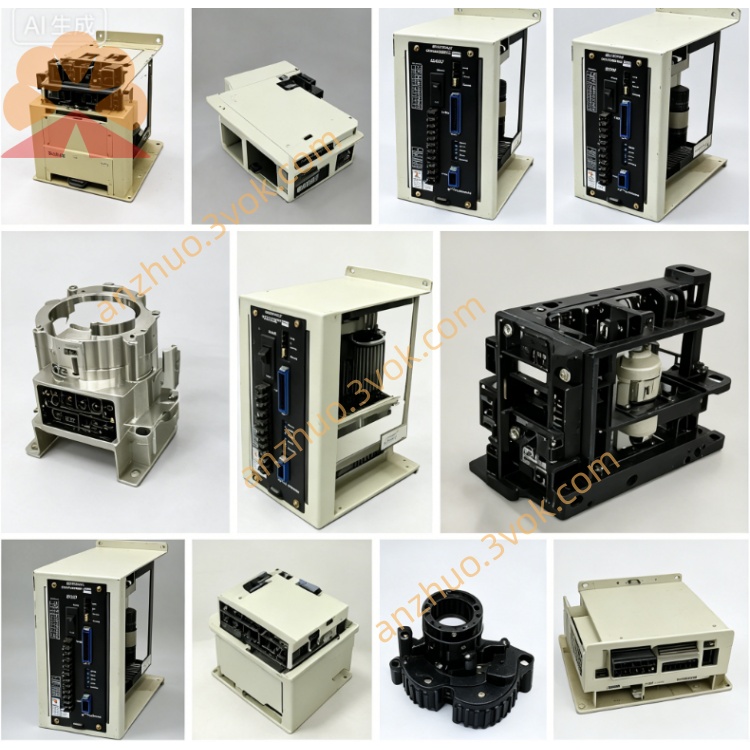
UGTMEM-03MB2 Minertia Mini Series Coreless Brushed DC Servo Motor Specification
UGTMEM-03MB2 belongs to Yaskawa Minertia Mini coreless brushed DC servo motor lineup, a derivative variant of UGTMEM-03LB2 with modified rear terminal and built-in integrated analog tachometer generator for closed-loop speed feedback, widely configured on precision wire EDM equipment, miniature automated assembly equipment and laboratory precision inspection machinery. This product adopts exclusive cup-shaped coreless rotor construction without silicon steel lamination, eliminating inherent cogging torque of conventional iron-core motors to deliver ultra-smooth low-speed rotation and minimal torque fluctuation. Thanks to ultra-low rotor inertia design, the motor realizes rapid acceleration, deceleration and frequent forward-reverse switching to satisfy cyclic high-speed positioning requirements. This model is not equipped with built-in power-off electromagnetic holding brake to keep compact overall dimension; MB2 coding represents factory-standard integrated tachometer structure, dedicated multi-group terminal pin layout and fixed internal wiring specification, which is the core difference against terminal-only LB2 version without built-in tachometer feedback module. The original manufacturer has discontinued formal production, and available products mainly come from aftermarket refurbished parts and surplus inventory of decommissioned industrial equipment.
Description
UGTMEM-03MB2 Minertia Mini Series Coreless Brushed DC Servo Motor Specification
1. Product Overview
UGTMEM-03MB2 belongs to Yaskawa Minertia Mini coreless brushed DC servo motor lineup, a derivative variant of UGTMEM-03LB2 with modified rear terminal and built-in integrated analog tachometer generator for closed-loop speed feedback, widely configured on precision wire EDM equipment, miniature automated assembly equipment and laboratory precision inspection machinery. This product adopts exclusive cup-shaped coreless rotor construction without silicon steel lamination, eliminating inherent cogging torque of conventional iron-core motors to deliver ultra-smooth low-speed rotation and minimal torque fluctuation. Thanks to ultra-low rotor inertia design, the motor realizes rapid acceleration, deceleration and frequent forward-reverse switching to satisfy cyclic high-speed positioning requirements. This model is not equipped with built-in power-off electromagnetic holding brake to keep compact overall dimension; MB2 coding represents factory-standard integrated tachometer structure, dedicated multi-group terminal pin layout and fixed internal wiring specification, which is the core difference against terminal-only LB2 version without built-in tachometer feedback module. The original manufacturer has discontinued formal production, and available products mainly come from aftermarket refurbished parts and surplus inventory of decommissioned industrial equipment.
2. Model Code Definition
UGTMEM serves as general model prefix for non-brake Minertia Mini coreless DC servo motors; digit 03 stands for medium-small frame size with rated continuous output power of 45W consistent with 03-series unified mechanical outline standard. MB refers to motor sub-group pre-installed with original built-in analog tachometer generator that outputs proportional analog speed signal; suffix 2 defines fixed output shaft size, rear terminal layout, internal winding routing and tachometer wiring pin assignment. Due to different internal tachometer circuit and terminal definition, UGTMEM-03MB2 cannot be directly interchanged with LB2 non-tachometer variant; cross replacement needs full terminal rewiring and complete servo drive parameter recalibration before formal commissioning.
3. Electrical Specifications
The motor is rated for 22.5VDC nominal armature input voltage and must match dedicated original Minertia DC servo amplifier to form complete closed-loop speed control system. Under standard rated ambient conditions, continuous rated power reaches 45W, full-load rated armature current is 4.5A, nominal continuous operating speed is fixed at 3000rpm, and permissible short-term peak transient speed can reach 3600rpm. Rated continuous torque is 0.3Nm while instantaneous peak overload torque can achieve five times rated torque to handle transient impact load and frequent start-stop working conditions. The embedded original analog tachometer generator outputs linear DC voltage signal corresponding to actual rotating speed, enabling high-precision closed-loop speed regulation without extra external encoder installation; internal stator winding complies with Class F insulation standard with embedded thermal sensing component, which transmits overheat protection signal to matched servo driver to activate automatic power-off protection and prevent winding burnout caused by over-temperature. Pre-installed surge suppression components inside internal wiring cavity effectively restrain industrial voltage spike and electromagnetic interference from surrounding switching power supply and inverter devices; standard room-temperature armature resistance is 2.5Ω and armature inductance is 1.2mH.
4. Mechanical and Environmental Specifications
Fully sealed motor housing meets IP54 ingress protection standard and adopts natural convection heat dissipation without auxiliary cooling fan structure. Standard cylindrical solid output shaft is reserved for assembling small timing belt pulley, miniature planetary reducer and micro ball screw unit; unified 70mm×70mm square flange mounting dimension keeps interchangeable installation space with same frame LB2 motor, total overall body dimension is 70mm×70mm×62mm and net total weight of complete motor assembly is approximately 0.98kg.
Valid continuous working ambient temperature ranges from 0°C to +40°C; long-term spare storage temperature covers -20°C to +70°C; applicable operating relative humidity is controlled between 5%RH and 80%RH under non-condensing environment to avoid dew-induced internal short-circuit damage of winding and tachometer circuit. When installation altitude exceeds 1000 meters above sea level, continuous running rated load needs appropriate derating for compensating reduced heat dissipation efficiency at low air density. The motor is qualified to withstand standard industrial vibration ranging from 10Hz to 55Hz; installation environment with corrosive gas, continuous liquid splashing and accumulated conductive dust is forbidden to extend service life of front bearing, carbon brush and built-in tachometer core components.
5. Drive Matching and Control Functions
UGTMEM-03MB2 is exclusively matched with original Yaskawa Minertia dedicated DC servo controller, supporting ±10VDC analog voltage speed command input transmitted from upper PLC or motion control unit. Relying on onboard integrated tachometer feedback signal, the servo system can realize high-stability speed closed-loop control without additional external feedback parts; for high-precision position control requirement, users can optionally install external incremental encoder on motor shaft end and adjust relevant drive parameters accordingly. Since no built-in power-off brake is configured, vertically mounted equipment with this motor needs independent external mechanical locking structure to avoid free falling of loaded workpiece after unexpected power failure. Thanks to native tachometer feedback configuration, the motor performs much better in low-speed constant-speed operation compared with LB2 non-tachometer model under low-speed precision feeding application.
6. Protection and Fault Alarm Description
Multi-level comprehensive safety protection is realized through cooperation of internal thermal sensing elements and matched servo drive equipment. Winding over-temperature signal triggers automatic servo overload shutdown to avoid permanent thermal damage of coreless winding; open circuit or poor contact of armature terminal and tachometer terminal separately leads to overcurrent fault and tachometer feedback loss alarm displayed on servo operation panel, resulting in motor out-of-control shutdown. Internal armature circuit and tachometer signal circuit are equipped with built-in noise filtering components to suppress on-site complex electromagnetic interference and guarantee stable speed feedback signal transmission during long-time continuous operation. Excessive wear of built-in carbon brush after long running will cause abnormal armature current rise and corresponding drive overload warning prompt.
7. Maintenance and Replacement Guidance
Field spare replacement requires identical UGTMEM-03MB2 original motor unit; same-power LB2 non-tachometer or brake-equipped variant cannot be directly replaced unless full terminal rewiring and comprehensive servo parameter reset are completed after installation. Before disassembling motor for carbon brush replacement, bearing inspection or tachometer maintenance, maintenance staff must fully cut off 22.5VDC main armature power supply and wait no less than 15 minutes for full discharge of internal DC bus capacitor of servo drive to eliminate residual high voltage and prevent electric shock accident. Routine maintenance includes checking residual carbon brush thickness every three months and replacing brushes when residual thickness is less than one-third of original specification; replenishing high-temperature resistant bearing grease after cumulative continuous operation over 8000 working hours and cleaning accumulated dust on housing every half year to retain original natural heat dissipation performance. Random modification on exclusive MB2 terminal pin definition and internal tachometer wiring layout will directly cause motor runaway and permanent servo driver locking fault.
8. Typical Application Scope
This compact tachometer-equipped coreless DC servo motor is mainly applied for wire feeding drive axis of precision wire cut EDM machine tools, micro rotary indexing platform of small electronic component automatic assembly lines, fine driving unit of optical detection and microscopic testing equipment as well as compact laboratory precision automation equipment. It is particularly suitable for horizontally installed mechanical structures with limited installation space, frequent cyclic start-stop motion and strict low-speed constant-speed precision control requirements.
Get a Quote