
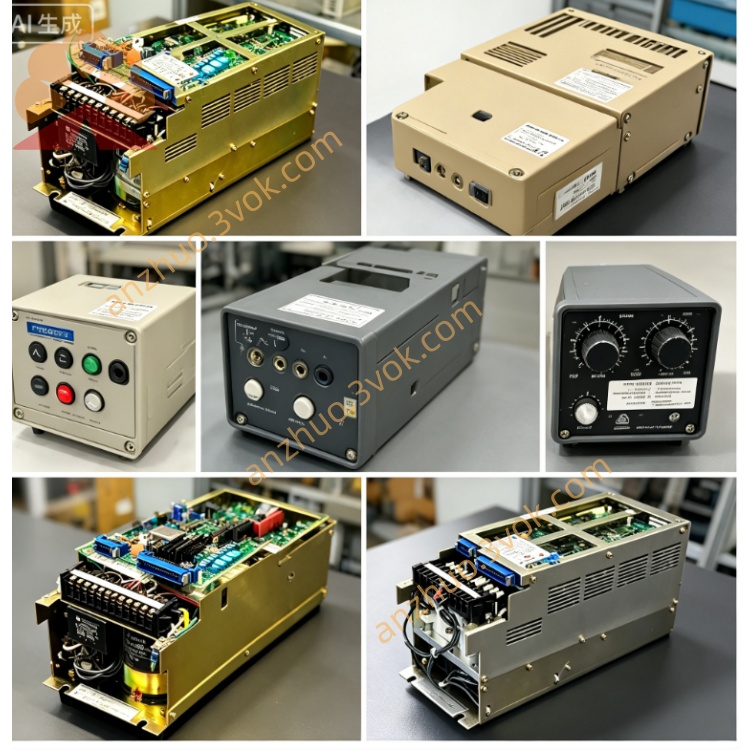
CACR-SR15BB1CS-Y99
CACR-SR15BB1CS-Y99 is an OEM customized locked-parameter AC Servopack within YASKAWA Yasnac VS800 full digital servo product lineup, rated for 1.5kW 200V-class applications and exclusively preprogrammed for designated CNC machine tools and special customized automation equipment.
Description
1. Product Overview
CACR-SR15BB1CS-Y99 is an OEM customized locked-parameter AC Servopack within YASKAWA Yasnac VS800 full digital servo product lineup, rated for 1.5kW 200V-class applications and exclusively preprogrammed for designated CNC machine tools and special customized automation equipment.
Breakdown of model coding: CACR represents VS800 series servo drives specially developed for CNC feed axis control. SR indicates the hardware is equipped with dual command input circuitry supporting ±10VDC analog control signal and differential pulse position signal reception. Number 15 corresponds to 1.5kW rated compatible servo motor capacity. BB stands for standardized universal main control printed circuit board and general-purpose I/O peripheral circuit layout. Digit 1 defines separate power supply configuration with three-phase AC200~230V main power input and independent single-phase AC200~230V control power supply. CS refers to base customized firmware platform with pre-locked core control parameters at factory side. Y99 is unique secondary OEM customized firmware version featuring fixed control logic, dedicated I/O pin definition and exclusive encoder matching algorithm customized for specific end-equipment manufacturer.
This servo drive can only operate stably with the factory-specified incremental encoder type servo motor defined under Y99 program setting. Conventional open-parameter standard models such as CACR-SR15BB1BM or non-Y99 marked CS version cannot achieve direct replacement unless professional factory personnel reload original Y99 dedicated firmware into alternative hardware.
2. Electrical Specifications
Main circuit power input is three-phase AC200V to 230V, compatible with 50Hz and 60Hz power grids, permitted input voltage fluctuation ranges minus fifteen percent up to plus ten percent of nominal rating. Control power is fed through an isolated single-phase AC200~230V source to avoid electrical disturbance induced by main circuit voltage swing.
The unit features continuous rated output current of 11.7A RMS. Overload characteristics follow factory preset criteria: one hundred fifty percent rated current is allowed for continuous sixty-second operation, while three hundred percent peak overload is restricted within three seconds only during motor startup phase. The drive adopts IGBT sine-wave PWM modulation technology with maximum output frequency capped at 300Hz. Nominal DC bus operating voltage falls between DC280V and DC320V, and terminals P and BN are reserved for external regenerative braking resistor connection to absorb surplus regenerated energy during frequent rapid deceleration and emergency stop cycles. It carries IP20 protection rating and is restricted to vertical cabinet-mounted installation only, with overall net weight around 3.3 kilograms. The CN2 feedback port is engineered exclusively for designated incremental encoder without built-in backup battery circuitry required for absolute type encoder operation.
All core control settings including position loop gain parameters, speed loop PI constants, acceleration and deceleration timing values and anti-resonance filter coefficients are pre-calibrated and write-protected by Y99 locked firmware. Default running control mode is fixed by factory programming, and end users have no access to switch between speed, position or torque control modes via onsite parameter adjustment. The automatic full motor parameter identification and complete gain auto-tuning functions are partially disabled by customized program constraints.
3. Environmental and Installation Specifications
Valid operating ambient temperature spans from zero degree Celsius to fifty-five degree Celsius, and permissible storage temperature ranges from minus twenty degree Celsius to seventy degree Celsius. Operating ambient relative humidity must stay between five percent and eighty percent without condensation formation on internal electronic components. Continuous output load shall be derated accordingly when installation elevation exceeds 1000 meters above sea level.
Allowed onsite vibration condition covers frequency range 10Hz to 55Hz with single vibration amplitude limited to 0.5 millimeter. Maintain a minimum clearance of fifty millimeters at both top and bottom space of the servo unit inside control cabinet to guarantee adequate heat dissipation airflow. Cut off all alternating current power supply and wait no less than fifteen minutes to complete full discharge of internal DC bus capacitor before opening casing or plugging and unplugging CN1 and CN2 connectors; hot swapping of any connectors under powered condition is strictly prohibited to prevent circuit damage and electric shock hazard.
4. Terminal and Connector Description
Terminals R, S and T are used for three-phase main alternating current input wiring, while U, V and W terminals connect to three-phase power leads of matched servo motor. Terminals P and BN serve as wiring points for external regenerative braking resistor installation.
CN1 is an optically isolated digital input and output connector following fixed Y99 OEM pin assignment, all defined I/O signal functions cannot be reallocated or revised by modifying internal parameters. CN2 is dedicated incremental encoder feedback receptacle which only fits original factory specified incremental servo motor cable matching Y99 configuration. The seven-segment LED indicator on front panel displays real-time operational status and standard VS800 series fault codes.
5. Built-in Protection Functions
Integrated comprehensive protection mechanisms consist of output overcurrent protection, DC bus overvoltage protection, DC bus undervoltage protection, internal power module overheat protection, encoder wire break detection protection, long-duration motor overload protection and main control CPU abnormal operation protection. The latest ten sets of fault records are permanently stored in nonvolatile internal memory and remain intact after power outage or manual fault reset execution.
An embedded small-capacity dynamic brake circuit handles energy dissipation under light-load regular deceleration scenarios; external regenerative braking resistor must be wired across P and BN terminals when the equipment runs under heavy cyclic load and frequent emergency stop working circumstances.
6. Replacement and Maintenance Instructions
Direct plug-and-play replacement is only achievable with identical full part number CACR-SR15BB1CS-Y99. Standard BM general-purpose servo drives or other CS variants without Y99 suffix cannot substitute directly due to mismatched locked firmware and fixed I/O definition; component replacement requires authorized manufacturer to rewrite dedicated Y99 customized firmware.
Inspect tightness of all power wiring and locking status of CN1 and CN2 connectors before every machine startup routine. Remove accumulated dust from radiator cooling fins every three to six months to avoid unexpected overheat shutdown caused by deteriorated heat dissipation performance. Full factory parameter initialization reset is forbidden for Y99 model, as such operation will erase all preloaded OEM customized parameters and result in irregular equipment running failure.
7. Common Troubleshooting Guidance
Overheat alarm generally originates from blocked radiator dust accumulation, insufficient cabinet ventilation or prolonged overload operation; resolve by cleaning cooling components or lowering actual mechanical working load. Encoder fault alarms occur due to loose CN2 connector, damaged feedback cable or mismatched non-designated servo motor; verify wiring integrity and replace with original specified incremental motor.
Deceleration overvoltage fault can be rectified by installing qualified external regenerative resistor between P and BN terminals. Parameter write failure alert is triggered by unauthorized attempts to alter firmware-locked core parameters and counts as normal software protection instead of hardware malfunction. Overload protection activation relates to mechanical transmission jamming or excessive payload; examine mechanical assembly structure and reduce driving load appropriately.
8. Fault Code Definition
1 stands for output overcurrent fault, 2 indicates abnormal main power circuit hardware, 3 refers to DC bus overvoltage protection activation, 4 represents DC bus undervoltage alarm, 5 means internal drive overheat protection triggered, 6 is encoder disconnection error, 7 shows continuous motor overload protection, letter A denotes abnormal main CPU operation, letter C signals active external emergency stop input signal.
Get a Quote