
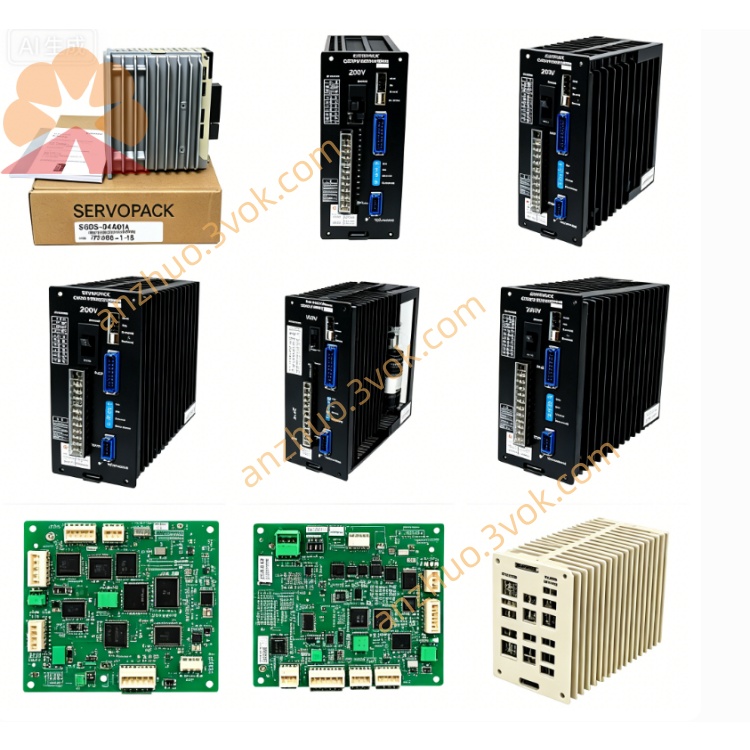
JANCD-PC20
Description
Basic Information
Model: JANCD-PC20 (also written as JANCDPC20)
Alternative part number: DF8203490-A0
Manufacturer: Yaskawa Electric / Yasnac
Applicable system: LX3 CNC controller (machine tool applications)
Type: Main CPU / motion control PCB
Product status: Obsolete, available as used, refurbished, or surplus parts
Origin: Japan
Technical Specifications
Power supply: 24 VDC (from controller backplane)
Operating temperature: 0 °C to 40 °C
Storage temperature: -20 °C to 50 °C
Relative humidity: 5%–80% (non-condensing)
Altitude: Up to 1,000 m (no derating)
Weight: Approx. 0.4–0.6 kg (1.34 lbs)
Certification: CE marked
Key Functions
Main CPU control: Executes CNC programs, coordinates multi-axis motion, and manages system logic.
Motion processing: Handles high-speed interpolation, servo loop control, and spindle motion commands.
System management: Oversees I/O, communication, safety interlocks, and diagnostic functions.
Data handling: Processes CNC parameters, macro programs, and machine feedback data.
Status monitoring: Provides LED indicators for power, run, alarm, and error codes.
Compatibility & Installation
Compatible with Yasnac LX3 series CNC controllers (milling, turning, and machining centers).
Installs in the dedicated CPU slot on the LX3 backplane (plug-in design).
Not interchangeable with robot controller boards (e.g., NX100/XRC series) or other CNC models.
Works with matching LX3 boards (I/O, servo, power supply modules).
Safety & Maintenance Notes
Disconnect all power and wait for capacitor discharge before removal/installation.
Use an ESD wristband to prevent static damage to components.
Do not perform high-voltage withstand tests; semiconductors may be damaged.
Regularly inspect connectors for dirt, corrosion, or poor contact.
Repairs and replacements must be performed by qualified technicians.
Get a Quote