
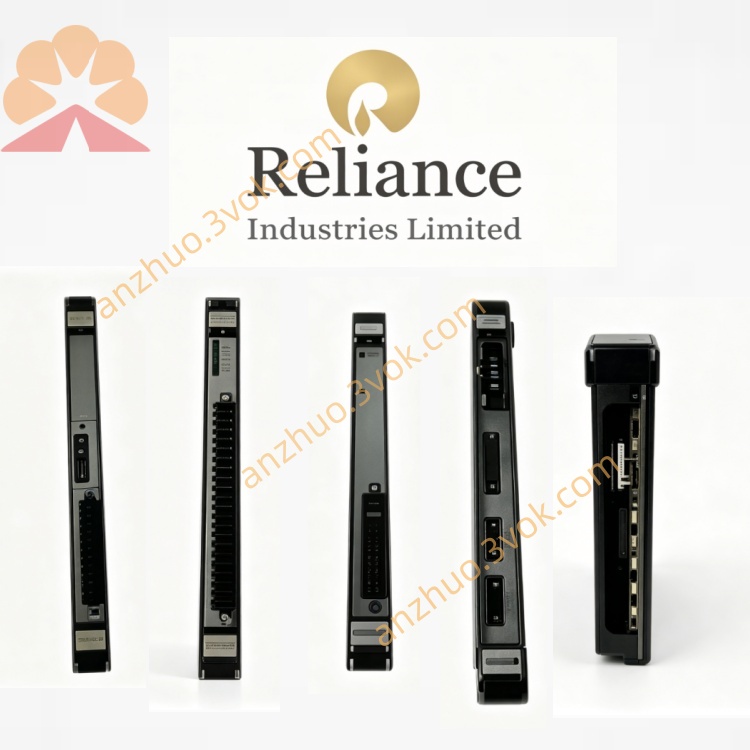
RELIANCE 57408-D professional industrial control module
The RELIANCE 57408-D is a professional industrial control module developed by Reliance Electric, designed for integration into industrial automation and motor control systems. It features compact structure, stable operation and strong anti-interference capability, and serves as a key auxiliary component for signal conversion and circuit expansion in industrial control cabinets. This module is built to adapt to harsh industrial environments and delivers long-term reliable performance for continuous industrial operation.
Description
Product Overview
The RELIANCE 57408-D is a professional industrial control module developed by Reliance Electric, designed for integration into industrial automation and motor control systems. It features compact structure, stable operation and strong anti-interference capability, and serves as a key auxiliary component for signal conversion and circuit expansion in industrial control cabinets. This module is built to adapt to harsh industrial environments and delivers long-term reliable performance for continuous industrial operation.
Model Definition
RELIANCE represents the brand of the product. 57408 is the fixed series code for this type of industrial module, identifying the product category and basic hardware framework. The suffix D stands for the specific hardware revision and functional configuration version, which distinguishes electrical parameters, internal circuit layout and matching specifications from other variants in the same series.
Technical Parameters
The module operates with a standard industrial working voltage range, supporting common DC power supply input in factory control systems. It adopts industrial-grade electronic components to ensure stable work within a wide temperature range. Its internal circuit is optimized for low power consumption, with standard load capacity and signal processing speed matching conventional industrial control signal standards. The whole machine has excellent vibration resistance and electromagnetic shielding performance, and complies with general industrial electrical safety and environmental adaptability standards.
Interface and Communication Configuration
It is equipped with standard terminal interfaces for power access, signal input and signal output. All interfaces follow industrial wiring specifications for convenient on-site wiring and maintenance. This module mainly realizes hard-wired signal transmission, and is designed to match the signal topology of the supporting PLC and motor control units. It does not carry independent network communication protocols, and completes data and signal interaction through physical wiring with upper and lower industrial control equipment.
Core Functions
Its primary function is signal acquisition, sorting and transmission between control units and on-site execution components. It can stabilize input and output signals, filter interference signals generated in industrial circuits, and expand signal access channels for the main control equipment. It also undertakes circuit isolation protection work, effectively avoiding the impact of abnormal current and voltage on the main control system, and ensures the normal and orderly transmission of control instructions and feedback signals.
Application Scenarios
This module is widely used in traditional industrial production lines, motor drive control systems and factory centralized control cabinets. It is applicable to machinery manufacturing, metallurgy, chemical industry, textile and other industrial fields that rely on motor linkage and automatic control. It is commonly matched with Reliance series PLC and drive equipment, and deployed in on-site control boxes and central control rooms of various continuous production equipment.
Operation and Maintenance Instructions
Before installation, check the appearance for damage and confirm that the power supply and wiring specifications conform to the product requirements. Complete wiring in a power-off state to prevent short circuit and electric shock. During operation, keep the installation environment dry and ventilated, and avoid long-term exposure to dust, moisture and corrosive gas. Regularly inspect terminal wiring for looseness and aging. If signal abnormality occurs, cut off the power supply first for inspection and troubleshooting. Do not disassemble the internal structure of the module without authorization. Replace the module in time when it reaches the service life or has irreversible faults to guarantee system safety.
Get a Quote