
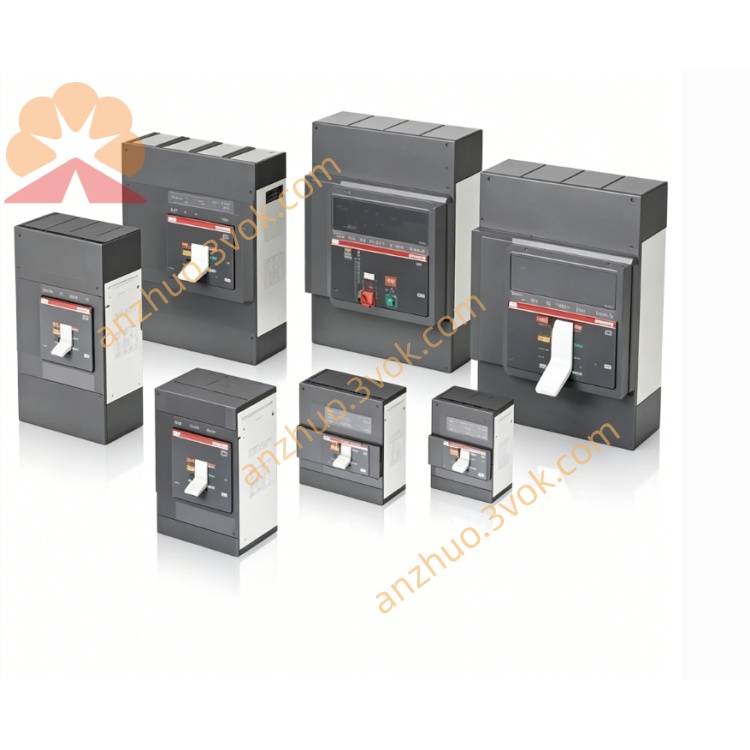
ABB PM856A AC 800M Mid-Range Integrated Processor Module For 800xA DCS Automation System
ABB PM856A is a mid-range processor module belonging to the AC 800M controller series. It acts as the core control unit for small and medium sized PLC and DCS systems in industrial automation. With compact structure and stable real-time operating performance, it is equipped with multiple built-in communication ports to handle control logic, data processing and signal interaction reliably in various industrial environments.v
Description
Product Introduction
ABB PM856A is a mid-range processor module belonging to the AC 800M controller series. It acts as the core control unit for small and medium sized PLC and DCS systems in industrial automation. With compact structure and stable real-time operating performance, it is equipped with multiple built-in communication ports to handle control logic, data processing and signal interaction reliably in various industrial environments.
Model Interpretation
PM stands for processor module. 856 represents the specific hardware series for AC 800M controllers. The letter A indicates the hardware revision version. This complete model code is applied for product identification, ordering and inventory management.
Technical Parameters
This module adopts 32-bit RISC processor. It is equipped with independent RAM and flash memory for program and data storage. The working power supply is 24 V DC with a certain voltage tolerance range and low power consumption. A built-in lithium battery is used to maintain real-time clock and stored data when power is off. The operating temperature ranges from minus 25 degrees Celsius to 70 degrees Celsius, and the storage temperature ranges from minus 40 degrees Celsius to 85 degrees Celsius. It can work normally under relative humidity between 5 percent and 95 percent without condensation. The protection class is IP20, and the product complies with relevant industrial certification standards. This model does not support redundant operation.
Interface and Communication Configuration
It has two Ethernet ports with 10 and 100 megabits per second transmission rate, supporting common industrial Ethernet protocols. Two serial communication ports are reserved, among which one is isolated for equipment configuration. It supports expansion with external bus modules to access different fieldbus systems. The module can be connected with a large number of local I/O modules to expand system control capacity. Multiple LED indicators are used to display power, operation and fault status.
Core Functions
It executes standard industrial control programs and completes logic control, sequence control and arithmetic processing. It supports multiple real-time control tasks with short minimum operation cycle and high response speed. It realizes high-speed data exchange with local I/O modules, human-machine interfaces and upper monitoring systems. It provides comprehensive self-diagnosis function to monitor operating status and report faults in time. It adopts memory protection technology to ensure data security and stability during long-term operation.
Application Scenarios
It is widely used in small and medium sized process control projects in chemical industry and water treatment industry. It is suitable for production line control and material handling in manufacturing industry. It can be applied to building automation and public infrastructure control systems. It is also used for upgrading and replacement of old standalone PLC control equipment.
Operation and Maintenance Instructions
Install the module on standard DIN rail inside a dry and well ventilated control cabinet, and keep away from heat sources and strong electromagnetic interference. Use shielded cables for all communication wiring and separate power cables from signal cables. Complete program downloading and parameter configuration through dedicated engineering software during commissioning. Check the connection status and indicator lights regularly in daily operation. Replace the built-in lithium battery periodically as required. Cut off the power and take anti-static measures before disassembling or replacing the module. No on-site calibration is required, and replace the whole module directly when permanent faults occur.
Get a Quote