
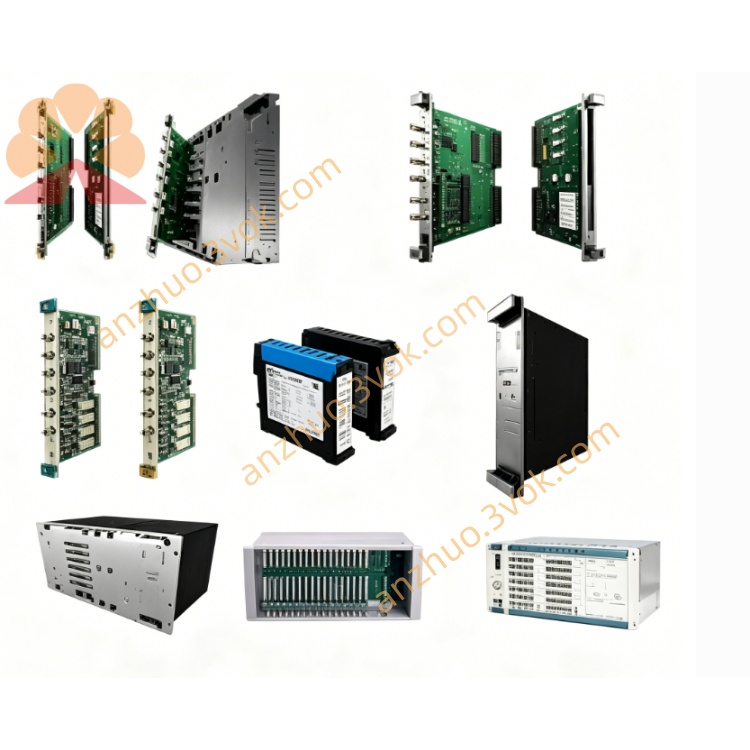
ABB DSTC175 (part number 57310001‑KN) high‑reliability dynamic signal input module
Description
Product Introduction
Model Interpretation
Technical Parameters
Power supply: 24 V DC (±10%), power consumption ≤12 W
Input channels: 4 independent dynamic analog input channels
Signal types: Eddy‑current probe (displacement), velocity transducer (vibration), accelerometer (vibration), key‑phase probe
Sampling rate: Up to 1000 samples per second, 16‑bit A/D conversion
Isolation: 2500 V AC optical isolation between field and system sides
Safety architecture: TMR (triple‑modular redundant) compliant
Operating temperature: −40 °C to +70 °C; storage temperature: −55 °C to +85 °C
Relative humidity: 5%–95%, non‑condensing
Protection class: IP20 (front panel)
Dimensions: 255 mm × 20 mm × 115 mm
Weight: Approx. 0.06 kg
Certifications: CE, UL, CSA, RoHS compliant; TÜV certified for SIS
Interface and Communication Configuration
Backplane interface: Tricon TMR bus for redundant data exchange with the controller
Field connections: 4 × dynamic analog input channels (BNC/terminal block selectable)
Communication protocols: Tricon proprietary safety protocol, Modbus TCP (optional)
Indicators: LEDs for Power, Run, Fault, and Channel Status
Redundancy: Triple‑channel data processing for fault tolerance
Core Functions
High‑speed, high‑precision acquisition of vibration, displacement, and key‑phase signals for turbomachinery
TMR data processing to ensure data integrity and fault tolerance in safety systems
Signal conditioning: Filtering, amplification, and linearization for raw sensor data
Overspeed, vibration, and mechanical protection logic support for critical rotating equipment
Self‑diagnostics with LED status indication for fast fault localization
Galvanic isolation to suppress EMI and protect system circuits
Hot‑swap capability in Tricon racks for non‑stop maintenance
Application Scenarios
Power generation: Steam/gas turbine monitoring and protection in thermal and nuclear power plants
Oil and gas: Compressor, pump, and turbomachinery safety monitoring in refineries and pipelines
Petrochemical: High‑speed rotating equipment protection in critical process units
Heavy industry: Vibration and position monitoring for large motors and generators
Triconex Tricon SIS system integration for safety‑critical applications
Operation and Maintenance Instructions
Install the module in a Tricon V9/V10 rack, ensuring secure seating and proper grounding
Use shielded coaxial cables for sensor connections; separate power and signal cables
Verify 24 V DC supply before power‑on; check LED indicators for normal operation
Configure sampling rates, filter parameters, and safety thresholds via Tricon engineering tools
Keep the module surface clean with a dry cloth; avoid moisture and corrosive substances
Periodically inspect connectors for oxidation or damage; tighten loose connections
Back up configuration data before replacement; use anti‑static measures during handling
Operate within specified temperature and humidity limits; avoid strong vibration
Get a Quote