
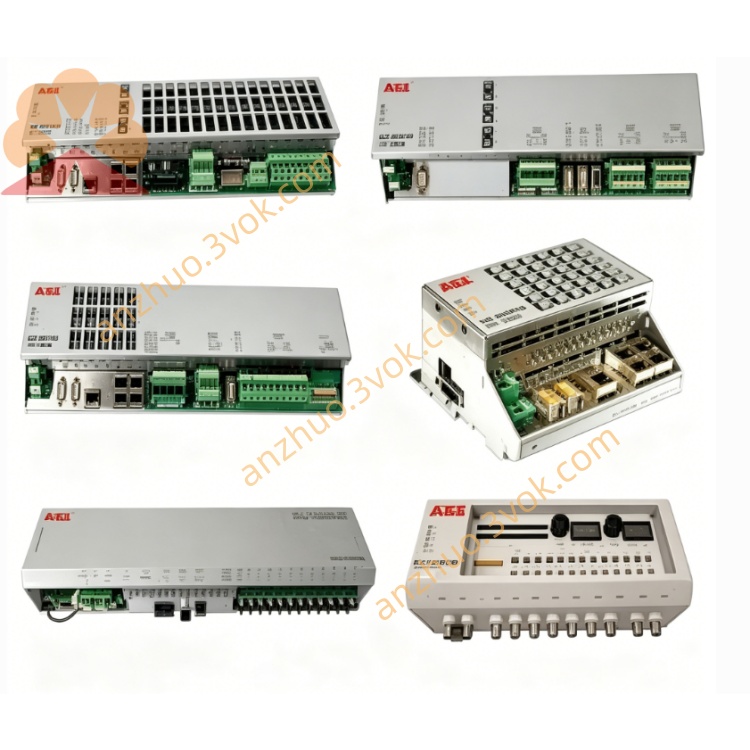
ABB 086348-001 ECF Control Module / PWA Board Card
Product Introduction
ABB 086348-001 is an End Column Frame control printed wiring assembly, also known as ECF control module. It acts as a signal hub and expansion controller for ABB DCS and PLC systems. This module undertakes local I/O processing, control logic operation, signal routing and communication conversion, and is fully compatible with ABB 800xA, AC500 and legacy Advant platforms. It features low power consumption and reliable performance for long-term operation in industrial cabinets.
Model Explanation
086348 is the base part number of ABB ECF series control board. The suffix -001 represents the original standard hardware revision, equipped with basic I/O circuits and RS-485 communication function. This module is designed for rack mounting and also compatible with DIN rail installation.
Technical Parameters
The module is powered by 24 VDC with a voltage tolerance of plus or minus ten percent, and the rated power consumption is 5 watts. It is configured with 8 digital input channels supporting both PNP and NPN types, and 6 relay digital output channels with a rated load of 2 A at 250 VAC. It adopts 1500 VAC isolation design between each channel. The operating temperature ranges from minus 20 degrees Celsius to 60 degrees Celsius, and the storage temperature ranges from minus 40 degrees Celsius to 85 degrees Celsius. The applicable relative humidity is 5% to 95% without condensation. The protection class is IP20, and it complies with IEC 61000-6-2/4 EMC standards. The overall dimensions are 150 mm × 100 mm × 25 mm, and the weight is approximately 0.2 kilograms.
Interface and Communication Configuration
It is equipped with screw terminals for connecting field digital signals and RS-485 communication lines. The gold finger connector on the back is used to connect the system backplane for power supply and bus data transmission. It supports Modbus RTU protocol over RS-485 interface to realize data interaction with upper controllers. Dual-color LED indicators are arranged on the front panel to display power status, running state and fault information. Hot-swap operation is supported on matched system racks.
Core Functions
It collects on-site switching signals and proximity sensor data via digital input channels, and drives valves, contactors and alarm indicators through relay outputs. It integrates basic control functions including PID regulation, time delay and interlock logic, which can run simple control tasks independently without upper devices. It works as a communication gateway to convert RS-485 signals to system bus data. It provides real-time circuit monitoring to detect open circuit and short circuit faults, and feed back fault information through indicators. The low-power design effectively reduces heat generation inside the control cabinet.
Application Scenarios
It is widely applied in auxiliary equipment control and status monitoring of thermal power and hydropower plants. It is used for local interlock control and I/O expansion in chemical, oil and gas production facilities. It suits water treatment systems for signal collection and control of dosing pumps and solenoid valves. It serves auxiliary equipment, cooling systems and tension control units in metallurgical and rolling industries. It is also a standard replacement part for upgrading and maintaining legacy ABB control systems.
Usage and Maintenance Instructions
Follow anti-static rules during installation, insert the module into the designated slot and fix it firmly. Separate strong and weak current cables during wiring, and use shielded twisted pairs for RS-485 communication lines with proper grounding. Keep the operating environment clean and dry, free from dust and corrosive gas. Check the LED operating status every day, inspect the tightness of wiring terminals every quarter, and conduct comprehensive function verification every year. Use original 086348-001 modules for replacement, and confirm firmware compatibility with the host system. Do not plug and unplug the module randomly when the power is on except on hot-swap supported racks, and do not disassemble the internal structure privately.
Description
Product Introduction
c
Model Explanation
086348 is the base part number of ABB ECF series control board. The suffix -001 represents the original standard hardware revision, equipped with basic I/O circuits and RS-485 communication function. This module is designed for rack mounting and also compatible with DIN rail installation.
Technical Parameters
The module is powered by 24 VDC with a voltage tolerance of plus or minus ten percent, and the rated power consumption is 5 watts. It is configured with 8 digital input channels supporting both PNP and NPN types, and 6 relay digital output channels with a rated load of 2 A at 250 VAC. It adopts 1500 VAC isolation design between each channel. The operating temperature ranges from minus 20 degrees Celsius to 60 degrees Celsius, and the storage temperature ranges from minus 40 degrees Celsius to 85 degrees Celsius. The applicable relative humidity is 5% to 95% without condensation. The protection class is IP20, and it complies with IEC 61000-6-2/4 EMC standards. The overall dimensions are 150 mm × 100 mm × 25 mm, and the weight is approximately 0.2 kilograms.
Interface and Communication Configuration
It is equipped with screw terminals for connecting field digital signals and RS-485 communication lines. The gold finger connector on the back is used to connect the system backplane for power supply and bus data transmission. It supports Modbus RTU protocol over RS-485 interface to realize data interaction with upper controllers. Dual-color LED indicators are arranged on the front panel to display power status, running state and fault information. Hot-swap operation is supported on matched system racks.
Core Functions
It collects on-site switching signals and proximity sensor data via digital input channels, and drives valves, contactors and alarm indicators through relay outputs. It integrates basic control functions including PID regulation, time delay and interlock logic, which can run simple control tasks independently without upper devices. It works as a communication gateway to convert RS-485 signals to system bus data. It provides real-time circuit monitoring to detect open circuit and short circuit faults, and feed back fault information through indicators. The low-power design effectively reduces heat generation inside the control cabinet.
Application Scenarios
It is widely applied in auxiliary equipment control and status monitoring of thermal power and hydropower plants. It is used for local interlock control and I/O expansion in chemical, oil and gas production facilities. It suits water treatment systems for signal collection and control of dosing pumps and solenoid valves. It serves auxiliary equipment, cooling systems and tension control units in metallurgical and rolling industries. It is also a standard replacement part for upgrading and maintaining legacy ABB control systems.
Usage and Maintenance Instructions
Follow anti-static rules during installation, insert the module into the designated slot and fix it firmly. Separate strong and weak current cables during wiring, and use shielded twisted pairs for RS-485 communication lines with proper grounding. Keep the operating environment clean and dry, free from dust and corrosive gas. Check the LED operating status every day, inspect the tightness of wiring terminals every quarter, and conduct comprehensive function verification every year. Use original 086348-001 modules for replacement, and confirm firmware compatibility with the host system. Do not plug and unplug the module randomly when the power is on except on hot-swap supported racks, and do not disassemble the internal structure privately.
Get a Quote