
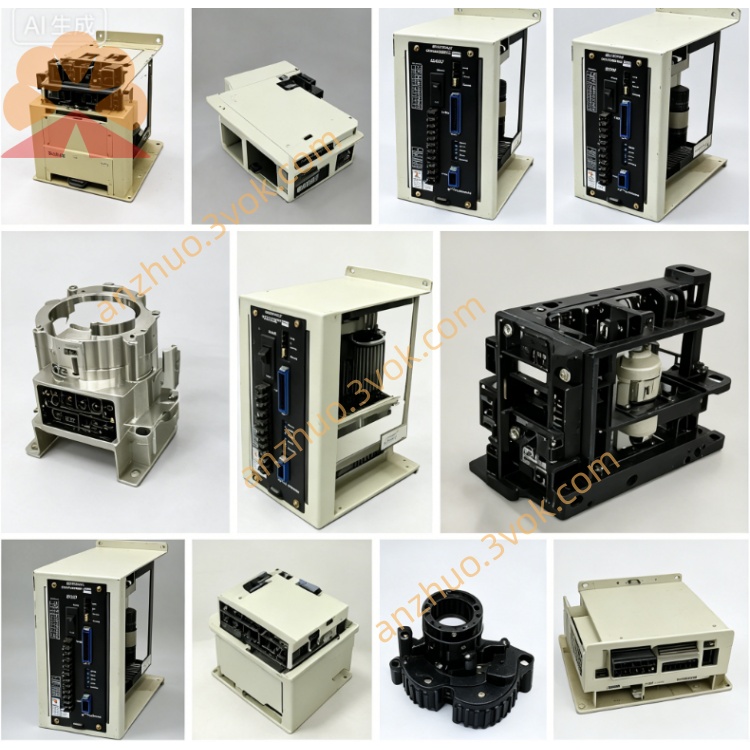
Yaskawa CACR-SR15SZ1SS-Y125 Digital Servo Drive
The CACR-SR15SZ1SS-Y125 is a legacy digital AC servo drive of VS-800 series for industrial CNC and automation control systems. It adopts built-in forced air cooling, with 9.9 A continuous current and 28 A short-term peak current. It is equipped with serial encoder interface and Y125 dedicated OEM parameter configuration, suitable for single-axis and multi-axis automation systems requiring stable servo performance and customized operating parameters.
Description
Model Definition
CACR: AC servo drive (SERVOPACK) product familySR: VS-800 series for integrated speed and position control15: 1.5 kW rated output powerS: Matched with Yaskawa S-series servo motorsZ: Customized hardware for dedicated I/O and feedback circuits1: Single-phase 200 VAC control power supplyS: Serial encoder signal interfaceS: Standard base firmwareY125: Preloaded OEM parameter set for specific industrial equipment
Technical Specifications
Electrical Parameters
Main power supply: 3-phase 200–230 V AC, tolerance -15% to +10%, 50/60 HzControl power supply: 1-phase 200–230 V AC, tolerance -15% to +10%, 50/60 HzDC bus voltage: Internal integrated DC bus designContinuous output current: 9.9 APeak output current: 28 A for short-time operation (max 30 s)Output frequency range: 0 Hz to 400 HzCompatible motors: Yaskawa S-series servo motors with serial encoders
Mechanical & Environmental Parameters
Cooling method: Built-in forced air cooling with internal fanProtection class: IP20 for overall unitOperating temperature: 0 °C to +55 °CStorage temperature: -20 °C to +85 °CMaximum installation altitude: 1000 m, 1% performance derating per 100 m above 1000 mVibration resistance: 0.5 g (10–60 Hz), 0.2 g (60–200 Hz)Dimensions (H×W×D): 380 mm × 150 mm × 200 mmWeight: Approximately 5.5 kg
Interface and Communication Configuration
Motor feedback: CN2 9-pin interface supporting Yaskawa serial encoder signalsMain power interface: R, S, T for main power; L1, L2 for control power; U, V, W for motor outputRegenerative interface: P, B terminals for external regenerative resistor connectionControl I/O: CN1 50-pin interface with multi-channel isolated digital inputs and outputsAnalog interface: ±10 V DC analog command input and monitoring outputCommunication: RS232 and RS485 interfaces supporting Modbus RTU protocolDisplay unit: Seven-segment LED display for operating status and alarm codes
Core Functions
Current, speed and position three-loop control realizes high-precision and stable motion control.Serial encoder interface provides strong anti-interference ability and long-distance signal transmission.Y125 pre-configured OEM parameters simplify on-site commissioning and parameter tuning.Multiple control modes including speed, torque and position adapt to diverse working demands.Comprehensive protection against overvoltage, undervoltage, overcurrent, overheating, encoder fault and overload.Compact vertical structure fits standard industrial control cabinet installation.Stable base firmware ensures long-term continuous operation in harsh industrial environments.
Application Scenarios
Legacy CNC lathes, milling machines and machining centers with serial encoder servo systemsSpecial-purpose machine tools requiring Y125 customized parameter settingsRotary tables, material handling and general industrial automation equipmentProduction line renovation and replacement projects for VS-800 series servo systemsAutomation equipment with strict requirements on signal stability and anti-interference performance
Usage and Maintenance
Reserve sufficient clearance around the drive to ensure smooth airflow and heat dissipation.Keep ambient temperature within the rated range to avoid performance attenuation.Complete power circuit, encoder circuit and control signal wiring strictly before power-on.Verify motor type and encoder specification to match the drive configuration.Inspect LED status, fan operation and running sound during daily operation.Clean air ducts and cooling components, and fasten terminal connections every six months.Check internal capacitors, fan performance and communication status once a year to maintain operational stability.
Get a Quote