
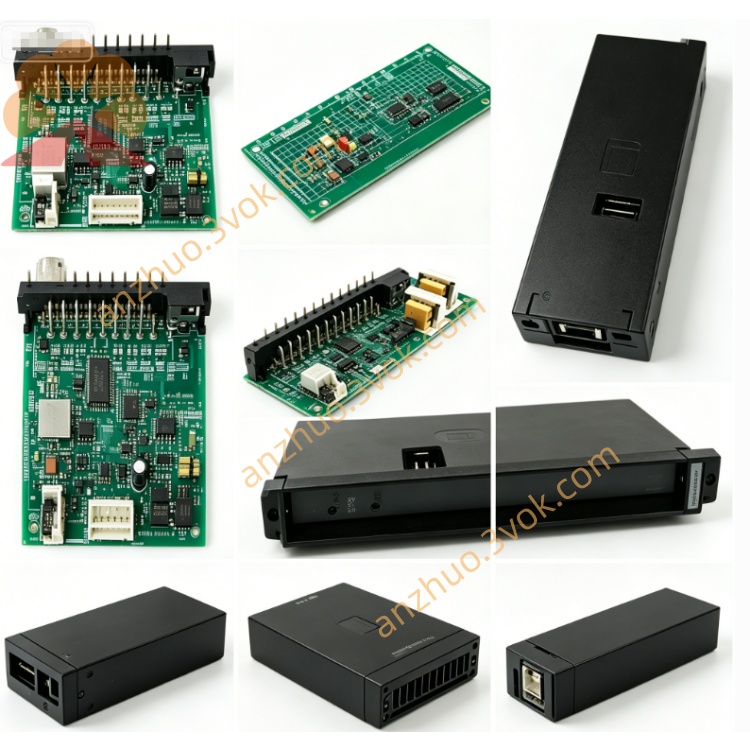
Reliance 45C-307 PLC CPU Module
The 45C-307 is a high-performance enhanced processor module for the Reliance AutoMate 30 series PLC, originally developed by Reliance Electric (later Baldor Reliance/ABB). As the core control unit, it executes user programs, processes I/O data, and manages network communication. It is fully compatible with AutoMate 30-series backplanes and designed for complex industrial automation tasks. This model is discontinued; only refurbished, surplus, or NOS units are available for legacy system maintenance and replacement.
Description
Product Description
The 45C-307 is a high-performance enhanced processor module for the Reliance AutoMate 30 series PLC, originally developed by Reliance Electric (later Baldor Reliance/ABB). As the core control unit, it executes user programs, processes I/O data, and manages network communication. It is fully compatible with AutoMate 30-series backplanes and designed for complex industrial automation tasks. This model is discontinued; only refurbished, surplus, or NOS units are available for legacy system maintenance and replacement.
Model Number Interpretation
45C: Unified prefix for Reliance AutoMate 45C-series control components.307: Designates the high-end enhanced processor module for the AutoMate 30 system (higher performance than 45C301/305 models).No suffix: Indicates the original hardware revision; variants like 45C307A/B denote updated revisions with minor circuit improvements.
Technical Specifications
Processor: Enhanced 16-bit processor with advanced instruction set for AutoMate 30 systems.Memory: 8K × 16-bit application memory (16KB total), double the capacity of 45C305.Max I/O Capacity: Supports up to 4 local I/O heads (256 digital/64 analog I/O each) or 4 I/O ports (64 digital/16 analog I/O each); mixed configuration allowed.Communication Baud Rate: 250k baud with parity for data integrity.Status Indicators: 5 front-panel LEDs: COMM DATA, RAIL FAULT, READY, FORCING, RUN.Power Supply: 24 VDC (from backplane), 3A max load, 50W power dissipation, 3AG 3A fuse protection.Operating Environment: -10°C to +50°C, 5%–95% non-condensing humidity.Enclosure: Rugged metal housing for industrial durability.Weight: Approximately 2.35 lbs (1.07 kg).
Interface and Communication Configuration
Backplane Interface: Proprietary edge connector for power and data exchange with AutoMate 30-series backplanes.Communication Ports: Front-panel RS-232C port for programming, monitoring, and data exchange.Supported Protocols: R-NET (Reliance proprietary network), Modbus RTU, ASCII; supports direct communication with local I/O heads/ports and remote devices.Programming Interface: Dedicated front port for program upload/download, online editing, and diagnostics.
Core Functions
Acts as the main controller to execute ladder logic/function block programs for complex logic, motion, and process control.Manages up to 4 local I/O heads/ports for high-density digital/analog data acquisition and output control.Supports R-NET networking for data exchange between AutoMate PLCs, HMIs, and host computers.Built-in self-diagnostics with 5 LED indicators for quick fault localization (communication, power, I/O, forcing status).Enhanced software with advanced instructions for data manipulation, interprocessor communication, file handling, remote I/O, and PID control.Data cache and power-off protection to preserve critical operational data during power interruptions.
Application Scenarios
Replacement and maintenance of high-end CPU modules in legacy AutoMate 30-series PLC systems.Complex industrial automation: manufacturing lines, process control, water treatment, power, metallurgy, and petrochemical industries.Systems requiring high-density I/O, multi-device networking, and advanced control (e.g., assembly lines, material handling, batch processing).Legacy equipment retrofitting: maintains compatibility with original system architecture, reducing upgrade costs.
Usage and Maintenance Instructions
Installation: Cut system power before inserting the module into the designated backplane slot; secure firmly to avoid loose connections.Power-On Check: Verify wiring integrity and fuse specification (3AG 3A) before powering on to prevent short circuits/overloads.Operation Monitoring: Use front LEDs: steady READY = normal power; flashing RUN = program execution; steady RAIL FAULT = system error; flashing COMM DATA = active communication; lit FORCING = I/O forcing enabled.Routine Maintenance: Quarterly cleaning of dust from vents/connectors; tighten terminal screws; inspect fuse for damage; avoid moisture/contaminant exposure.Safety: Disconnect all power and wait for full discharge before disassembly/maintenance to prevent electric shock.
Get a Quote