
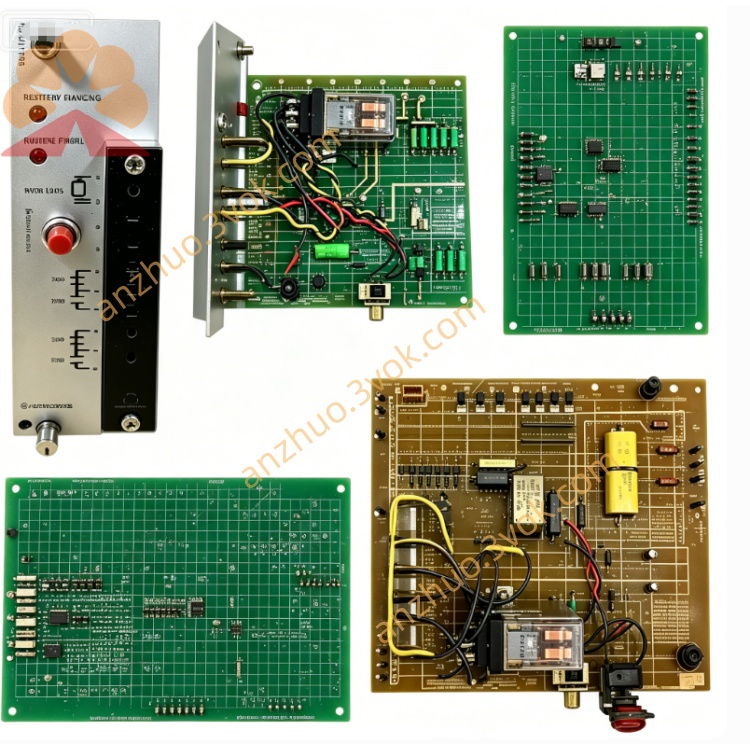
Reliance 45C-225 PLC Control Module
The 45C-225 is an enhanced AutoMate 20E CPU module developed for Reliance AutoMate 20 series PLC systems. It features stronger processing performance, larger memory capacity and built-in PID control functions, serving as an upgraded version of the basic CPU models. This product has been discontinued, and only refurbished, surplus or NOS units are provided for maintenance and replacement of legacy industrial automation systems.
Description
Product Description
The 45C-225 is an enhanced AutoMate 20E CPU module developed for Reliance AutoMate 20 series PLC systems. It features stronger processing performance, larger memory capacity and built-in PID control functions, serving as an upgraded version of the basic CPU models. This product has been discontinued, and only refurbished, surplus or NOS units are provided for maintenance and replacement of legacy industrial automation systems.
Model Number Interpretation
45C: Unified prefix for Reliance AutoMate 45C series control and I/O components. 225: Stands for enhanced CPU module of AutoMate 20E platform. The hyphen is a common industrial writing format for part numbers. Hardware revisions marked with C or D share the same functions and compatibility with the standard version.
Technical Specifications
Processor: 16-bit enhanced CPU. Program Memory: 4K × 16-bit non-volatile RAM with data retention after power loss. Data Registers: 512 general-purpose registers. PID Control: Supports up to 20 independent PID loops. Maximum I/O Capacity: 256 digital I/O points and 64 analog I/O points. Power Supply: 120/240 VAC, 50/60 Hz, rated current 0.5A at 120V and 0.25A at 240V. Operating Temperature: 0°C to 55°C; humidity 20%–90% non-condensing. Mounting: DIN-rail or panel mount matching AutoMate 20 series backplane. Built-in 250V AGC 2A replaceable fuse for overcurrent protection. Weight: Approximately 0.9 kg with durable metal enclosure.
Interface and Communication Configuration
Power Terminals: For 120/240 VAC power input and status relay connection. DB25 RS-232 Port: Isolated interface with default baud rate 9600bps, used for programming, HMI connection and upper computer monitoring. R-NET Coaxial Port: Dedicated network interface for building peer-to-peer network, supporting up to 32 network nodes. Backplane Interface: Proprietary connector for data exchange and connection with local and remote I/O modules. Status LEDs: PWR for power status, RUN for operating state, COMM for RS-232 communication, R-NET for network activity, RAIL FAULT for I/O rail fault and FORCING for I/O forced status.
Core Functions
It executes enhanced ladder logic programs with faster scan speed and supports advanced arithmetic and logic instructions. The integrated PID function realizes closed-loop regulation of temperature, pressure, flow and other process parameters. It provides sufficient storage space for complex programs, formula data and operation records. It establishes distributed control systems via R-NET network to achieve data sharing and coordinated control among multiple PLC stations. It supports remote program upload, download and online fault diagnosis through serial port. It monitors operating status in real time and quickly alarms various system faults.
Application Scenarios
It is widely used for upgrading and replacing old basic CPU modules in legacy AutoMate 20 systems. It applies to process control occasions such as chemical industry, water treatment, pharmaceutical and food processing. It fits industrial production lines including automobile assembly and heat treatment equipment which require logic control and analog closed-loop regulation. It is an ideal choice for renovation projects of old industrial machines to expand functions and improve overall system performance.
Usage and Maintenance Instructions
Install the module into the matched backplane slot securely under power-off state, then connect power cables and communication lines correctly. Complete communication parameter configuration, program editing and PID parameter setting via RS-232 port before running the system. Conduct regular quarterly inspections to clean dust on the module, check tightness of wiring and connectors, and verify LED working status. Back up programs periodically to prevent data loss. Replace the fuse with the same specification timely once it blows and check for overcurrent causes. Cut off all power supply and wait for full discharge before any disassembly or maintenance work to avoid electric shock. Use only compatible modules and accessories of AutoMate 20 series.
Get a Quote