
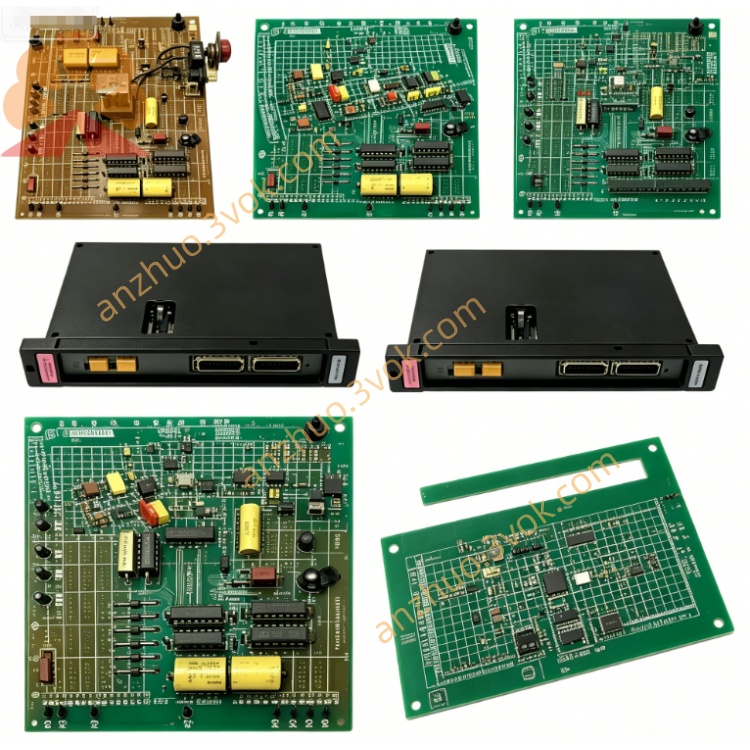
Reliance 45C15C PLC Processor Module
The 45C15C is the final revised CPU module for the Reliance Electric AutoMate 15 PLC system. It acts as the central processing unit to execute control programs, manage I/O signals and process internal communications within the control rack. This product is obsolete and no longer in production. Only surplus, refurbished or used units are available for maintenance and replacement of legacy industrial automation systems. It features enhanced circuit design and improved anti-interference performance, and is fully backward compatible with 45C15, 45C15A and 45C15B.
Description
Product Description
The 45C15C is the final revised CPU module for the Reliance Electric AutoMate 15 PLC system. It acts as the central processing unit to execute control programs, manage I/O signals and process internal communications within the control rack. This product is obsolete and no longer in production. Only surplus, refurbished or used units are available for maintenance and replacement of legacy industrial automation systems. It features enhanced circuit design and improved anti-interference performance, and is fully backward compatible with 45C15, 45C15A and 45C15B.
Model Number Interpretation
45C is the unified prefix for all modules of the AutoMate PLC series. 15 stands for the AutoMate 15 compact PLC platform. The letter C represents the third hardware revision, which optimizes internal circuits, eliminates known defects from earlier versions and upgrades electromagnetic interference resistance for more stable long term operation.
Technical Specifications
This is a rack mounted processor module. It supports dual input voltage of 115V AC and 230V AC at 50/60Hz, with rated current of 0.5A and 0.25A respectively. It is equipped with 1K×16 bit non volatile memory that retains programs and data without a backup battery. The program execution speed is 4 milliseconds per ladder logic instruction. The maximum capacity is 64 digital I/O points. It contains 56 data registers and 64 internal control coils. Six LED indicators on the front panel display the status of power supply, operation, CPU readiness, communication data, signal forcing and rail faults. A 1A fuse and multiple communication ports are integrated on the panel. The operating temperature ranges from 0°C to 45°C. It can be installed on DIN rails or mounting panels, and its total weight is about 1.1 kilograms.
Interface and Communication Configuration
It connects with matching I/O modules such as 45C1 through the dedicated rack backplane. A special programming port is reserved for connecting handheld programmers or the 45C115 CRT terminal to upload, download and edit control programs. Four additional ports are used for I/O expansion and system interconnection. This module only supports ladder diagram programming language. All signals are transmitted via hardwired connections and proprietary internal bus.
Core Functions
It runs user defined ladder logic programs to implement automatic discrete control. It scans, receives and outputs digital signals of all connected I/O points in real time. It provides on site fault diagnosis and working status indication through front panel LED lights. It establishes data interaction with programming terminals to complete program management and parameter setting. The built in non volatile memory ensures programs and operational data remain intact after power loss. It can directly replace earlier CPU versions without modifying existing system settings.
Application Scenarios
It is mainly applied to complete Reliance AutoMate 15 PLC control systems. It is widely used to control conveyors, pumps, valves and limit switches on small and medium sized production lines. It serves as a standard replacement part for faulty CPU modules in old industrial workshops, paper mills and textile factories. It is usually used together with the 45C1 I/O rail to form a complete control unit for legacy automation equipment.
Usage and Maintenance Instructions
Install the module firmly on the DIN rail or mounting panel, and ensure the backplane connector is fully locked. Check the power supply voltage and all wiring terminals before powering on. Conduct regular quarterly inspections to verify LED working status, cable tightness and module surface cleanliness. Remove dust regularly to prevent poor heat dissipation. Cut off the power supply completely and wait for a while before disassembly or maintenance to avoid electric shock. Use only original matched accessories and modules for replacement and expansion.
Get a Quote