
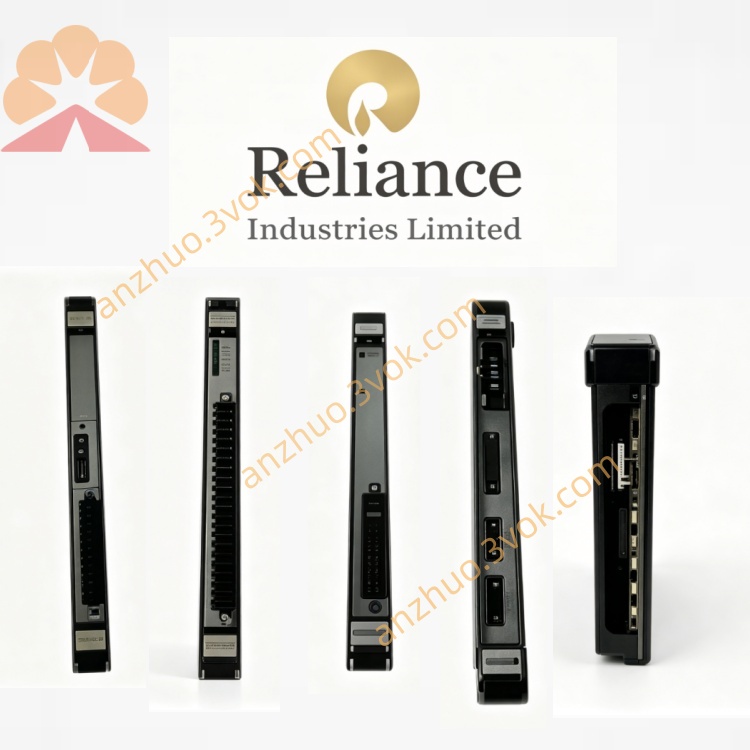
Reliance 11C57S (Minpak DC Drive)
Product Description
The 11C57S is a compact Minpak series DC drive manufactured by Reliance Electric, now part of ABB and Baldor-Reliance. It is designed for speed and torque control of small DC motors. This integrated unit regulates both armature and field power, featuring simple structure and stable performance for light industrial and OEM equipment. This model has been discontinued, and only refurbished or surplus units are available on the market.
Model Definition
11C57 is the base model code representing the Minpak series DC drive with fixed power and voltage specifications. The suffix S stands for standard configuration with basic control functions and no additional customized options.
Technical Specifications
This drive is rated at 1.5 HP. It accepts single-phase 230 VAC input with a frequency of 50/60 Hz. The armature output is 180 VDC and 7.5 A, while the field output is 100 VDC and 2 A. It adopts SCR phase control technology. The speed adjustment ratio reaches 10 to 1. The enclosure complies with NEMA 1 standard for indoor application. The operating temperature ranges from 0 degrees Celsius to 40 degrees Celsius, and the relative humidity is 5% to 95% without condensation. It supports wall mounting and panel mounting, and features a compact overall structure.
Interface and Communication Configuration
It is equipped with terminal blocks for single-phase AC power input. Independent terminals are reserved for DC armature and field winding connection to the motor. Local speed regulation is realized via onboard potentiometer, and it also supports external 0-10 VDC or 4-20 mA analog signals for remote speed setting. Onboard LED indicators display power status, running state and fault alarms. This is a standalone drive without built-in industrial communication ports, and it can only be controlled through analog signals and dry contact auxiliary terminals.
Core Functions
It realizes closed-loop speed regulation for small DC motors and maintains stable rotation speed under varying load conditions. It independently controls armature voltage and field excitation to optimize motor torque output. It provides adjustable soft start and soft stop functions to reduce inrush current and mechanical impact. Built-in overcurrent and thermal protection can effectively protect the drive and motor from overload and short circuit damage. It allows connection of external braking resistors for fast motor stopping, and supports fine speed calibration through local potentiometer.
Application Scenarios
It is widely applied in light industrial equipment such as small conveying devices and packaging machines. It is also a common matching component for machine tools, fans, pumps and textile machinery in OEM manufacturing. It is suitable for renovation and maintenance of legacy DC motor systems. It is mainly used for single-motor control occasions that do not require network communication, and adapts to ordinary indoor factory environments with slight dust and vibration.
Usage and Maintenance Instructions
Usage
Cut off the AC power supply before installation. Fix the drive on a flat panel or wall with mounting screws and reserve enough space for ventilation. Connect the AC power line, DC armature line and field line to corresponding terminals respectively, and ensure all connections are fastened reliably. Complete the wiring for speed potentiometer or external analog control signals, and make reliable grounding. After all work is finished, restore the power supply, set the speed to the minimum position, start the equipment and check whether the motor runs normally.
Maintenance
Carry out regular inspection every three to six months to check the appearance, wiring and indicator status of the drive. Cut off the power before cleaning, and remove dust on heat sinks and internal components with dry tools, never use liquid detergent. Check all terminals regularly and tighten loose connectors timely. Inspect internal SCR components and capacitors for leakage or damage. Wear anti-static tools when opening the shell for inspection to prevent static damage. Store spare units in a cool and dry anti-static environment. Do not disassemble the drive without authorization, and all maintenance work shall be completed by professional personnel.
Description
Product Description
c
Model Definition
11C57 is the base model code representing the Minpak series DC drive with fixed power and voltage specifications. The suffix S stands for standard configuration with basic control functions and no additional customized options.
Technical Specifications
This drive is rated at 1.5 HP. It accepts single-phase 230 VAC input with a frequency of 50/60 Hz. The armature output is 180 VDC and 7.5 A, while the field output is 100 VDC and 2 A. It adopts SCR phase control technology. The speed adjustment ratio reaches 10 to 1. The enclosure complies with NEMA 1 standard for indoor application. The operating temperature ranges from 0 degrees Celsius to 40 degrees Celsius, and the relative humidity is 5% to 95% without condensation. It supports wall mounting and panel mounting, and features a compact overall structure.
Interface and Communication Configuration
It is equipped with terminal blocks for single-phase AC power input. Independent terminals are reserved for DC armature and field winding connection to the motor. Local speed regulation is realized via onboard potentiometer, and it also supports external 0-10 VDC or 4-20 mA analog signals for remote speed setting. Onboard LED indicators display power status, running state and fault alarms. This is a standalone drive without built-in industrial communication ports, and it can only be controlled through analog signals and dry contact auxiliary terminals.
Core Functions
It realizes closed-loop speed regulation for small DC motors and maintains stable rotation speed under varying load conditions. It independently controls armature voltage and field excitation to optimize motor torque output. It provides adjustable soft start and soft stop functions to reduce inrush current and mechanical impact. Built-in overcurrent and thermal protection can effectively protect the drive and motor from overload and short circuit damage. It allows connection of external braking resistors for fast motor stopping, and supports fine speed calibration through local potentiometer.
Application Scenarios
It is widely applied in light industrial equipment such as small conveying devices and packaging machines. It is also a common matching component for machine tools, fans, pumps and textile machinery in OEM manufacturing. It is suitable for renovation and maintenance of legacy DC motor systems. It is mainly used for single-motor control occasions that do not require network communication, and adapts to ordinary indoor factory environments with slight dust and vibration.
Usage and Maintenance Instructions
Usage
Cut off the AC power supply before installation. Fix the drive on a flat panel or wall with mounting screws and reserve enough space for ventilation. Connect the AC power line, DC armature line and field line to corresponding terminals respectively, and ensure all connections are fastened reliably. Complete the wiring for speed potentiometer or external analog control signals, and make reliable grounding. After all work is finished, restore the power supply, set the speed to the minimum position, start the equipment and check whether the motor runs normally.
Maintenance
Carry out regular inspection every three to six months to check the appearance, wiring and indicator status of the drive. Cut off the power before cleaning, and remove dust on heat sinks and internal components with dry tools, never use liquid detergent. Check all terminals regularly and tighten loose connectors timely. Inspect internal SCR components and capacitors for leakage or damage. Wear anti-static tools when opening the shell for inspection to prevent static damage. Store spare units in a cool and dry anti-static environment. Do not disassemble the drive without authorization, and all maintenance work shall be completed by professional personnel.
Get a Quote