
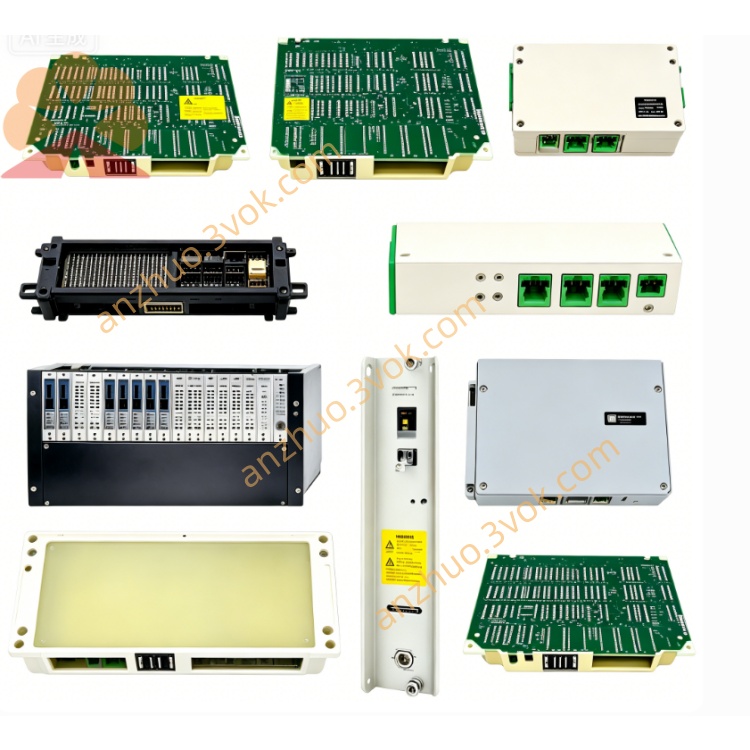
HONEYWELL 51304690-100
The 51304690-100, also named MU-PDIS11, is a high-precision sequence of events digital input card designed for Honeywell TDC3000, UCN and Experion PKS DCS systems. It collects discrete signals from on-site switches, relays and interlock contacts, and records event sequences with millisecond-level accuracy. This card serves as a core I/O module for analyzing the causes of process trips and abnormal conditions in industrial sites.
Description
Product Description
The 51304690-100, also named MU-PDIS11, is a high-precision sequence of events digital input card designed for Honeywell TDC3000, UCN and Experion PKS DCS systems. It collects discrete signals from on-site switches, relays and interlock contacts, and records event sequences with millisecond-level accuracy. This card serves as a core I/O module for analyzing the causes of process trips and abnormal conditions in industrial sites.
Model Definition
The prefix 5130 represents the product series of Honeywell TDC3000 and UCN distributed control systems. The code 4690 stands for digital input card with sequence of events recording function. The suffix 100 refers to the standard hardware version, featuring non-redundant design, UCN network interface and millisecond-level timing function.
Technical Specifications
This module is equipped with 32 digital input channels, which support both dry contact and wet contact signals. It is compatible with 24VDC and 125VDC discrete signals from field devices. The time resolution for event recording reaches 1 millisecond. It provides 2500 VAC galvanic isolation between each channel and the system side to resist electrical interference and ground loop issues. The module is powered by external 24VDC power supply with a tolerance of plus or minus ten percent and UCN bus power. The operating temperature ranges from 0 degrees Celsius to 60 degrees Celsius, and the storage temperature ranges from minus 40 degrees Celsius to 70 degrees Celsius. The relative humidity for operation is 5 percent to 95 percent without condensation. The product is coated with protective paint and has passed CE, UL and CSA certifications. The overall weight is approximately 0.59 kilograms.
Interface and Communication Configuration
The module connects to system controllers and operator stations through UCN universal control network and adopts dedicated real-time communication protocol. It receives unified clock synchronization from the UCN network to guarantee consistent timing of all recorded events across the whole system. Field signals are connected to the card via matching field terminal assemblies. There are built-in status indicator lights and diagnostic interfaces on the module, enabling real-time status monitoring and quick fault location. The module can actively upload recorded events to the upper system.
Core Functions
It achieves high-density collection of 32-channel digital signals and accurately captures every state change of field contacts. The millisecond-level sequence of events recording function provides reliable data support for accident investigation and root cause analysis. The high-strength galvanic isolation effectively protects internal system circuits from damage caused by on-site high voltage and interference. The local storage space can cache more than one thousand event records, so data will not be lost even when the network is temporarily disconnected. It supports hot swapping and online diagnosis, which facilitates daily maintenance and module replacement.
Application Scenarios
This product is applicable to Honeywell TDC3000, UCN and Experion PKS DCS systems. It is widely used in oil and gas, chemical, power generation, metallurgy and other process industries. It is mainly deployed for signal collection and event recording of critical interlock circuits and safety protection systems. It is installed inside standard DCS cabinets and suitable for conventional industrial environments with general temperature and humidity conditions.
Usage and Maintenance Instructions
Usage
Insert the module into the designated slot of the DCS cabinet and ensure firm contact with the backplane. Connect the field terminal assembly and external power supply according to wiring requirements. Complete network configuration and clock synchronization after installation. Power on the module and check the indicator status to confirm normal operation before formal use.
Maintenance
Keep the cabinet interior clean, dry and well ventilated. Conduct regular inspections to check the working status of the module, wiring tightness and cable integrity. Use dry soft cloth to remove surface dust, and never use liquid cleaners to clean the circuit board. Store spare modules in anti-static bags and place them in cool and dry areas. Take anti-static protection measures during handling and installation. Do not disassemble the module without authorization to avoid permanent damage to internal components.
Get a Quote