
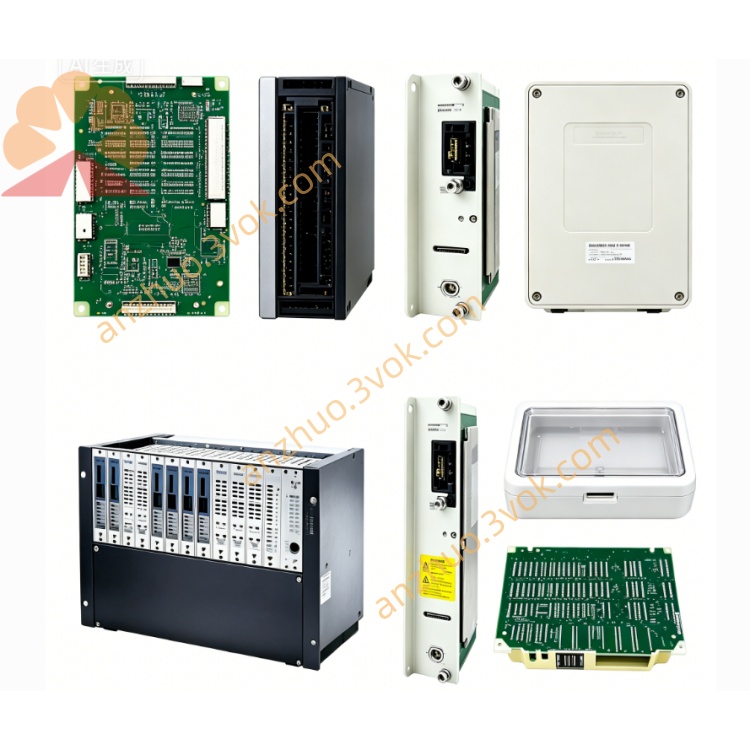
Honeywell 51304718-175 (51304718175, MC-GAIH13)
Description
Product Introduction
51304718-175 is the high-level analog input isolation terminal block (FTA) of the Honeywell UCN/Experion PKS system. Its model alias is MC-GAIH13. It is used for electrical isolation and signal conversion between the on-site 4-20mA/1-5V analog signals and the DCS control card, providing 1500VAC high-voltage isolation. It is suitable for explosion-proof and highly interfered industrial sites and is designed for non-redundant, high-density channels.
Model Explanation
5130: Honeywell TDC3000/UCN/Experion PKS DCS series;
4718: High-level analog input (HLAI) isolation terminal block (FTA) category;
175: Hardware version, representing high density, 16 channels, high-voltage isolation, non-redundant, screw terminal configuration, different from 200 (basic isolation), 325 (8-channel crimping), 375 (redundant). Technical Specifications
Channel Configuration: 16 differential analog inputs (the same series 200/325 has 8 channels);
Supported Signals: 4-20mA current, 1-5VDC/0-10VDC voltage;
Isolation Performance: 1500VAC RMS electrical isolation between the field and system sides, anti-ground loop and surge;
Interface Specifications: Screw terminals on the field side, 50-pin flat cable on the system side;
Measurement Accuracy: ±0.1% of full scale at 25℃;
Environmental Conditions: Operating temperature -20℃ to +60℃, storage -40℃ to +70℃, humidity 5%–95% (no condensation);
Protection and Certification: PCB three-layer coating, CE/UL/CSA/Ex explosion-proof certification;
Structural Weight: Size B, approximately 1.3kg.
Interface and Communication Configuration
System Connection: 50-pin flat cable compatible with MC-PAIH03, 51304754-150 etc. HLAI control cards;
Field Wiring: 16 screw terminals, directly connected to pressure, temperature, level, flow transmitters;
Isolation Design: 1500VAC high voltage isolation, cutting ground loop, suppressing EMI/RFI interference;
Communication Characteristics: Passive terminal board, no independent protocol; signal processing, A/D conversion, fault diagnosis completed by the matching control card and DCS network. Core function
High-density collection: 16 analog inputs, saving cabinet space and cost;
High-voltage isolation: 1500VAC isolation, protecting DCS cards from damage caused by on-site high voltage and grounding faults;
Explosion-proof compatibility: Certified for explosion protection, suitable for Zone 0/1/2 hazardous areas;
Stable connection: Screw terminals facilitate on-site wiring and maintenance, resistant to vibration;
System compatibility: Fully compatible with TDC3000, TPS, UCN, Experion PKS, supporting hot swapping and online replacement. Applicable scenarios
Adaptation system: Honeywell TDC3000, TPS, UCN, Experion PKS;
Industry applications: Process industries such as oil and gas, chemical, petrochemical, pharmaceutical, papermaking, power generation, etc.;
Signal adaptation: 4-20mA/1-5VDC standard transmitter signals;
Environmental requirements: DCS control cabinet, on-site explosion-proof cabinet, high humidity, dust, corrosive gases, strong electromagnetic interference and explosion-hazardous areas.
Operation and maintenance instructions Use
Installation: Fixed in a standard cabinet, leaving sufficient space for wiring and heat dissipation;
Wiring: Securely fasten the 50-pin cable, and on-site connect the cables to the screw terminals and tighten them;
Power-on and Debugging: After wiring is completed, start the DCS, check for no alarms, confirm the signal accuracy, and then put it into operation. Maintenance
Environment: Keep the cabinet dry and clean, avoiding moisture, corrosion and dust accumulation;
Inspection: Check the tightness of terminals and the integrity of cables every quarter, and tighten or replace them in time;
Cleaning: Use a dry soft cloth to remove dust; Do not allow liquid cleaners to come into contact with the circuit board and terminals;
Storage: Store spare parts in anti-static bags, in a cool and dry place; Take anti-static measures during handling;
Disassembly: Non-professionals are not allowed to disassemble; To prevent static electricity or damage to the circuit during operation.
Get a Quote