
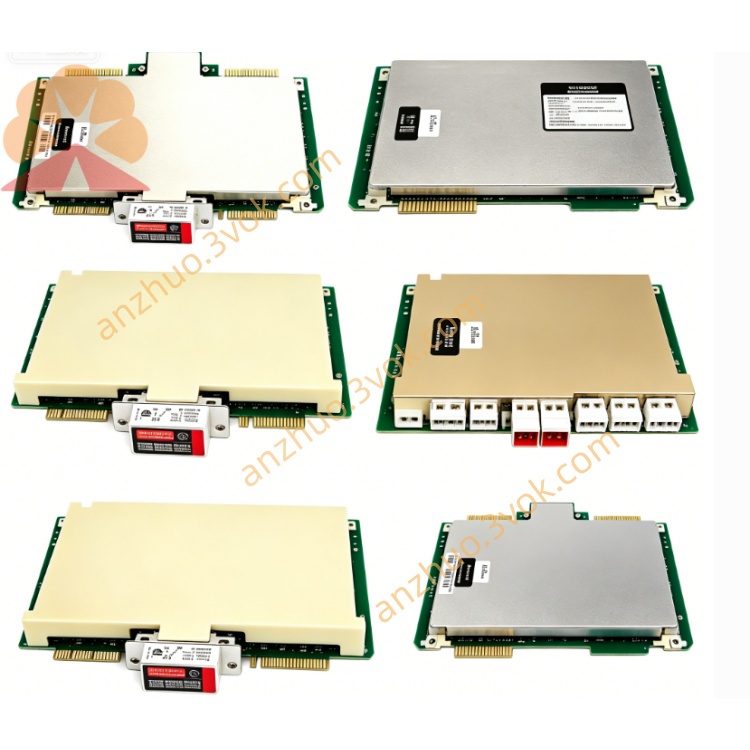
HONEYWELL 51305072-100
The 51305072-100 is a CLCN dual-network communication board developed for Honeywell TDC 3000, TPS and Experion PKS DCS systems. It allows compatible controllers to connect to both LCN A and LCN B backbone networks at the same time. This module integrates signal conditioning, electrical isolation and impedance matching functions, ensuring stable and reliable data transmission. It is designed for redundant network architecture to guarantee continuous operation of industrial control systems.
Description
Product Description
The 51305072-100 is a CLCN dual-network communication board developed for Honeywell TDC 3000, TPS and Experion PKS DCS systems. It allows compatible controllers to connect to both LCN A and LCN B backbone networks at the same time. This module integrates signal conditioning, electrical isolation and impedance matching functions, ensuring stable and reliable data transmission. It is designed for redundant network architecture to guarantee continuous operation of industrial control systems.
Model Definition
51305072-100 is the official Honeywell part number used for procurement, inventory management and maintenance. The code 5130 represents the series of Honeywell DCS hardware. The segment 5072 refers to the dedicated circuit design of CLCN communication boards. The suffix 100 stands for the dual-network version that supports both LCN A and LCN B access. This product is also known as CLCN-A/B paddle board and LCN dual-network communication board.
Technical Specifications
This module is fully compatible with Honeywell TDC 3000, TPS and Experion PKS DCS platforms. It is powered by 5 VDC supplied from the controller backplane without external power supply. The operating temperature ranges from minus 40 degrees Celsius to plus 70 degrees Celsius, and the storage temperature ranges from minus 40 degrees Celsius to plus 85 degrees Celsius. The applicable relative humidity is 5% to 95 percent, and condensation is prohibited during operation. The standard data transmission rate of LCN network is 1 Mbps, and each network segment supports up to 255 nodes. The net weight of the module is about 0.35 kilograms. It has passed CE, UL, CSA and RoHS certifications to meet industrial application standards.
Interface and Communication Configuration
The module is equipped with two independent BNC coaxial ports, which are separately connected to LCN A network and LCN B network. It adopts gold finger connector to be inserted into the dedicated slot of CB120 and CB121 controllers. Complete electrical isolation is realized between the controller and two LCN networks to reduce common mode interference. Multiple LED indicators are arranged on the board to display the status of power supply, A network link, B network link and system fault. It adopts Honeywell proprietary LCN communication protocol, and supports remote status monitoring and fault diagnosis through the system engineer station.
Core Functions
It provides dual redundant network access for controllers to connect to LCN A and LCN B simultaneously. It completes mutual conversion and adaptation of different electrical signals between controllers and dual LCN networks to maintain signal integrity during transmission. It builds electrical isolation barriers to prevent local faults on single network from spreading to the whole control system. It conducts impedance matching for coaxial lines to effectively reduce signal reflection and attenuation. It supports automatic network failover. When one network fails, the system will switch to the other network to ensure uninterrupted communication.
Application Scenarios
This product is widely applied in process industries such as oil and gas, chemical engineering, power generation and petrochemical industry. It is mainly installed on CB120 and CB121 controllers of TDC 3000 and TPS DCS systems to build dual LCN redundant networks. It is suitable for standard industrial control rooms and on-site control cabinets with stable temperature and humidity. It is also used for hardware replacement, system upgrading and function expansion of existing Honeywell DCS devices that require high communication reliability.
Usage and Maintenance Instructions
Usage
Insert the module into the dedicated slot of the controller and tighten the fixing screws to avoid displacement caused by vibration. Connect coaxial cables of LCN A and LCN B networks to corresponding BNC ports respectively, and check that all connectors are firmly connected. Power on the controller, observe all LED indicators, and confirm normal power supply and network link without fault alarms. Complete network address configuration and redundancy function setting on the DCS engineer station according to actual system requirements.
Maintenance
Keep the installation environment clean, dry and well ventilated, and keep temperature and humidity within the specified working range. Check the status of LED indicators every month, and inspect the tightness and surface cleanliness of BNC connectors every quarter. Use a dry soft cloth to wipe dust on the module surface, and never use liquid cleaning agents. Store spare modules in anti-static packaging and place them in cool and dry areas, keeping away from strong static electricity and magnetic fields. Do not disassemble the module without permission. All installation and maintenance operations must be performed by qualified professional technicians.
Get a Quote