
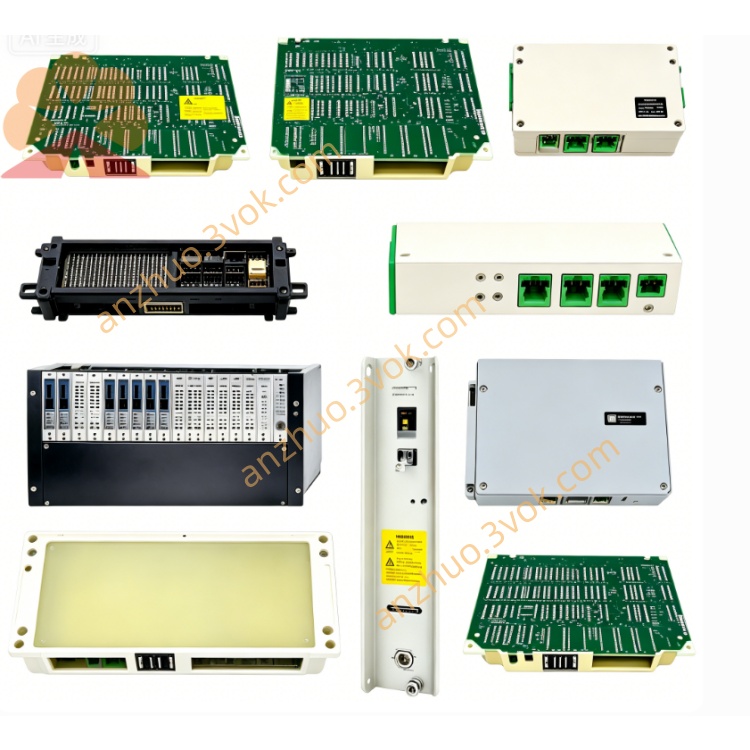
HONEYWELL 51305072‑800
Description
Product Description
51305072-800 is the Honeywell CLCN-B (Control Network-B) controller network communication board, belonging to the TDC 3000 / Experion PKS system LCN network core I/O board, specifically used for the signal interface and adaptation between the controller (such as CB120/CB121) and the LCN B network.
Model Definition
51305072‑800: Honeywell part number (‑800 = B network version, corresponding to CLCN-B).
Alias: CLCN-B Paddle Board, LCN B Network Communication Board, TDC3000 I/O Board.
Disassembly:
5130: Honeywell DCS hardware series;
5072: CLCN circuit version;
800: B network specific (corresponding to -200 is A network).
Technical Specifications
System compatibility: Honeywell TDC 3000, TPS, Experion PKS (C300);
Functions: LCN B coaxial signal interface adaptation with controller chassis, electrical isolation, impedance matching;
Interfaces: 1 × LCN-B coaxial port (BNC), dedicated gold finger slot for controller;
Power supply: 5 VDC (supplied by controller backplane);
Temperature: Operating range: −40 °C to +70 °C; Storage range: −40 °C to +85 °C;
Dimensions: 176 mm × 61 mm × 25 mm;
Weight: Approximately 0.2 kg;
Certifications: CE, UL, CSA, RoHS.
Interface & Communication
LCN-B port: BNC interface, connects to the redundant LCN B backbone network of the system;
Controller interface: Special gold fingers, compatible with CB120/CB121 controller slots;
Isolation: Electrical isolation between the LCN network and the controller to suppress common-mode interference;
Diagnosis: Power, Link, Fault LED status indicators, supports remote diagnosis.
Core Functions
B Network Access: Provides LCN B network redundancy communication capability for the controller;
Signal Adaptation: Converts LCN differential signals to single-ended signals of the controller;
Fault Tolerance: Achieves dual-network redundancy in conjunction with A network (51305072-200) and automatically switches;
Impedance Matching: Optimizes B network signal transmission and reduces reflection attenuation;
Node Communication: Data exchange hub between the controller and the operation station/engineer station.
Application Scenarios
Controller redundancy: The TDC3000 system's CB120/CB121 controllers are configured with dual LCN networks;
Process industry: Key control devices in the oil and gas, chemical, power, and petrochemical sectors;
System upgrade: Replace the old KLCN-B boards and be compatible with the existing LCN network.
Usage & Maintenance
Usage
Installation: Insert into the dedicated CLCN-B slot of the controller and secure the anti-loosening screws;
Wiring: Connect the BNC to the LCN B coaxial cable and ensure the connection is tight;
Power On: Supply power to the controller and confirm that the Power/Link light is constantly on and there is no Fault alarm;
Configuration: Set the LCN B network address on the engineer station and enable redundant switching.
Maintenance
Environment: Well-ventilated and dry, temperature range: -40 °C to +70 °C, avoid condensation;
Inspection: Monthly check the status of LEDs; Quarterly check the cleanliness and tightness of BNC connectors;
Replacement standard: Replace when communication is interrupted, Link light is abnormal or Fault light is constantly on;
Supplies: Store in anti-static packaging to avoid strong magnetic fields and electrostatic shocks.
Get a Quote