
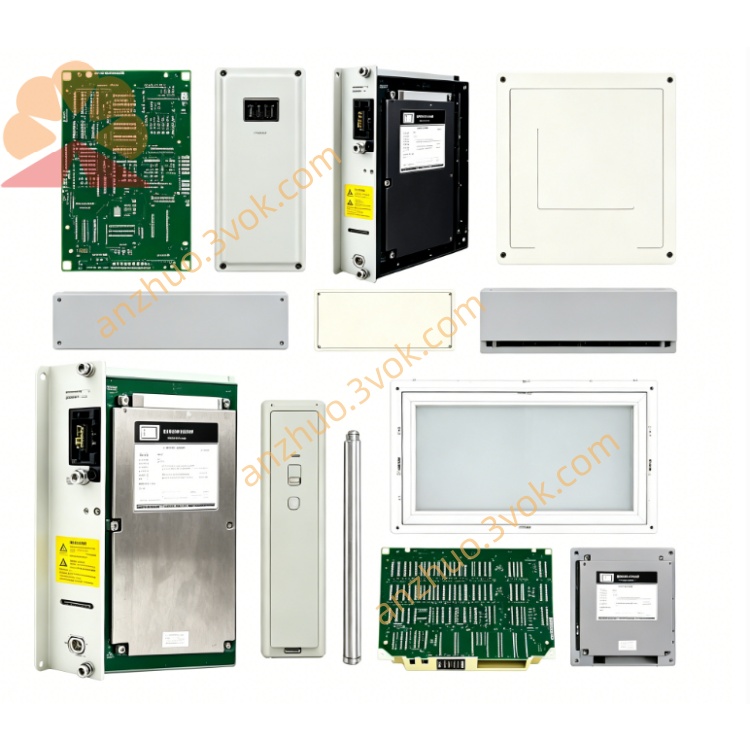
HONEYWELL 51305430‑100
Description
Product Description
51305430-100 is a Honeywell LCNP4 (Local Control Network Processor 4) control card, used in TDC 3000 / TPS / Experion PKS DCS systems. It serves as the core communication and processing module of the LCN network, responsible for LCN network data forwarding, real-time control computing, and node management.
Model Definition
51305430 - 100: Honeywell part number (‑100 = standard version, without conformal coating).
Alias: LCNP4, LCNP4 Control Card, Control Network Processor Board.
Disassembly:
5130: Honeywell DCS hardware series;
5430: LCNP4 circuit version;
100: standard model. Technical Specifications
System compatibility: Honeywell TDC 3000, TPS, Experion PKS (C300);
Functions: LCN network management, data processing, controller/operation station communication, redundant switching control;
Processor: Honeywell dedicated high-speed CPU;
Power supply: 5 VDC / 12–24 VDC, typical power consumption 10 W;
Temperature: Operating range -20 °C ~ +60 °C; Storage range -40 °C ~ +85 °C;
Humidity: 5%–95% RH (no condensation);
Weight: Approximately 0.27–0.51 kg;
Certifications: CE, UL, CSA, RoHS. Interface & Communication
LCN Port: 1 LCN bus interface, connecting the system LCN backbone network;
Diagnosis: Power, Run, Fault, Comm status LEDs; supports remote diagnosis by the engineer station;
Redundancy: Supports dual LCNP4 redundant configuration, with automatic fault switching. Core Functions
LCN network management: Data between routing operation station, controller, and I/O nodes;
Real-time data processing: Process data, alarms, low-latency operation of control instructions;
System synchronization: Time synchronization of all network nodes;
Fault tolerance: Detection of network/hardware faults, automatic switching of redundant modules;
Firmware execution: Execution of LCN protocol and control logic firmware. Application Scenarios
Process industry: Large-scale DCS devices in sectors such as oil and gas, chemicals, power, petrochemicals, and papermaking;
High availability system: Requires continuous operation 24/7 with zero downtime for critical control loops;
TDC 3000 upgrade / expansion: Replace the old LCNP modules and be compatible with the existing LCN network. Usage & Maintenance
Usage
Installation: Insert into the dedicated LCNP4 slot of the DCS cabinet and secure with screws;
Power On: 5 VDC ±5%, confirm that the Power indicator is constantly on and there is no Fault indicator alarm;
Configuration: Engineer station sets LCN address, redundant parameters, and network routing;
Redundancy: Dual-module configuration, enable automatic fault switching. Maintenance
Environment: The cabinet is clean and dry, with a temperature range of -20 °C to +60 °C;
Inspection: Monthly check of LED status; Quarterly check of connections and module integrity;
Cleaning: Use a dry soft cloth for dust removal; Do not use liquid cleaners;
Spares: Stored in anti-static packaging in a cool and dry place;
Maintenance: Do not disassemble by yourself; Faulty components should be returned to Honeywell or authorized service center.
Get a Quote