
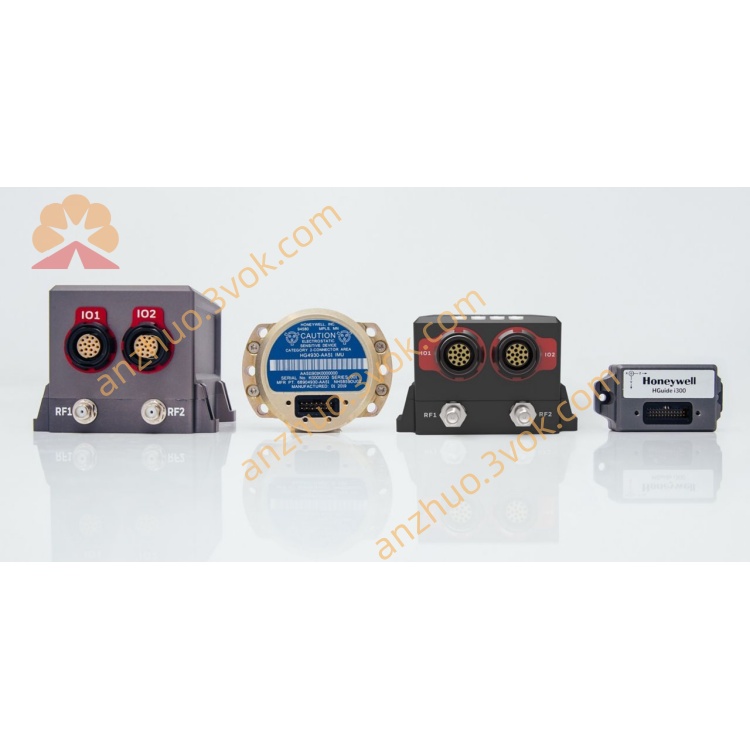
Honeywell 51309140-175 (MC-TSTX03)
Description
I. Product Introduction
Honeywell 51309140-175 (Model Name: MC-TSTX03) is an intelligent transmitter interface module of the MU-T series from Honeywell, used to connect field intelligent instruments with HART protocol to Experion PKS, TDC3000 and other DCS platforms, for the collection and communication of analog + digital mixed signals. It is one of the core I/O cards of the process control system.
II. Model Interpretation
51309140-175: Honeywell material code (part number), used for procurement, inventory and maintenance traceability. The segments within the code represent the product series, function type, version and serial number.
MC-TSTX03: Product model. Where MC is the prefix of the module series, TSTX represents Smart Transmitter Interface, and 03 is the specific model within this series.
III. Technical Parameters
Channel Quantity: 8 independent input channels.
Input Signals: Supports 4–20 mA analog signals and superimposes HART digital signals; compatible with 0–10 VDC, dry contact input.
Power Supply: Rated 24 VDC, module power consumption ≤ 1 W.
Isolation: Electrical isolation between input and system bus, strong anti-interference ability.
Operating Temperature: 0 ℃ to +60 ℃; Storage Temperature: -40 ℃ to +85 ℃.
Humidity: 5%–95%, no condensation.
Size: Approximately 151 × 120 × 55 mm; Weight: Approximately 0.32 kg.
Response Time: < 100 ms.
IV. Interface and Communication Configuration
Field Side: Each channel corresponds to a wiring terminal, and connects 4–20 mA + HART intelligent transmitters (temperature, pressure, flow, level, etc.).
System Side: Communicates with the DCS controller through the rack backplane bus; onboard RS-485 interface, supports Modbus RTU and HART protocols, for digital configuration, parameter reading and fault diagnosis.
Connectors: One end is a high-density D-type interface connected to the backplane, and the other end is a screw terminal block for easy on-site wiring.
V. Core Functions
Signal Acquisition: Receives and converts 4–20 mA analog + HART digital mixed signals, achieving synchronous reading of process variables and instrument parameters.
Protocol Processing: Parses HART digital signals, supports remote configuration, range modification, zero point calibration and instrument diagnosis.
Isolation Protection: Electrical isolation between channels and between channels and the system side, suppressing common-mode interference, protecting the DCS system from the impact of on-site surges.
Fault Diagnosis: Equipped with open circuit, short circuit, overload detection and communication abnormal alarm functions, displaying fault information on the upper computer.
Redundancy Support: Supports DCS system redundancy configuration, the module can be hot-swappable, and online replacement does not affect system operation.
VI. Application Scenarios
Petrochemical, oil and gas extraction, refineries: Connects HART pressure, temperature, flow transmitters to achieve precise monitoring of process parameters.
Power, water treatment, large-scale manufacturing: Used for the intelligent instrument access of critical circuits to ensure continuous production and safety interlocks.
Honeywell Experion/TDC3000 DCS System: As a standard I/O card, builds a mixed signal acquisition and control platform.
VII. Usage and Maintenance Instructions Instruction Manual
Installation: Install on the Honeywell standard control rack, using rail clips for fixation. It supports hot swapping. Before installation, confirm that the rack is powered off or complies with the hot-swapping specifications.
Wiring: The positive and negative poles of the on-site instrument's 4–20 mA correspond to the terminals of the module, and the shielding layer is grounded at one end; the 24 VDC power supply is provided by the DCS rack or an external power source.
Configuration: Configure the channel type, range, HART address, and communication parameters through the DCS engineer station. After downloading, normal data collection can be achieved.
Maintenance instructions:
Regular inspection: Check the terminal tightening and whether the wiring is loose or corroded, and whether the module indicator light status is normal every quarter.
Environmental maintenance: Keep the cabinet dry and dust-free, avoid corrosive gases and strong electromagnetic interference; the temperature should be controlled within 0–60 ℃.
Fault handling: When there is an abnormal channel, first check the wiring and power supply, then locate the fault through the DCS diagnostic information; if the module is damaged, it can be replaced online, and then re-download the configuration.
Long-term storage: Place the spare modules in a dry and cool place, with a temperature range of -40 ℃ to +85 ℃. Avoid heavy pressure and severe vibration.
Get a Quote