
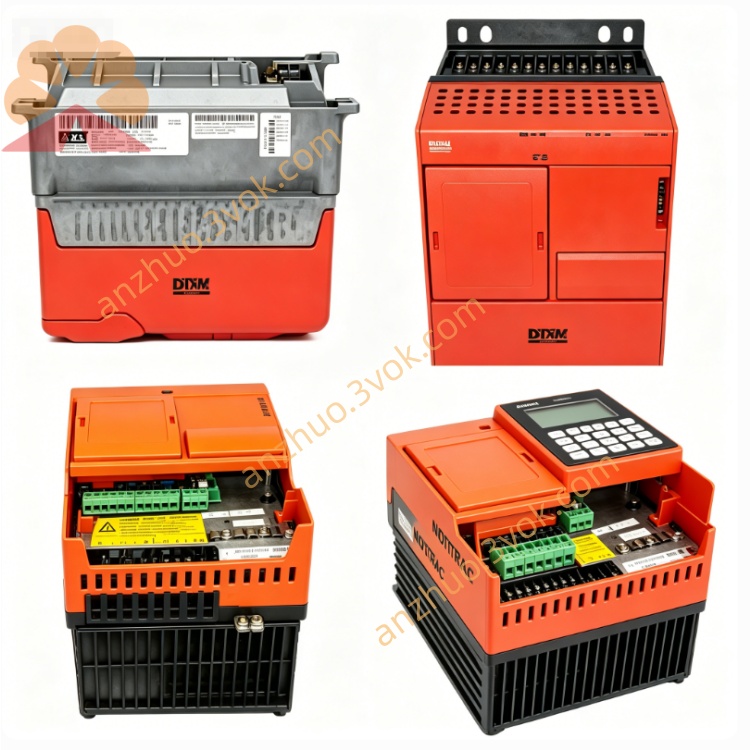
SEW CAN-BUS Communication Module
Description
Core Features
Multi-master architecture
All nodes on the bus can send data actively without a central controller, which prevents single-point failure.
Non-destructive bitwise arbitration
Messages with smaller ID numbers have higher priorities. Conflicts are resolved automatically without data loss.
Differential signal transmission
Signals are transmitted via CAN_H and CAN_L twisted pairs, offering strong resistance to electromagnetic interference.
High real-time performance
Each standard frame carries up to 8 bytes of data, ensuring fast transmission and low latency.
Comprehensive error handling
It supports multiple error detection mechanisms. Faulty nodes can be automatically isolated to avoid affecting the whole network.
Flexible speed and distance
1 Mbps at a cable length of 40 meters; 10 kbps at a cable length of 10 kilometers.
Main Protocol Versions
CAN 2.0A (Standard Frame): Equipped with 11-bit identifier, for basic application scenarios.
CAN 2.0B (Extended Frame): Equipped with 29-bit identifier, compatible with CAN 2.0A and supports more network nodes.
CAN FD: An upgraded version with longer data length and higher transmission speed.
Get a Quote