
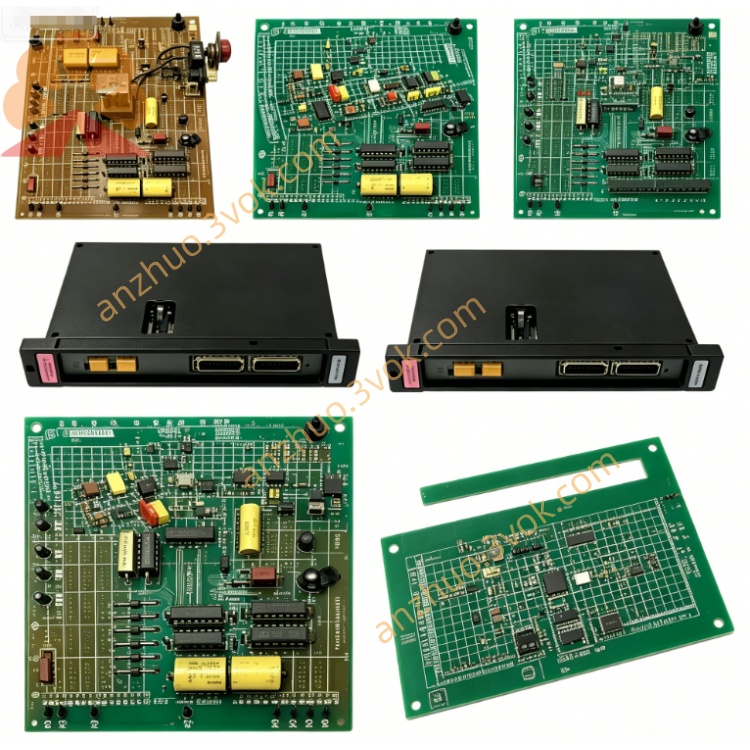
0-60021-4
Description
Technical Specifications
Processor: 32-bit industrial-grade CPU, with a main frequency of 25 MHz
Memory: RAM 128KB (battery-powered retention), ROM 512KB (firmware / algorithms)
Power supply: +5V DC/4A, ±15V DC/1A (power supply from the back panel)
Control cycle: Current loop 0.5ms, speed loop 5ms, position loop 1ms
Feedback interface: Encoder (5V differential, up to 1MHz), Resolver (10Vrms/400Hz, 16bit)
Operating temperature: 0–55°C; Storage: -20–70°C
Size (width × height × depth): Approximately 30×220×180mm
Weight: Approximately 2.0kg
Installation: PMI rack-specific advanced slot, front panel fixed
Insulation withstand voltage: Logic and I/O 1.5kV AC/1min
Interface and communication configuration
Front panel:
LED digital tube: 4 bits, displays operating parameters / fault codes
LED indicator lights: RUN (running), FLT (fault), NET (network), SYNC (synchronization)
Buttons: 4 keys (mode / up / down / confirm), local parameter setting and debugging
Back panel pins:
Power bus: +5V, ±15V, GND
High-speed data bus: High-speed interaction with I/O board, driver board, communication board
Control signals: System enable, emergency stop, interlock, synchronization signal
Communication: Supports AutoMax network bus, RS-232/485 serial port, optional DH+ industrial network (extension board) Core function
High-performance closed-loop control: Implements PID algorithms for current loop, speed loop, and position loop, supporting tension control, synchronous transmission, and positioning control.
Multi-task logic processing: Concurrently processes complex logics such as equipment start/stop, forward/reverse rotation, interlock protection, and timing control.
Advanced motion control: Supports electronic gears, cam synchronization, position following, and multi-axis linkage (requires expansion).
Network communication and data interaction: Real-time communication with upper computers, PLCs, and other transmission equipment, transmitting operation data and control instructions.
Fault diagnosis and protection: Overcurrent, overvoltage, overload, overheating, feedback abnormalities, communication failures detection, precise location and triggering protection.
Parameter management and storage: Stores multiple sets of motor parameters, PID parameters, and process parameters, supports parameter backup/restore, and power-off retention. Applicable scenarios
High-performance industrial direct drive transmission: high-speed rolling mills, precision paper machines, large extruders, cranes, synchronous transmission production lines.
Core upgrade of AutoMax PMI system: replacing the old version 0-60021-1/2/3, improving the system's computing speed and control accuracy.
High-precision motion control: requiring stable speed accuracy ≤ ±0.001%, rapid dynamic response, and multi-axis synchronization for the equipment.
Maintenance of old high-end production lines: replacing spare parts of high-end transmission equipment during shutdown to ensure the high-performance operation of the production line and avoid high renovation costs.
User and maintenance instructions Installation
When the power is off, insert the PMI rack-specific advanced slot and tighten the front panel screws; do not perform hot swapping to prevent the gold fingers from being burned.
The installation location should be far away from power lines, heat-generating components and strong interference sources to ensure a smooth air circulation path for heat dissipation. Parameter settings
The motor parameters, PID gains, process parameters, and communication parameters can be set through the front panel buttons or the upper computer software (such as DriveMonitor).
After modifying the parameters, they need to be saved to non-volatile storage so that they will not be lost even after power failure; to restore the factory settings, press the "Confirm" key for 10 seconds continuously.
Daily maintenance
Discharge dust and check for dust accumulation on the gold fingers every 3-6 months. Check for oxidation of the gold fingers, whether the terminals are loose, and whether the capacitors are bulging.
Observe the LED status: RUN is always on normally; FLT flashes → fault; NET is not lit → network interruption; SYNC flashes → abnormal synchronization.
Fault troubleshooting
No running display: Check the back panel + 5V power supply, gold finger contact, board card fuse, and CPU firmware.
Unstable control: Check PID parameters, feedback signal accuracy, load fluctuation, communication interference, and poor heat dissipation.
Communication interruption: Check network wiring, terminal resistor, communication parameter matching, and board card communication chip.
Frequent faults: Check power ripple, external interference, board card aging, and firmware version compatibility.
Get a Quote