
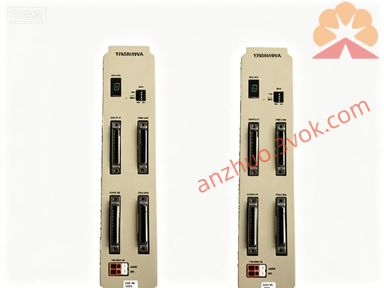
CACR-SR20BB1AF-Y303
1. Product Introduction
CACR-SR20BB1AF-Y114303 is a high-performance AC servo drive belonging to the Yaskawa VS-800 series, also known as Yasnac AC ServoPack. It is well-recognized for its robust performance, stable operation, and high reliability, specifically designed for precision motion control applications in industrial automation fields such as semiconductor wafer factories, DRAM plants, IC manufacturing facilities, CNC machine tools, automated production lines, and precision processing equipment, and CNC robotics[3]. This servo drive adopts a practical hardware structure, supports analog input signals, and features factory-customized parameters and I/O logic (identified by the -Y114303 suffix). It enables seamless compatibility with various control systems to meet the requirements of high-precision and high-dynamic-response operation scenarios, and is widely used in industrial automation due to its durable design and flexible adaptability. Notably, this model has been discontinued by the manufacturer but is still available as a refurbished productis available in both new and refurbished versions in the market, with corresponding warranty services in the marketprovided by professional suppliers[2]. Unlike standard models, CACR-SR20BB1AF-Y114303 is a customized version with fixed parameters, suitable for specific industrial motion control needs, and boasts high reliability after strict quality control and testing[1].
Description
1. Product Introduction
CACR-SR20BB1AF-Y114303 is a high-performance AC servo drive belonging to the Yaskawa VS-800 series, also known as Yasnac AC ServoPack. It is well-recognized for its robust performance, stable operation, and high reliability, specifically designed for precision motion control applications in industrial automation fields such as semiconductor wafer factories, DRAM plants, IC manufacturing facilities, CNC machine tools, automated production lines, and precision processing equipment, and CNC robotics[3]. This servo drive adopts a practical hardware structure, supports analog input signals, and features factory-customized parameters and I/O logic (identified by the -Y114303 suffix). It enables seamless compatibility with various control systems to meet the requirements of high-precision and high-dynamic-response operation scenarios, and is widely used in industrial automation due to its durable design and flexible adaptability. Notably, this model has been discontinued by the manufacturer but is still available as a refurbished productis available in both new and refurbished versions in the market, with corresponding warranty services in the marketprovided by professional suppliers[2]. Unlike standard models, CACR-SR20BB1AF-Y114303 is a customized version with fixed parameters, suitable for specific industrial motion control needs, and boasts high reliability after strict quality control and testing[1].
2. Key Specifications
2.1 Electrical Specifications
• Rated Output Power: 4.0kW (4000W)
• Input Voltage: 380V AC (3-phase, 50/60Hz)
• Input Type: Analog signal
• Operating Voltage Type: AC
• Rated Output Voltage: 200V AC
• Rated Output Current: 20A (RMS)
• Control Modes: Position control, speed control, torque control
• Encoder Compatibility: Compatible with high-precision incremental encoders
• Encoder Input Resolution: 17-bit
• Maximum Speed: 3000rpm
• Acceleration/Deceleration Time: 0.5/0.5s (continuous type)
• Position Accuracy: ±5 pulse equivalent
• Repeat Positioning Accuracy: ±3 pulse equivalent[1]
2.2 Environmental & Physical Specifications
• Operating Temperature Range: -10~50°C (non-condensing)[1]
• Storage Temperature Range: -10~50°C (non-condensing)
• Operating Humidity: 80% (non-condensing)
• Storage Humidity: 80% (non-condensing)
• Maximum Operating Altitude: 1000 meters above sea level
• Protection Grade: IP20 (standard)[1]
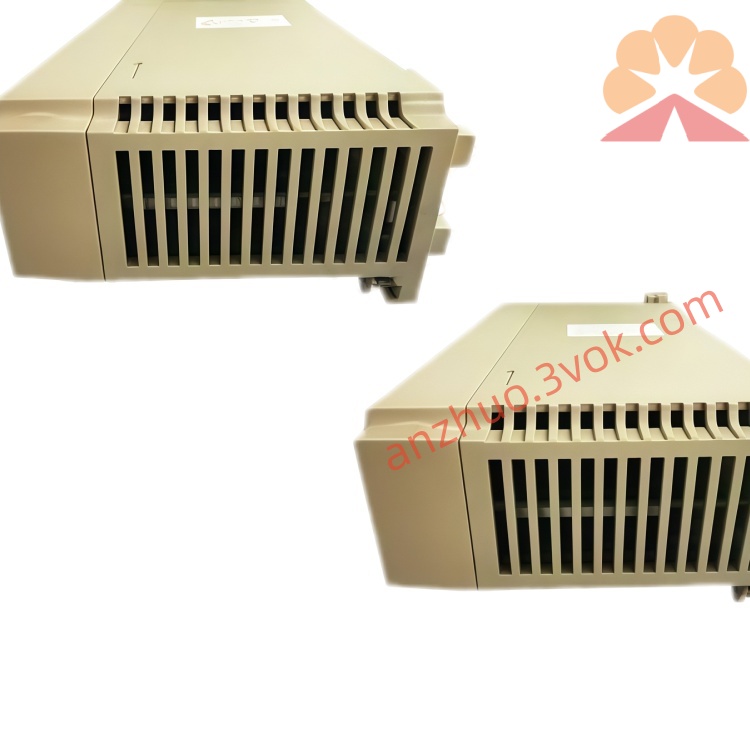
• Cooling Method: Natural cooling[1]
• Dimensions: Practical installation dimensions may vary, refer to detailed manual
• Shipping Weight: 10 lbs (approximately 4.54kg)[2]
• Installation Orientation: Vertical installation recommended
2.3 Performance Characteristics
• Overload Characteristics: Adapt to sudden load changes with stable performance
• Heat Dissipation: Natural cooling design, ensuring stable operation within the operating temperature range[1]
• Compatibility: Supports analog input signals, compatible with various industrial control systems, and adopts standard interfaces and communication protocols for easy integration[1]
• Durability: Sturdy build,经过 strict quality control and testing, suitable for long-term continuous operation in industrial environments[1]
• Fault Diagnosis: Equipped with basic fault monitoring function, facilitating quick troubleshooting
• Cost-Effectiveness: High performance-price ratio, able to meet the needs of various application scenarios[1]
3. Installation & Wiring
3.1 Installation
Install the servo drive vertically in a control cabinet, leaving no less than 50mm clearance on all sides to ensure effective heat dissipation. The installation environment should be clean and dry, free from dust, oil fumes, corrosive gases, and excessive vibration to ensure stable operation of the equipment. Avoid installation in areas with direct sunlight or extreme temperature changes, and ensure the installation surface is flat and firm to reduce vibration impact during operation.
3.2 Simplified Wiring
Follow the correct sequence when wiring: first, connect the motor U/V/W and encoder cable to the corresponding interface (refer to the official wiring diagram for interface designation), ensuring correct wiring to avoid signal loss or equipment damage; then, connect analog control signals to the input interface, ensuring the signal line is a shielded twisted-pair cable to reduce electromagnetic interference; finally, connect the 3-phase 380V AC power supply to the R/S/T terminals and reliably ground the drive, ensuring the ground resistance is no more than 10Ω. Note that power cables with a cross-sectional area of no less than 4mm² should be used for the main circuit, and shielded twisted-pair cables should be used for signal cables to comply with relevant electromagnetic radiation regulations. Before formal operation, check the wiring point by point and conduct step-by-step debugging according to the debugging outline to ensure correct wiring and normal system operation. Since it is a customized version with fixed I/O logic, do not use standard I/O wiring diagrams.
4. Basic Operation
4.1 Panel Button Functions
The core buttons on the CACR-SR20BB1AF-Y114 panel include MODE, SET, ↑/↓, and RUN/STOP. The MODE button switches between monitoring and fault modes; the SET button confirms operations and accesses related settings; the ↑/↓ buttons adjust parameter values or switch monitoring items; the RUN/STOP button starts or stops local jog operation. This servo drive is equipped with basic fault monitoring functions, which can real-time monitor parameters such as current and temperature to warn of potential faults. Most alarm and error issues can be initially resolved by resetting parameters, resetting the drive, or re-powering it, but complex faults should be referred to professional technical support. For detailed button operations and parameter settings, refer to the official bulletin for the Yaskawa CACR-SR20BB series. Note that this is a customized version with factory-locked parameters, which can only be viewed but not arbitrarily modified.
4.2 Common Operations
For local jog operation: press the MODE button to select "JOG" mode, press SET to confirm, then use the ↑/↓ buttons to control the motor to jog forward or backward, and press STOP to end the operation. For monitoring: press the MODE button to switch and check real-time data such as motor speed, output current, and fault codes. For parameter operation: press the MODE button, enter the default password 0000, and press SET to access the parameter interface. As a -Y114 customized version, CACR-SR20BB1AF-Y114 has factory-locked parameters—they can only be viewed, not arbitrarily modified, to avoid equipment failure. After completing basic debugging, gradually conduct semi-automatic and automatic operation tests, observe multiple working cycles, and ensure the system operates continuously and correctly.
5. Common Faults & Solutions
When the servo drive malfunctions, a corresponding alarm code will be displayed on the panel. For detailed alarm code explanations and troubleshooting methods, refer to the official bulletin for the Yaskawa CACR-SR20BB series, which includes a complete troubleshooting guide. Common fault handling methods are as follows:
• Overcurrent (Alarm Code A.10): Power off the drive for 5 minutes, check for motor short circuits, incorrect wiring, or excessive load, and restart the drive after troubleshooting.
• Overvoltage (Alarm Code A.31): Check if the input power voltage is too high and inspect the regenerative resistor for open circuits.
• Overtemperature (Alarm Code A.40): Clean the fan filter to ensure normal fan operation and reduce the load if necessary.
• Encoder Error (Alarm Code A.80): Check if the encoder cable is broken or loosely connected, and reconnect or replace the cable if needed.
If the fault cannot be resolved with the above methods, contact professional technical support or the manufacturer for repair services, and avoid forced operation to prevent secondary equipment damage.
6. Safety & Maintenance
High voltage hazard: the drive’s terminals still carry high voltage for 5 minutes after power off—do not touch the terminals during this period to avoid electric shock. For daily maintenance: check the fan operation status and panel alarm information daily; clean the fan filter weekly to prevent dust blockage that affects heat dissipation; tighten terminal screws monthly to avoid loose connections, and do not loosen the fixed screws of the components, especially the screws with red marks. When replacing the drive, only use the same model (CACR-SR20BB1AF-Y114)—do not use other models or customized versions, and do not arbitrarily modify the firmware or parameters without professional guidance to prevent equipment malfunction. This 4.0kW servo drive is widely used in industrial automation fields such as CNC machine tools, precision processing, packaging equipment, and CNC robotics; proper installation, operation, and maintenance can effectively extend its service life. For hardware-related faults or advanced parameter settings, contact professional maintenance personnel or the manufacturer. Since this model has been discontinued[2], refurbished models are mainly available in the market, covered by a limited warranty (usually 6 months), and repair, exchange, and evaluation services are available from professional servo drive service providers.
7. Supplementary Information
• Manufacturer: Yaskawa Electric Co.
• Product Line: Servopack (VS-800 series)
• Discontinuation Status: This model has been discontinued by the manufacturer[2]
• Warranty: Refurbished products come with a 6-month limited warranty (varies by supplier); new products are no longer available.
• Documentation: Detailed operation and maintenance guidelines can be downloaded from the official website or relevant service platforms, including the 81-page bulletin for the Yaskawa CACR-SR20BB series.
• Application Scenarios: CNC machine tools, industrial automation production lines, precision processing equipment, CNC robotics, axis controller applications, and other fields requiring precise motion control[3].
• Supplementary Advantages: High reliability, easy integration, and high cost-effectiveness[1].
Get a Quote