
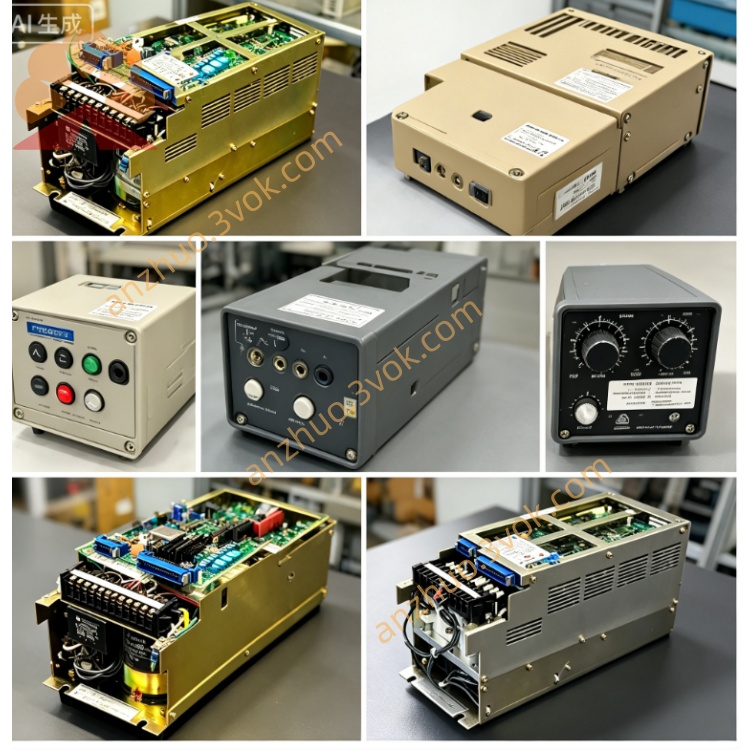
JANCD-GMM22
Description
I. Basic Specifications
Model: JANCD-GMM22
Type: 32-bit high-performance main CPU + large-capacity program/data memory board
Compatible systems: YASNAC 3000G (high-end model), 2000G (compatible expansion configuration)
Power supply: DC5V (direct supply from the back panel, power consumption approximately 35W)
Form: Full-length industrial board card, gold finger slots (Slot1 main slot)
Temperature: Working 0℃~+55℃; Storage -25℃~+85℃
Humidity: 30%~95% RH (no condensation)
Memory: Program storage 1MB, data / tool compensation storage 256KB
Maximum number of linked axes: Up to 8 axes linkage (supports multi-channel, complex surface processing)
II. Interfaces and Indicators
CN1: System bus (connects GMR22/GMR24 graphics board, GRT01 display IO board, high-speed transmission)
CN2: Axis control bus (connects servo amplifier/axis card, 8 axes, supports high-speed servo communication)
CN3: MDI / panel interface (key scanning, high-resolution display data interaction)
CN4: RS-232C serial port (DNC program transmission, maximum 19.2kbps) + expansion communication (optional)
Indicators:
PWR: Power normal (always on)
RUN: System running (1Hz flashing, fast flashing when under heavy load)
ALM: System alarm (always on / flashing, includes axis / communication / memory alarms)
MEM: Memory read/write (high-frequency flashing, dense when loading large programs)
III. Core Functions (enhanced compared to GMM11/GMM12)
Program execution: High-speed G/M/T code parsing, complex straight line / arc interpolation, 8-axis linkage + multi-channel trajectory planning (supports 5-axis linkage processing)
Memory management: 1MB large-capacity part program storage, 256KB parameters / tool compensation / macro program storage (supports extremely large processing programs)
Display control: Sends high-resolution coordinates, 3D tool trajectory, complex graphic data to GMR24, supports dynamic simulation
IO scheduling: Enhanced IO processing, fast response to machine emergency stop, limit, multiple sets of relay output, suitable for high-load scenarios
Communication: High-speed RS-232C DNC transmission, external device data interaction, system deep diagnosis monitoring, supports online debugging and remote monitoring
IV. Differences from GMM11/GMM12
GMM11: Basic model, 256KB memory, 4-axis linkage, compatible with 2000G standard model
GMM12: Mid-range model, 512KB memory, 6-axis linkage, compatible with 2000G/3000G universal model
GMM22: High-end model, 1MB memory, 8-axis linkage, enhanced computing speed + anti-interference ability + graphic processing ability, compatible with 3000G high-end (high-end multi-axis machine tool)
V. Installation and Maintenance
Installation: Control cabinet back panel Slot1 (main slot), push vertically and lock, align gold fingers (needs to match GMR24)
Wiring: Back panel DC5V power supply; CN1–CN4 away from power lines / frequency converters, it is recommended to use separate shielding wiring to avoid electromagnetic interference
Maintenance: Regular dust blowing, clean gold fingers; Back up parameters / programs every 3 months (built-in large-capacity CR2032 battery, longer battery life)
Faults:
No display: GMM22 not started, CN1 bus loose, power supply abnormal (need to check the stability of the back panel DC5V)
Program loss: Memory battery failure (replace CR2032, recommend using high-capacity model) Axis stationary: CN2 axis control bus failure, servo communication mismatch (please confirm that the servo model is compatible with GMM22)
High frequency alarms: Chip aging, cache error, incompatible with GMR22 (low-end graphics board) version (it is recommended to pair with GMR24)
Get a Quote