
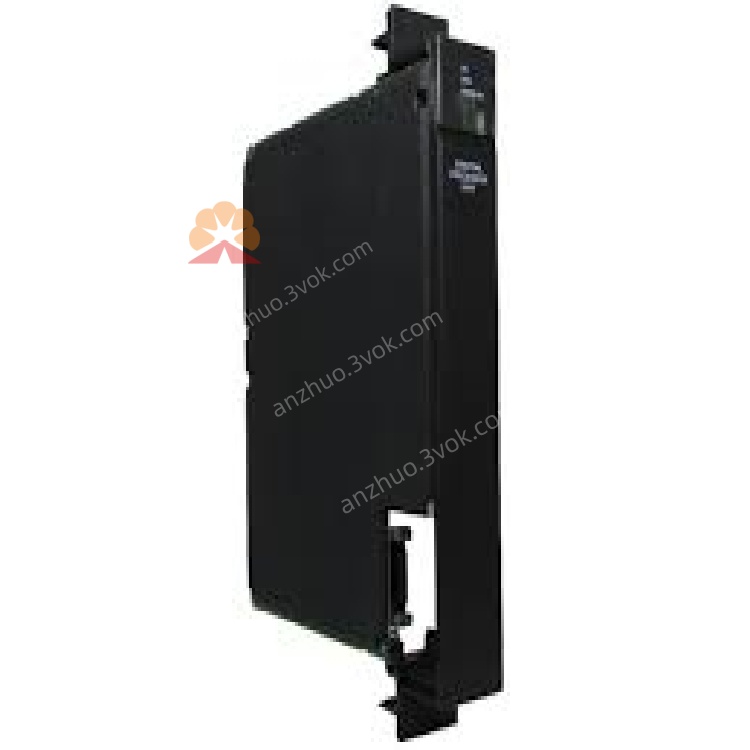
GE Fanuc IC697CPM790 Series 90-70 High Performance CPU Module
Description
Product Specification: GE Fanuc IC697CPM790
1. Product Identification
Manufacturer: GE Fanuc (Emerson Automation Solutions)
Part Number: IC697CPM790
Product Series: Series 90-70
Product Type: High-Performance Central Processing Unit (CPU) Module
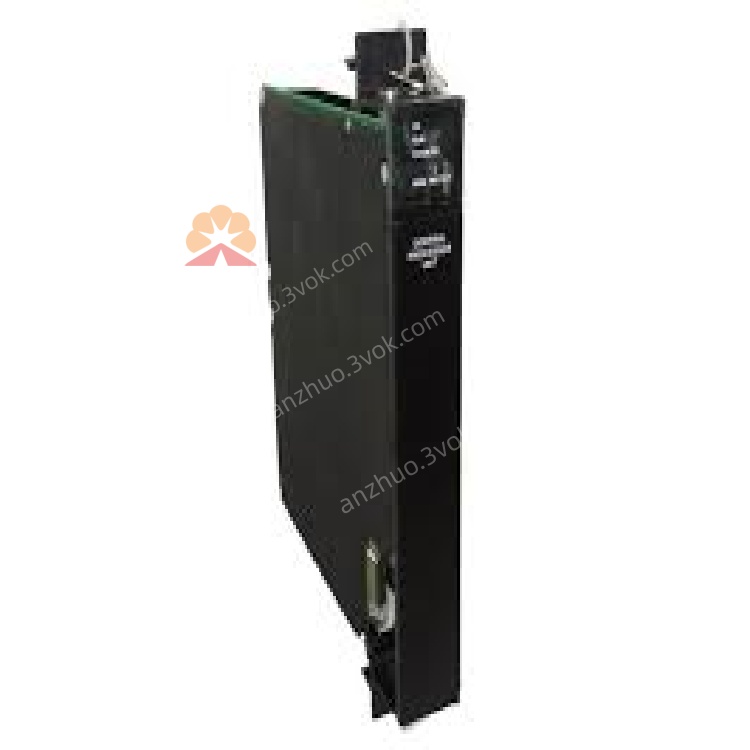
Form Factor: Single-slot, rack-mounted module for Series 90-70 PLC chassis
2. General Description
3. Core Technical Specifications
3.1 Processor & Performance
Processor: Intel 80486DX2 microprocessor
Clock Speed: 64 MHz
Floating-Point Unit: Integrated 32-bit FPU for high-precision mathematical computations
Execution Speed: 0.4 microseconds per Boolean instruction
Architecture: 32-bit internal data path
3.2 Memory Configuration
Battery-Backed SRAM: 1 MByte (non-volatile memory retention)
User Application Memory: 512 KBytes (dedicated for user logic/programs)
Flash Memory: Onboard flash for operating system firmware storage
Real-Time Clock (RTC): Battery-backed calendar/clock with ±3.5 seconds/day accuracy
Memory Protection: Key-lock and software-protected memory for security
3.3 Input/Output (I/O) Capabilities
Discrete I/O (Simplex Mode): Up to 12,000 I/O points (any mix of inputs/outputs)
Discrete I/O (Voted/TMR Mode): Up to 2,048 inputs and 2,048 outputs
Analog I/O (Simplex Mode): Up to 8,192 input words and 8,192 output words
Analog I/O (Voted/TMR Mode): Up to 1,024 input words
Supported I/O Families: IC697 (local), IC660/IC661 (remote I/O)
3.4 Communication Interfaces
Serial Port: (1) 15-pin D-sub port, RS-485/RS-422 compatible
Supported Protocols: SNP, Modbus RTU (Master/Slave), ASCII
Backplane Bus: VME C.1 standard high-speed backplane interface
Expansion Compatibility: Supports LAN interfaces, coprocessors, and I/O link modules
4. Physical & Environmental Specifications
Dimensions: 12.7 cm (W) x 23.4 cm (D) x 3.8 cm (H)
Weight: Approx. 1.8 kg (4.0 lbs)
Power Requirements: +5 VDC @ 3.3 A (nominal current draw)
Operating Temperature: 0°C to +60°C (32°F to 140°F)
Storage Temperature: -20°C to +85°C
Relative Humidity: 5% to 95% (non-condensing)
Indicators: (4) Front-panel status LEDs for system monitoring
Controls: 3-position RUN/STOP/REMOTE mode switch
5. Key Features & Advantages
Triple Modular Redundancy (TMR): Native support for fault-tolerant TMR systems, ensuring uninterrupted operation in safety-critical scenarios.
High-Speed Processing: 64 MHz processor delivers rapid execution for complex control algorithms.
32-Bit Floating-Point Math: Enables precise engineering calculations, PID loops, and process analytics.
Non-Volatile Memory: 1 MB battery-backed RAM preserves user programs and critical data during power loss.
Single-Slot Design: Compact footprint optimizes rack space and simplifies system configuration.
Software Configuration: Fully configurable via software; no DIP switches or jumpers.
Built-in Diagnostics: Automatic configuration verification and fault reporting for proactive maintenance.
Secure Operation: Password protection and physical key-lock for memory/program security.
6. Software & Programming
Programming Languages:
Ladder Diagram (LD)
Structured Text (ST)
Function Block Diagram (FBD)
Sequential Function Chart (SFC)
Standalone C Language (required for TMR functions)
Programming Software: Compatible with Windows and MS-DOS based programming packages
Firmware Updates: Flash memory allows field-upgradable firmware via serial port
7. Typical Applications
Safety Instrumented Systems (SIS): Emergency Shutdown (ESD) systems
Fire & Gas Detection & Control
High-Availability Process Control
Oil & Gas pipeline and refinery automation
Power generation and distribution
Chemical and pharmaceutical manufacturing
Critical infrastructure control
High-integrity test & measurement systems
8. Reliability & Compliance
Designed for 24/7 operation in harsh industrial environments
Conforms to VMEbus C.1 backplane standards
Comprehensive fault detection and alarm handling
Lithium battery backup for RAM and RTC (typically 5-year life)
2. General Description

3. Core Technical Specifications
3.1 Processor & Performance
Processor: Intel 80486DX2 microprocessor
Clock Speed: 64 MHz
Floating-Point Unit: Integrated 32-bit FPU for high-precision mathematical computations
Execution Speed: 0.4 microseconds per Boolean instruction
Architecture: 32-bit internal data path
3.2 Memory Configuration
Battery-Backed SRAM: 1 MByte (non-volatile memory retention)
User Application Memory: 512 KBytes (dedicated for user logic/programs)
Flash Memory: Onboard flash for operating system firmware storage
Real-Time Clock (RTC): Battery-backed calendar/clock with ±3.5 seconds/day accuracy
Memory Protection: Key-lock and software-protected memory for security
3.3 Input/Output (I/O) Capabilities
Discrete I/O (Simplex Mode): Up to 12,000 I/O points (any mix of inputs/outputs)
Discrete I/O (Voted/TMR Mode): Up to 2,048 inputs and 2,048 outputs
Analog I/O (Simplex Mode): Up to 8,192 input words and 8,192 output words
Analog I/O (Voted/TMR Mode): Up to 1,024 input words
Supported I/O Families: IC697 (local), IC660/IC661 (remote I/O)
3.4 Communication Interfaces
Serial Port: (1) 15-pin D-sub port, RS-485/RS-422 compatible
Supported Protocols: SNP, Modbus RTU (Master/Slave), ASCII
Backplane Bus: VME C.1 standard high-speed backplane interface
Expansion Compatibility: Supports LAN interfaces, coprocessors, and I/O link modules
4. Physical & Environmental Specifications
Dimensions: 12.7 cm (W) x 23.4 cm (D) x 3.8 cm (H)
Weight: Approx. 1.8 kg (4.0 lbs)
Power Requirements: +5 VDC @ 3.3 A (nominal current draw)
Operating Temperature: 0°C to +60°C (32°F to 140°F)
Storage Temperature: -20°C to +85°C
Relative Humidity: 5% to 95% (non-condensing)
Indicators: (4) Front-panel status LEDs for system monitoring
Controls: 3-position RUN/STOP/REMOTE mode switch
5. Key Features & Advantages
Triple Modular Redundancy (TMR): Native support for fault-tolerant TMR systems, ensuring uninterrupted operation in safety-critical scenarios.
High-Speed Processing: 64 MHz processor delivers rapid execution for complex control algorithms.
32-Bit Floating-Point Math: Enables precise engineering calculations, PID loops, and process analytics.
Non-Volatile Memory: 1 MB battery-backed RAM preserves user programs and critical data during power loss.
Single-Slot Design: Compact footprint optimizes rack space and simplifies system configuration.
Software Configuration: Fully configurable via software; no DIP switches or jumpers.
Built-in Diagnostics: Automatic configuration verification and fault reporting for proactive maintenance.
Secure Operation: Password protection and physical key-lock for memory/program security.
6. Software & Programming
Programming Languages:
Ladder Diagram (LD)
Structured Text (ST)
Function Block Diagram (FBD)
Sequential Function Chart (SFC)
Standalone C Language (required for TMR functions)
Programming Software: Compatible with Windows and MS-DOS based programming packages
Firmware Updates: Flash memory allows field-upgradable firmware via serial port
7. Typical Applications
Safety Instrumented Systems (SIS): Emergency Shutdown (ESD) systems
Fire & Gas Detection & Control
High-Availability Process Control
Oil & Gas pipeline and refinery automation
Power generation and distribution
Chemical and pharmaceutical manufacturing
Critical infrastructure control
High-integrity test & measurement systems
8. Reliability & Compliance
Designed for 24/7 operation in harsh industrial environments
Conforms to VMEbus C.1 backplane standards
Comprehensive fault detection and alarm handling
Lithium battery backup for RAM and RTC (typically 5-year life)
Get a Quote