
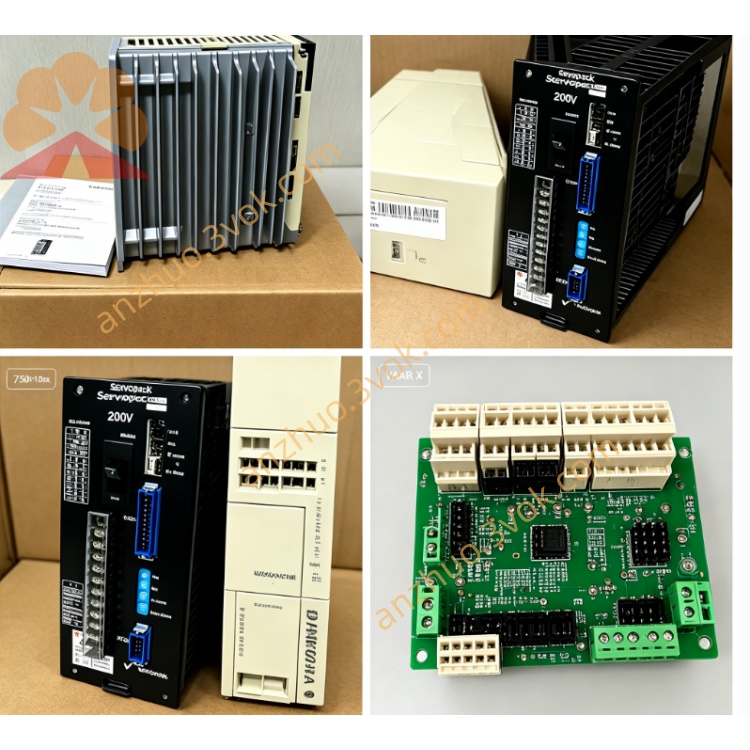
DF9200840-B0 Product Technical Specification
Description
DF9200840-B0 Product Technical Manual
Manufacturer: Yaskawa
Model: DF9200840-B0
Board Code: JANCD – YEN20 (REV.B)
Type: Robot Controller Ethernet / Fieldbus Communication Board
Applicable System: Yaskawa Motoman DX100 / DX200 Robot Controller
I. Product Overview
DF9200840-B0 (JANCD-YEN20) is a high-performance Ethernet and fieldbus communication interface board specifically designed for the DX100/DX200 controller. As the core network communication component of the controller, it is responsible for high-speed data interaction between the robot and the upper computer, PLC, HMI, robot group, and industrial Ethernet / fieldbus devices. B0 is the stable hardware revision version (REV.B), supporting standard industrial Ethernet protocols and multiple fieldbus expansions, and is a key communication module for the networked, intelligent, and production line integrated system of the DX100/DX200 system.
II. Physical Specifications
Board Type: Standard 6U VME Industrial Communication Board
Size: Approximately 233mm × 160mm × 20mm
Weight: Approximately 0.65kg
Core Components
Specialized Network Processor (ASIC)
128MB Cache Memory
Hardware Protocol Accelerator
Optical Isolation Interface Circuit
External Interfaces (Panel)
CN1: Ethernet RJ45 (10/100/1000Mbps Auto-Sensing)
CN2: Fieldbus Expansion Interface (DeviceNet/EtherNet/IP Optional)
CN3: RS-232C Debug Serial Port
LED Status Lights: PWR, LINK, ACT, ERR, RUN, BUS
Process Characteristics
8-layer Industrial PCB, Gold Plating Process
Whole Board Three-Protect Coating (Dust-proof, Moisture-proof, Salt Spray-proof)
Industrial-grade Components (-25℃~+75℃)
EMI/EMC Grade 4 Anti-interference (Compliant with IEC 61000-6-2/4)
Port Electrostatic Protection (±15kV ESD)
III. Version and Compatibility
Version Evolution
DF9200840-B0 (JANCD-YEN20 REV.B): Standard Production Version (Standardly equipped for DX100/DX200)
DF9200840-A0: Early Prototype Version (Out of Production, B0 Completely Replaces)
DF9200840-C0: Next Generation Upgrade Version (Compatible with B0, New Profinet Protocol Added)
Applicable Controllers
DX100: Fully Compatible (Native Support, Plug and Play)
DX200: Fully Compatible (Native Support, Plug and Play)
YRC1000: Incompatible (New Bus Architecture)
Replacement Relationship
B0 ↔ C0: Hardware Compatible, Can Be Directly Interchanged (C0 Protocol More Comprehensive)
B0 ↔ A0: B0 Can Replace A0, A0 Cannot Replace B0 (B0 Has Stronger Performance)
IV. Core Functional Characteristics
1. Ethernet Communication (Main Function)
Protocol Support
TCP/IP: Standard Ethernet Communication (Remote Programming, Monitoring, File Transfer)
EtherNet/IP: Industrial Ethernet (High-speed Interconnection with Rockwell PLC)
Modbus TCP: General Industrial Protocol (Data Acquisition, I/O Mapping)
FTP/HTTP: File Transfer, Web Monitoring
Socket Communication: Custom Protocol (Upper Computer / Vision System Integration)
Communication Performance
Rate: 10/100/1000Mbps Auto-Sensing
Response time: <5ms (real-time data interaction)
Number of connections: Maximum 32 TCP connections
Data throughput: 100Mbps line rate
2. Fieldbus expansion
DeviceNet: Supported (slave mode, baud rate 125kbps~500kbps)
Profibus-DP: Optional expansion (slave mode, 12Mbps)
CC-Link: Optional expansion (slave mode, 10Mbps)
IO mapping: Maximum 1024 points of input / 1024 points of output (remote I/O expansion)
3. Robot system functions
Remote control: Upper computer / PLC remote start, stop, program call
Data acquisition: Real-time acquisition of robot position, speed, torque, I/O status, alarm information
Program management: Remote upload / download of robot programs, parameter backup / restoration
Multi-machine group control: Supports 8 robot networking collaboration (master-slave control, synchronous movement)
Safety communication: High-speed transmission of safety signals (emergency stop, safety door) (<1ms)
4. Diagnosis and maintenance
Real-time diagnosis: Port status, link quality, protocol error, communication failure
Fault log: Stores 1000+ communication failure records (timestamp + code + reason)
LED indication: Intuitively displays power, connection, activity, error, operation, bus status
Firmware upgrade: Supports CF card / Ethernet online upgrade (rollback supported)
5. Electrical parameters
Power supply
Input: 5VDC ±5% (VME backplane power supply)
Power consumption: Approximately 12W
Environmental parameters
Operating temperature: 0°C ~ +60°C
Storage temperature: -40°C ~ +85°C
Humidity: 5%~95% RH (no condensation)
Vibration: 10~500Hz, 1.5G (IEC 60068-2-6)
Impact: 15G, 11ms (IEC 60068-2-27)
6. LED status indication
PWR (green): 5V power supply normal (always on)
LINK (green): Ethernet physical connection (always on = connected)
ACT (yellow): Data transmission (flashes = active)
RUN (green): System running (1Hz flashing)
BUS (yellow): Fieldbus activity (flashes)
ERR (red): Fault alarm (always on = hardware failure, flashing = protocol failure)
7. Installation and configuration
Installation: Power off and insert DX100/DX200 controller VME bus expansion slot
Hardware settings
No hardware jumpers (full software configuration)
Ethernet IP address: Teaching device / software setting
Software configuration
Teaching device: System → Communication settings → Ethernet / Fieldbus
Configuration items: IP, subnet, gateway, protocol selection, IO mapping
Start verification
Power-on self-check → Port initialization → Protocol loading → Enter ready state
Verification: LINK always on, RUN flashes, communication normal
8. Typical applications
DX100/DX200 robot Ethernet communication module
Production line automation: Robot and PLC (Siemens, Mitsubishi, Omron) networking
Intelligent factory: MES/ERP system data acquisition and monitoring
Multi-machine collaboration: Robot group, synchronous control, tool changer linkage
Vision integration: High-speed communication with machine vision system (Cognex, Keyence)
Remote operation: Remote programming, fault diagnosis, program update
Get a Quote