
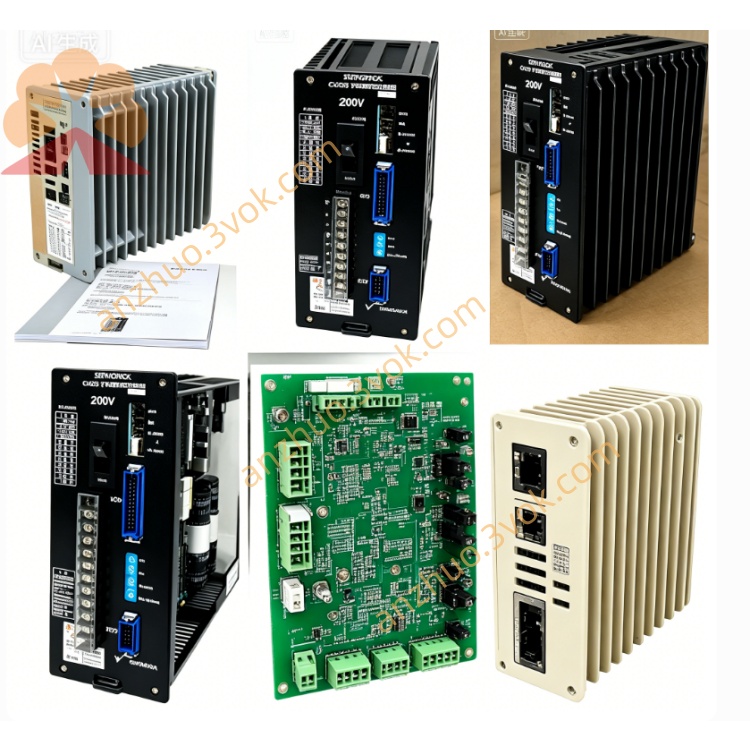
DF9200745-A0 Product Technical Manual
Description
DF9200745-A0 Product Technical Manual
Manufacturer: Yaskawa
Model: DF9200745-A0
Board Code: JANCD-CP11 (REV.E)
Type: Robot Controller CPU Motherboard / Central Processing Board
Applicable System: Yaskawa Motoman DX100 Robot Controller
I. Product Overview
DF9200745-A0 (JANCD-CP11) is the core CPU motherboard of the Yaskawa DX100 robot controller, responsible for the operation, logic processing, motion planning, and bus communication of the entire control system. As the "brain" of the controller, it manages the servo of the robot body, external axes, I/O signals, and safety circuits, and is the core hardware of the DX100 system. A0 is the basic production version, and REV.E is the hardware revision version.
II. Physical Specifications
Board Type: Standard 6U VME Industrial Main Control Board
Size: Approximately 233mm × 160mm × 25mm
Weight: Approximately 0.75kg
Core Components
Main Processor: High-performance RISC CPU
Memory: Standard 256MB DRAM + 64MB Flash ROM
System Clock: Hardware real-time clock (RTC) with battery backup
Interface Layout
VME System Bus Interface (communicates with the controller's back panel)
CN1: Teaching Pendant Interface (connects to the DX100 teaching pendant)
CN2: Ethernet Interface (TCP/IP, used for programming / monitoring)
CN3: USB 2.0 Interface (program / parameter backup)
CN4: CF Card Slot (system software, parameter storage)
CN5: Serial Port (RS-232C, equipment debugging)
LED: PWR, RUN, COM, ALM, BAT
Process
10-layer industrial PCB, gold plating process
Whole board three-proof coating (anti-dust, anti-humidity, anti-corrosion)
Wide temperature industrial-grade components (-40℃~+85℃)
Anti-interference design (complies with EMC industrial grade 4 standard)
III. Version and Compatibility
Version Evolution
DF9200745-A0 (JANCD-CP11 REV.E): Basic stable version (standard for DX100)
DF9200745-A1: Hardware optimization version (compatible with A0, improves computing performance)
Applicable Controllers
DX100: Fully compatible with all series (native support, plug and play)
DX200: Incompatible (hardware architecture and bus protocol are different)
YRC1000: Incompatible (new generation controller architecture)
Replacement Relationship
A0 ↔ A1: Hardware fully compatible, can be directly interchanged
With other CPU boards (such as DF9200742-A0): Not interchangeable
IV. Core Functional Characteristics
1. Control and Computing Capability
Main Controller: Central computing unit of the DX100 system
Control Axes: 6 axes of the robot body + 3 axes of external axes (total 9 axes synchronized control)
Motion Planning: 64-bit floating-point operation, supports straight line, circular arc, S-curve interpolation
Control Cycle: 0.5ms~1ms (motion control / servo refresh)
Program Storage: Maximum 512MB (CF card expansion)
Multi-task Processing: Can run 32 tasks simultaneously (main program + sub-program + background task)
2. Communication and Interfaces
Ethernet: 10/100Mbps TCP/IP (remote programming, monitoring, data acquisition)
Field Bus: Supports Profibus-DP, DeviceNet, EtherNet/IP (extension) Teaching device communication: High-speed dedicated bus (response time < 5ms)
Data backup: USB/CF card support for program, parameters, and log backup / restoration
Serial communication: RS-232C (for communication with the host computer / sensors)
3. System management functions
System self-check: Power-on full hardware diagnosis (CPU, memory, I/O, bus)
Fault diagnosis: Real-time monitoring, precise location of over 1000 fault codes
Safety monitoring: Integrated safety circuit monitoring (emergency stop, safety door, STO)
Parameter management: Servo parameters, axis parameters, safety parameters, I/O configuration
Firmware update: Supports CF card / USB online system upgrade
V. Electrical parameters
Power supply
System power: 5VDC ± 5% (VME backplane, approximately 2.5A)
Auxiliary power: 3.3VDC ± 5% (internal logic, approximately 1.0A)
Total power consumption: approximately 15W Environment
Operating temperature: 0°C ~ +55°C
Storage temperature: -20°C ~ +70°C
Humidity: 5%~90% RH (no condensation)
Vibration: 10~50Hz, 9.8m/s² (IEC 60068-2-6)
Six. LED Status Indicators
PWR (green): 5V power supply is normal (always on)
RUN (green): System is running (1Hz flashing)
COM (green): Bus communication is normal (fast flashing)
ALM (red): System failure (always on = hardware failure, flashing = software failure)
BAT (green): Battery voltage is normal (always on), flashing = low battery voltage
Seven. Installation and Configuration
Installation: Power off and insert into DX100 VME main CPU slot (the only designated slot)
Grounding: Controller safety grounding ≤ 1Ω
Battery replacement: Replace the 3.6V lithium battery within 5 minutes of power off (save system parameters)
System startup
Power on automatically loads CF card system software
Hardware self-check → System initialization → Enter standby mode Configuration
Teaching device settings: axis parameters, servo gains, safety configuration
Program backup / restoration, firmware upgrade, network settings
VIII. Typical Applications
Core computing unit of DX100 controller
Robot control for arc welding, spot welding, handling, and spraying
Synchronous control of 3 external axes (tool changer, traveling axis)
Central control system of industrial robot workstation
Get a Quote