
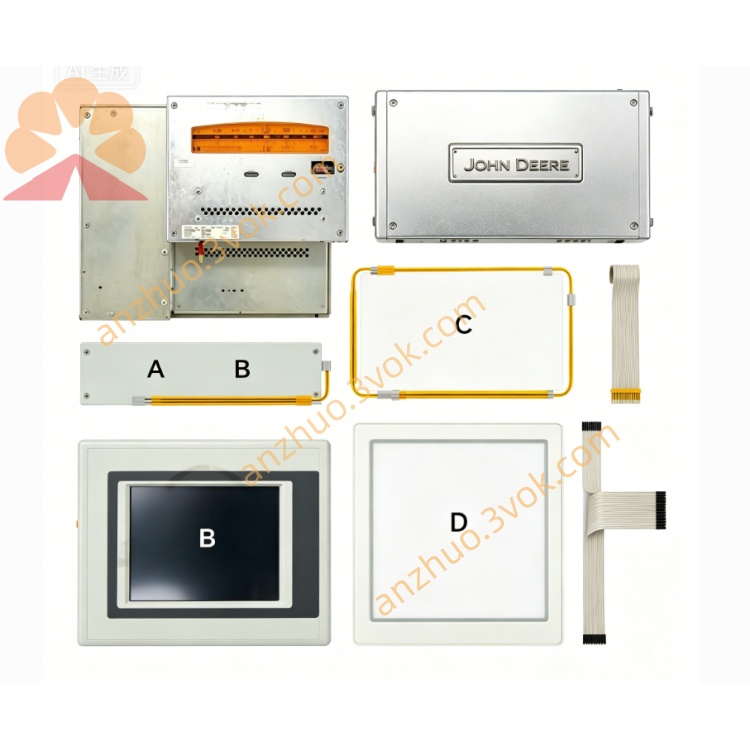
B&R 7CP474.60-2 Compact CPU Module
7CP474.60-2 is a compact high-performance master CPU belonging to B&R System 2003 PCC modular industrial control platform, manufactured in Austria in compliance with European EN industrial quality and safety standards. Designed with a streamlined compact form factor for standard DIN rail rack installation, it acts as the central master computing and scheduling unit for the entire control rack. It handles full tasks including user application program execution, sequential logic interlock control, PID closed-loop process regulation, multi-axis motion interpolation, high-speed encoder counting calculation, internal backplane bus master management and external fieldbus network coordination. This compact CPU is not a counter, I/O or bus slave expansion module; all core machine control, counting and motion logic run locally within the CPU hardware. The whole System 2003 hardware series has been officially discontinued by B&R. Available stock includes original new surplus compact CPU units and fully performance-validated refurbished spare parts for legacy compact automation cabinet maintenance, partial retrofits and urgent equipment replacement. The module holds CE and UL/cULus global industrial safety certifications, built with reinforced EMC anti-interference circuits to resist electromagnetic noise generated by inverters, servo drives and contactor switching inside compact factory control cabinets.
Description
Product Description of B&R 7CP474.60-2 Compact CPU Module
1. Product Overview
7CP474.60-2 is a compact high-performance master CPU belonging to B&R System 2003 PCC modular industrial control platform, manufactured in Austria in compliance with European EN industrial quality and safety standards. Designed with a streamlined compact form factor for standard DIN rail rack installation, it acts as the central master computing and scheduling unit for the entire control rack. It handles full tasks including user application program execution, sequential logic interlock control, PID closed-loop process regulation, multi-axis motion interpolation, high-speed encoder counting calculation, internal backplane bus master management and external fieldbus network coordination. This compact CPU is not a counter, I/O or bus slave expansion module; all core machine control, counting and motion logic run locally within the CPU hardware. The whole System 2003 hardware series has been officially discontinued by B&R. Available stock includes original new surplus compact CPU units and fully performance-validated refurbished spare parts for legacy compact automation cabinet maintenance, partial retrofits and urgent equipment replacement. The module holds CE and UL/cULus global industrial safety certifications, built with reinforced EMC anti-interference circuits to resist electromagnetic noise generated by inverters, servo drives and contactor switching inside compact factory control cabinets.
2. Compact Mechanical Structure and DIN Rail Installation
This compact CPU uses the unified narrow plug-in mechanical outline exclusive to System 2003 series, fully mechanically compatible with all 7BP DIN rail backplane variants such as 7BP701.1, 7BP702.0, 7BP703.0, 7BP704.0, 7BP707.0, 7BP708.0 and 7BP709.0. Despite its compact size, it must be inserted into the first primary master slot of the backplane, the only position authorized to activate backplane bus master operation. All subsequent rack slots serve as slave expansion positions for pulse counter modules, analog I/O, digital I/O and fieldbus communication modules like 7CM411.70-1. Insertion into any slave expansion slot will cause backplane bus initialization failure, persistent fault alarm and failure to enter RUN operational mode.
An integrated elastic snap lock is molded into the bottom of the compact module shell for fast, secure mounting onto standard 35 mm DIN rails. After horizontal insertion fully into the master slot until the front panel aligns flush with the backplane surface, the snap lock is pressed downward to clamp the compact CPU firmly in place, with no extra fixing brackets or auxiliary mounting hardware required. The outer enclosure is constructed from lightweight flame-retardant reinforced industrial plastic, engineered for impact resistance, low weight and long-term anti-aging performance to fit space-restricted compact cabinet layouts. The protection rating is IP20, meaning installation is restricted solely to sealed indoor electrical control cabinets; exposure to open air, liquid splashes, oil mist or heavy dust accumulation is prohibited.
Multiple compact multi-color LED status indicators are arranged neatly on the slim front panel to display real-time operating conditions: power supply status, RUN/STOP program mode, internal backplane bus communication health, system fault alerts and real-time clock backup power status, supporting rapid on-site diagnosis without external testing instruments. Permanent laser marking is printed on the side of the compact housing, displaying B&R brand logo, complete part number 7CP474.60-2, hardware revision code, unique factory serial number and Austrian production batch data to enable complete end-to-end supply chain traceability and genuine product authentication. The compact mechanical frame meets EN 60068-2-6 vibration and shock resistance standards, capable of enduring continuous vibration from servo spindles, compact conveyor systems and small automated processing machinery over extended production cycles.
3. Electrical Specifications and Power Supply Performance for Compact Operation
The rated operating power input of this compact CPU is 24 V DC, fed uniformly through the backplane internal power bus. The allowable voltage fluctuation range spans 18 V DC to 30 V DC, and no separate high-voltage power feed is needed for the compact CPU core circuitry. Optimized low-power circuit design delivers stable, moderate power consumption, ensuring it does not impose excessive load pressure on dedicated System 2003 rack 24 V DC power supply units, a critical advantage for compact cabinets with limited power dissipation capacity. A small-form-factor replaceable onboard backup battery powers the internal real-time clock circuit, maintaining precise timestamps for counting fault logs, compact production batch records and recipe parameter storage during brief power outages.
As the proprietary System 2003 backplane bus master controller, the compact CPU utilizes differential signal transmission with compact integrated hardware filtering circuits. It performs cyclic polling, task priority allocation and synchronous bidirectional data exchange with every slave expansion module mounted on the same compact rack, including dedicated pulse counter submodules, 7AI analog input submodules, 7AO analog output submodules, digital input and digital output submodules, encoder positioning modules and 7CM fieldbus communication expansion modules represented by 7CM411.70-1. Full galvanic isolation is integrated between the compact CPU core logic and backplane bus signals to eliminate ground loop potential difference interference, a primary source of unstable counting values and distorted pulse data in compact, densely packed cabinet environments with multiple drive units. Multi-layer compact protective circuits are embedded internally, including overvoltage suppression, overcurrent shutdown, reverse polarity prevention and ESD electrostatic protection, preventing permanent circuit damage caused by wiring errors, grid voltage surges and static discharge during installation and maintenance within tight cabinet spaces. All backplane plug contact pins are gold-plated to ensure stable conduction and anti-oxidation performance under long-term vibration and compact heat accumulation conditions.
4. Compact Integrated Interface Layout
A small isolated programming and debugging interface is embedded on the slim front panel of the compact CPU module. This port connects to a PC running licensed B&R Automation Studio software via an official compact dedicated download cable, supporting program upload, program download, online variable monitoring, force-value debugging and project file backup. This programming interface is electrically isolated from both the internal control backplane and external fieldbus networks, so online debugging activities will not disrupt real-time counter pulse data transmission and compact machine control signal stability. The internal backplane bus controller is miniaturized and embedded directly within the compact CPU core chipset, requiring no external bulky auxiliary interface transceivers to facilitate communication between the CPU and rack slave modules.
There are no native physical fieldbus ports built into the compact body of 7CP474.60-2. All external fieldbus connections to servo drives, compact HMIs, remote distributed counter I/O stations and third-party automation controllers must be expanded by installing compatible 7CM communication modules into vacant slave backplane slots. No physical pulse input, digital or analog I/O terminal blocks are present on the compact CPU module itself; all raw encoder pulse signals, digital switching signals and analog measurement signals are collected by independent compact System 2003 I/O and counter slave modules and transmitted to the CPU via the backplane bus for centralized processing.
5. Core Compact CPU Functional Capabilities
5.1 User Program Execution, Counting and Compact Motion Calculation
The compact CPU runs application programs compiled by B&R Automation Studio, covering full-range compact control tasks including sequential interlock logic, safety protection judgment, PID analog closed-loop regulation, small-batch production counting, equipment fault diagnosis arithmetic, high-speed quadrature encoder counting, up/down pulse frequency measurement, real-time position and speed calculation. Onboard non-volatile compact program memory stores compiled user logic code, while independent compact data memory retains runtime variables, machine production recipes, axis home offset parameters, count preset values and historical fault log records timestamped by the hardware real-time clock. It supports high-precision multi-axis interpolation motion control, position/speed/torque closed-loop calculation and coordinated synchronization of multiple compact servo axes based on feedback counting data, optimized for space-saving automated machinery layouts.
5.2 Internal Backplane Bus Master Administration for Compact Racks
It acts as the exclusive master of the System 2003 compact rack backplane bus, uniformly scheduling communication cycles, synchronizing compact counter pulse sampling timing and distributing task operation priorities for every slave expansion module in the rack. It prioritizes high-speed motion counter data refresh cycles above general batch counting signals, delivering precise synchronous coordination of pulse signal collection, analog value acquisition and digital/analog output updating across all compact I/O and counter modules to guarantee consistent timing for compact sequential production actions and rapid safety interlock responses.
5.3 External Fieldbus Network Orchestration for Compact Servo and Counter Systems
Through matched 7CM compact communication expansion modules, the CPU manages all external fieldbus network operations for distributed compact field devices. It generates compact motion commands including target position, speed and acceleration ramps, analog setpoint values and digital switch control signals, then transmits these data frames to field slave hardware such as B&R ACOPOS compact servo drives and small frequency converters. Meanwhile, it receives real-time compact feedback data including actual motor position, operating torque, motor temperature and drive fault codes from field nodes to complete closed-loop motion and compact process control. Multiple isolated fieldbus network segments can be managed simultaneously when several 7CM communication modules are deployed within one compact rack.
5.4 Real-time Compact System Self-monitoring and Safe Fault Response
Continuous real-time self-monitoring tracks compact backplane module presence, backplane bus signal integrity, 24 V power fluctuation, program runtime errors, watchdog timeout events and communication breakdown faults. Upon detection of critical hazardous faults such as counter pulse signal loss, excessive position deviation or servo communication failure, the compact CPU automatically activates preconfigured compact safe-state control routines: stopping all connected servo axes, de-energizing high-risk compact actuators, triggering compact digital alarm outputs and locking unsafe compact machine movement sequences to protect production machinery, small workpieces and operating personnel. All counting and motion fault events are timestamped and saved to internal compact memory for post-failure troubleshooting analysis in space-restricted production cells.
5.5 Miniaturized Real-time Operating System Task Scheduling
The embedded compact real-time operating system delivers stable fixed task cycle precision, enabling parallel high-speed processing of digital interlock logic, analog closed-loop regulation and multi-axis compact motion calculation without signal delay, counting jitter or logic disorder for space-saving automated positioning and processing equipment. All bus communication, compact I/O refresh and motion calculation cycles are precisely synchronized to maintain overall compact system control accuracy within limited cabinet thermal budgets.
6. Environmental Operating Conditions for Compact Cabinet Deployment
The allowable continuous operating ambient temperature range of the compact module is 0 °C to +60 °C, suitable for small compact control cabinet environments of miniature plastic injection molding machines, compact packaging filling production lines, small CNC metalworking equipment, narrow-frame textile winding and drying machinery and compact municipal water treatment regulation cabinets. The temperature range permitted for storage and transportation is from -25 °C to +70 °C. Applicable ambient humidity ranges from 5% to 95% without condensation. Deployment is prohibited in environments with corrosive chemical vapors, persistent high humidity, heavy airborne dust, liquid splashes or flammable and explosive atmospheres; fully sealed compact protective cabinets equipped with compact active heat dissipation fans are mandatory for harsh workshop conditions. Shielded twisted-pair cables with compact outer diameters are required for programming connecting lines, counter pulse wiring and external fieldbus wiring to preserve long-distance communication stability and anti-interference performance within tight cable routing layouts.
7. Compatible System 2003 Compact Hardware Ecosystem
7CP474.60-2 only interoperates with other compact and standard hardware products of the B&R System 2003 series. It is mechanically and electrically incompatible with later B&R platforms including X20, X67, APC and standalone ACOPOS drive controllers, as well as third-party brand compact PLC rack systems. The complete list of fully compatible supporting hardware includes all models of 7BP DIN rail backplanes, 7AF104.7 analog adapter bases paired with 7AI analog input submodules and 7AO analog output submodules, independent System 2003 compact digital input and digital output submodules, dedicated compact pulse counter and positioning signal expansion slave modules, 7CM fieldbus communication expansion modules represented by 7CM411.70-1, 7AC020.9 blank slot protective baffles for unused compact backplane positions and dedicated compact 24 V DC rack power supply units designed exclusively for System 2003 racks. All unoccupied slave slots must be covered with 7AC020.9 blank baffles to stabilize backplane bus impedance, prevent dust and metal debris from corroding compact contact pins and eliminate signal reflection and communication frame loss issues that degrade long-term bus reliability between the compact CPU and expansion modules.
8. Typical Compact Industrial Application Fields
This compact CPU module functions as the space-saving central control core for legacy System 2003 compact automated equipment across discrete manufacturing and light process industries that demand small cabinet footprints alongside encoder counting and precise positioning control. Typical compact application machinery covers small and medium plastic injection molding machines with multi-axis compact servo motion control and multi-loop temperature and hydraulic pressure closed-loop regulation, compact high-speed packaging and filling production lines with short-stroke positioning, compact conveying, precise dosing and sealing actuation control, narrow-frame textile winding and drying equipment with compact spindle speed, yarn tension and oven temperature regulation, small CNC metalworking lathes, milling machines and machining centers with compact X/Y/Z feed axis and high-speed spindle servo motion control, compact large-format printing presses, multi-station miniature automated assembly production lines with compact clamping, pressing and part ejection control, compact food and beverage thermal processing equipment, small municipal water treatment multi-pump flow and pressure regulation cabinets and compact heavy-duty long-distance material conveyor systems with speed adjustment and jam detection logic. It serves as the primary replacement compact CPU component for maintenance and partial upgrade projects of aging space-restricted System 2003 production lines, maintaining full backward compatibility with original installed compact analog, digital and communication expansion modules without requiring full rack or cabinet redesign.
9. Quality Assurance, Compact Commissioning and Maintenance Guidelines
Every genuine original 7CP474.60-2 compact CPU module features a unique factory serial number permanently archived in B&R’s Austrian production database to realize complete end-to-end supply chain traceability and authenticity verification. Refurbished spare compact CPU modules undergo exhaustive multi-stage pre-delivery validation testing, including backplane plug vibration durability cycling, compact power fluctuation endurance testing, program execution cycle precision verification, compatibility testing with compact counter slave modules, 7CM communication modules and compact ACOPOS servo drives, front panel compact LED functional validation and extended 72-hour continuous burn-in operation under simulated high-interference compact factory operating conditions. All qualified refurbished units are supplied with a standard supplier warranty period ranging from 12 months to 24 months.
The standardized compact on-site commissioning workflow follows fixed sequential steps. First, securely mount the selected 7BP System 2003 backplane onto a standard 35 mm DIN rail inside the compact control cabinet. Second, insert the 7CP474.60-2 compact CPU module into the first master slot and fully engage the snap locking buckle. Third, install compact pulse counter expansion modules, analog I/O modules, digital I/O modules and 7CM communication expansion modules into subsequent empty slave slots one by one and lock each module’s buckle securely. Fourth, energize the System 2003 rack 24 V power supply unit and verify the compact CPU power indicator LED illuminates normally. Fifth, connect a programming PC running licensed B&R Automation Studio software to the compact CPU’s dedicated programming port using the official B&R compact download cable. Sixth, create or open the existing user compact control project, configure the exact backplane module layout, compact counter channel parameters, fieldbus communication parameters, motion axis definitions and counting interlock control logic within the software environment, compile the complete project code and download it into the compact CPU’s internal non-volatile program memory. Seventh, switch the compact CPU operating state from STOP mode to RUN mode, inspect front panel compact LEDs to confirm healthy backplane bus communication and absence of active fault codes. Eighth, execute manual compact encoder pulse signal verification, count value calibration, compact axis jog positioning tests and safety interlock function checks before enabling fully automatic compact production operation mode.
Unauthorized disassembly of the compact CPU printed circuit board, miniaturized memory chips, compact interface transceivers or manual modification of onboard circuit components is strictly prohibited during installation, inspection and maintenance activities within tight cabinet spaces. Such tampering will immediately invalidate all warranty coverage and introduce severe operational hazards including counting value disorder, program crashes, uncontrolled compact axis movement, small machine collisions and unplanned compact production downtime. Spare backup 7CP474.60-2 compact CPU modules must be stored long-term in dry, stable-temperature, low-humidity warehouse environments to prevent compact terminal pin oxidation, plastic housing degradation and internal compact circuit moisture damage during idle storage periods. When replacing a faulty compact CPU on active compact production equipment running a System 2003 rack, fully back up all user recipes, compact count preset parameters, machine parameters and project files first, install the replacement compact CPU confirmed for mechanical and System 2003 bus compatibility, restore backed-up data post-installation and revalidate project version matching with the existing installed compact counter and expansion module layout before returning the compact machine to formal production operation.
Get a Quote