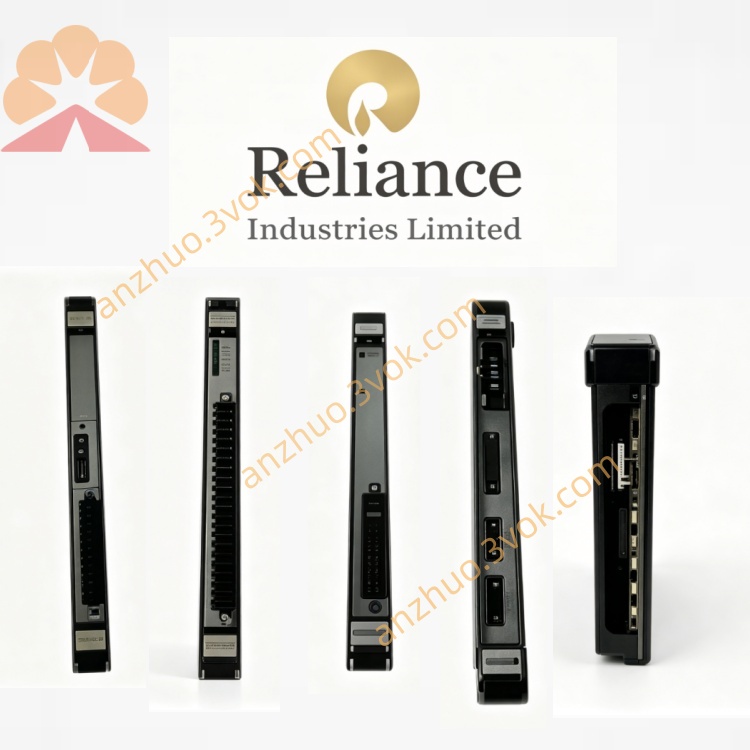
Reliance Electric S-D4008E Motion Controller Module
Overview
The S-D4008E is a high-performance motion controller module manufactured by Reliance Electric (now part of ABB and Baldor), engineered as an enhanced variant of the S-D4008 series for the Reliance AutoMax distributed control system. It is a rack-mounted, industrial-grade module designed to deliver precise, synchronized motion control for servo drives, variable frequency drives, and mechanical actuators in demanding automation environments. Building on the proven reliability of the S-D4008 platform, the S-D4008E incorporates upgraded processing power, enhanced noise immunity, and expanded communication capabilities, making it ideal for high-speed, high-precision applications where consistent performance is critical. It is widely used for system upgrades, replacement of legacy modules, and new installations in industries such as manufacturing, material handling, and process automation.
Key Features
Equipped with a high-speed dedicated processor, the S-D4008E executes complex motion control algorithms with improved efficiency, supporting multi-axis coordination, point-to-point positioning, continuous path control, and synchronized motion for up to 6 axes. It features advanced electrical isolation, surge suppression, and electromagnetic shielding, which minimize interference from harsh industrial environments (e.g., voltage spikes, EMI, and vibration) and ensure stable operation in electrically noisy settings. Designed for seamless integration with the AutoMax rack system, the module supports plug-and-play installation on standard PMI racks, eliminating the need for rewiring or program modifications during replacement and reducing maintenance downtime. The front panel includes clearly labeled LED indicators for power, run status, motion activity, and fault diagnostics, enabling real-time monitoring and fast, on-site troubleshooting. It draws 24VDC power directly from the AutoMax backplane bus, with optimized power consumption for long-duration operation, and complies with the system’s internal bus protocols for high-speed, reliable data exchange with CPUs, communication modules, power supplies, and I/O units. With a rugged, sealed enclosure and an IP20 protection rating, it resists dust and accidental contact, suitable for continuous operation in standard industrial control cabinets. Additionally, the S-D4008E supports Modbus RTU and TCP communication protocols, enhancing interoperability with third-party devices and upper-level monitoring systems.
Technical Specifications
Manufacturer: Reliance Electric (ABB/Baldor)
Model: S-D4008E (enhanced motion controller variant of the S-D4008 series)
System Compatibility: Exclusive to Reliance AutoMax distributed control system
Power Supply: 24VDC via AutoMax backplane bus
Power Consumption: Low, optimized for continuous operation
Controllable Axes: Up to 6 axes (servo/stepper drives)
Communication Protocols: AutoMax internal bus, Modbus RTU, Modbus TCP
Operating Temperature: 0°C to 55°C
Storage Temperature: -20°C to 70°C
Relative Humidity: 5% to 95% (non-condensing)
Protection Rating: IP20 (dust and finger contact protection)
Mounting: Standard AutoMax 19-inch rack-mountable
Dimensions: Conforms to AutoMax rack module standards
Weight: Industrial-grade, compact for easy handling
Certifications: CE, UL, RoHS compliant
Production Status: Discontinued by the manufacturer; available as professionally refurbished units with full functional testing and calibration.
Typical Applications
The S-D4008E is deployed in industrial automation applications requiring high-precision motion control within the AutoMax ecosystem. In automated assembly lines and material handling systems, it controls servo motors, conveyors, and robotic arms for accurate positioning, material transfer, and sequential mechanical operations. In machinery manufacturing and CNC processing, it enables multi-axis synchronization to ensure machining accuracy, speed consistency, and production efficiency. It serves as a high-performance replacement for older S-D4008A or S-D4008-A modules during system upgrades, extending the service life of legacy AutoMax installations without full system overhauls. In process industries, it regulates the speed and position of pumps, fans, and valve actuators to align with production process requirements. It also integrates with SCADA or HMI systems to upload real-time motion data and receive remote commands, supporting centralized monitoring and control of automated production lines.
Compatibility and Product Availability
The S-D4008E offers full backward compatibility with the entire Reliance AutoMax hardware ecosystem, including standard PMI racks, main processing units, SA3000 series power supplies, S-D4007 communication modules, and all digital/analog I/O modules. It shares identical mechanical dimensions, backplane pinouts, and core communication protocols with other S-D4008 series variants (e.g., S-D4008A, S-D4008-A), allowing direct drop-in replacement for cross-version upgrades or fault replacements. Since the manufacturer has discontinued mass production, brand-new original S-D4008E modules are unavailable. Most units on the market are professionally refurbished, undergoing rigorous disassembly, cleaning, component replacement, aging testing, and performance calibration to meet original factory specifications. Reputable suppliers typically provide a 12-month warranty for refurbished modules.
Advantages
The S-D4008E delivers enhanced precision and reliability compared to standard S-D4008 variants, meeting the strict motion control demands of high-speed industrial automation. Its upgraded anti-interference design and expanded communication support improve adaptability to complex industrial environments and integration flexibility with external systems. The plug-and-play rack-mounted design simplifies installation, maintenance, and upgrades, reducing operational costs and downtime. Intuitive LED status indicators enable rapid fault diagnosis, boosting maintenance efficiency. As a cost-effective upgrade solution for legacy AutoMax systems, it allows users to retain existing control architectures while improving motion performance, avoiding large capital investments in full system replacements.

Get a Quote