
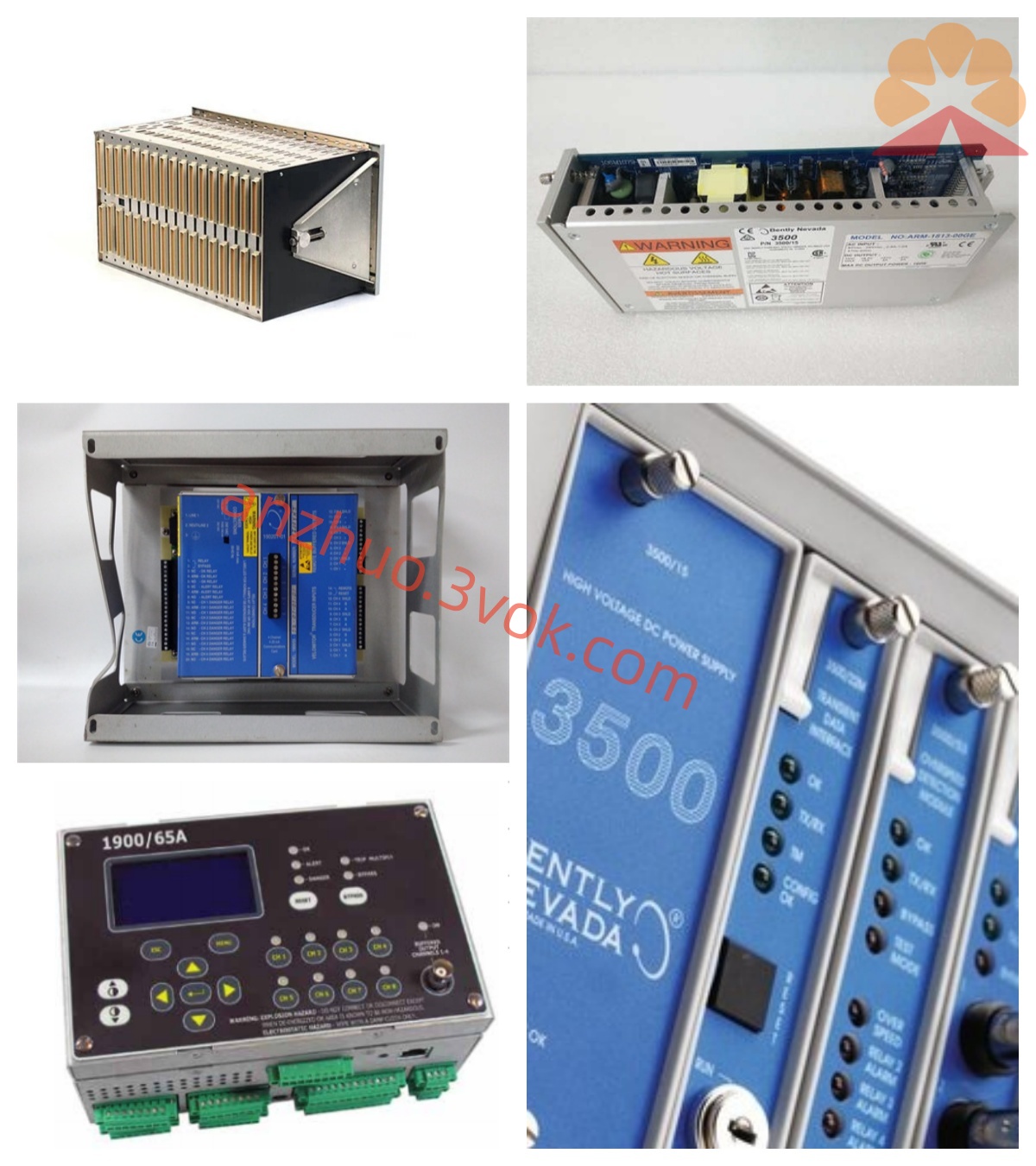
Bently Nevada Printed Wiring Assembly Specification
PWA26313-02-09-03-01-01-01-01 is an original factory customized printed wiring assembly designed as core internal excitation and signal conditioning PCB for Bently Nevada standard eddy-current proximitor transmitter unit, fully compliant with API 670 rotating machinery protection criteria, CE EMC and global industrial electrical safety specifications for standalone field monitor installation in thermal power, petrochemical, metallurgy and offshore oil & gas industry control cabinets. This circuit board is dedicated to drive Bently 3300 series non-contacting eddy-current proximity probes and matched extension cables, implementing high-frequency oscillation excitation output, gap feedback signal pre-amplification, linear conditioning and standardized DC analog conversion for shaft axial displacement, radial vibration and eccentricity monitoring of steam turbines, centrifugal compressors and large industrial blowers. After generating fixed high-frequency carrier signal and delivering it to external proximity probe via interconnect cable, the PCB processes impedance variation feedback signal caused by metal target clearance change, eliminates mixed field interference noise and converts clearance fluctuation into proportional linear DC output voltage for local meter indication, external relay alarm drive and remote signal transmission to DCS, PLC and secondary monitoring instruments. Once monitored shaft gap deviates beyond pre-set alert or trip limit, built-in voltage comparison circuit outputs switching level to trigger safety interlock and equipment shutdown protection against rotor rub and mechanical failure. All finished assemblies pass full linearity calibration with master standard probe, powered burn-in aging and high-voltage dielectric withstand inspection prior to factory release to eliminate manufacturing and component consistency defects.
Description
Bently Nevada Printed Wiring Assembly Specification
1. Product Overview
PWA26313-02-09-03-01-01-01-01 is an original factory customized printed wiring assembly designed as core internal excitation and signal conditioning PCB for Bently Nevada standard eddy-current proximitor transmitter unit, fully compliant with API 670 rotating machinery protection criteria, CE EMC and global industrial electrical safety specifications for standalone field monitor installation in thermal power, petrochemical, metallurgy and offshore oil & gas industry control cabinets. This circuit board is dedicated to drive Bently 3300 series non-contacting eddy-current proximity probes and matched extension cables, implementing high-frequency oscillation excitation output, gap feedback signal pre-amplification, linear conditioning and standardized DC analog conversion for shaft axial displacement, radial vibration and eccentricity monitoring of steam turbines, centrifugal compressors and large industrial blowers. After generating fixed high-frequency carrier signal and delivering it to external proximity probe via interconnect cable, the PCB processes impedance variation feedback signal caused by metal target clearance change, eliminates mixed field interference noise and converts clearance fluctuation into proportional linear DC output voltage for local meter indication, external relay alarm drive and remote signal transmission to DCS, PLC and secondary monitoring instruments. Once monitored shaft gap deviates beyond pre-set alert or trip limit, built-in voltage comparison circuit outputs switching level to trigger safety interlock and equipment shutdown protection against rotor rub and mechanical failure. All finished assemblies pass full linearity calibration with master standard probe, powered burn-in aging and high-voltage dielectric withstand inspection prior to factory release to eliminate manufacturing and component consistency defects.
2. Core Functional Characteristics
The FR-4 industrial printed wiring board integrates high-frequency oscillation excitation circuit, multi-stage precision pre-amplifier network, built-in cable capacitance automatic compensation circuit, temperature drift passive compensation network, probe open/short-circuit fault detection logic and multi-level surge overvoltage suppression components to complete full eddy-current probe drive and gap-to-voltage conversion. First, embedded constant-amplitude high-frequency oscillator provides stable standard excitation source, featuring automatic distributed capacitance compensation function to adapt varied field cable lengths without extra external matching accessories, improving site wiring flexibility for different cabling layouts. Second, independent isolated routing separates high-frequency excitation loop and low-frequency measurement signal loop, effectively suppressing ground loop potential difference interference and stray electromagnetic noise induced by adjacent high-power motor and frequency converter operation, preventing analog output drift and linearity degradation from cross-circuit leakage current. Third, onboard passive temperature compensation network automatically offsets parameter shift of core precision components triggered by cabinet ambient temperature fluctuation, maintaining stable conversion linearity across full rated working temperature range during long-term uninterrupted equipment operation. Fourth, continuous real-time fault monitoring circuit tracks probe and cable operating status continuously; probe breakage, cable open or short circuit will generate specified abnormal output level for upper system fault capture without extra portable testing tools. Fifth, transient voltage suppression devices and RC absorption networks are configured on power input and signal output terminals to absorb instantaneous surge spike from lightning induction and grid switching disturbance, protecting core oscillation and amplifier chips from overvoltage breakdown damage under unstable industrial power environment.
3. Mechanical Structure and Construction Details
PWA26313-02-09-03-01-01-01-01 is fabricated with customized outline dimension matching internal installation space of standalone proximitor metal housing, with pre-drilled positioning mounting holes along PCB perimeter for secure screw fixing inside instrument casing, allowing the assembly to withstand long-term cyclic mechanical vibration from nearby running turbomachinery and avoid component desoldering or poor terminal contact failure. The substrate uses premium industrial FR-4 printed circuit board with full-area ground copper foil layer for enhanced electromagnetic shielding and stray noise suppression; thickened power path copper traces improve overcurrent tolerance and passive heat dissipation efficiency under continuous energization and ambient temperature swing. All onboard oscillation crystal, low-drift precision resistors, low-loss filter capacitors and industrial-grade operational amplifiers adopt original factory specified electronic components; soldering is finished via automatic wave soldering followed by selective manual sampling inspection to exclude cold solder and virtual solder hidden risks. After component mounting completion, entire PCB surface is coated with solvent-resistant three-proof conformal coating to defend erosion from floating industrial dust, lubricant oil mist and weak corrosive volatile vapor accumulated inside closed control cabinets, slowing down copper trace oxidation and component pin corrosion under high-humidity and oil-rich working surroundings near turbine and compressor units. Pin welding terminals are reserved on two board sides for internal connection with front panel indication meter and external outgoing wiring terminals; finished bare PCB is packed with anti-static sealed plastic packaging at factory to avoid electrostatic damage during storage and cross-region transportation.
4. Detailed Electrical Technical Parameters
The wiring assembly supports universal industrial power input covering 110VAC/220VAC alternating supply and optional +24VDC direct supply according to field configuration; average overall power consumption under full-load probe driving status is controlled below 3.3W. Factory-calibrated high-frequency excitation matches standard specification of 3300 series proximity probe; standard gap measurement range corresponds to configurable 0~5VDC or 0~10VDC linear DC analog output via onboard internal solder jumpers. Compatible with full specification of matched 3300 proximity probe, overall conversion linearity error after factory calibration is better than ±1.0% full scale within effective measuring scope. Insulation resistance between power input terminal and signal output terminal exceeds 200MΩ under 500VDC dielectric withstand test, and isolation voltage between excitation loop and measurement signal loop reaches 1500VDC to block cross-conduction of fault leakage current between different functional circuits. Built-in surge protection can resist instantaneous common-mode impulse voltage up to 2000V from transient grid interference to prevent core circuit burnout from unexpected abnormal overvoltage impact. Dedicated fault diagnosis terminal outputs defined abnormal voltage level when probe loop occurs open or short fault for upper control system remote fault collection and alarm prompt.
5. Environmental Operating Specifications
Rated continuous long-term fixed cabinet installation working ambient temperature range is 0°C ~ +60°C; permissible short-duration transient operating temperature extends from -20°C ~ +70°C during temporary cabinet heat dissipation failure or extreme seasonal ambient fluctuation. Safe spare storage temperature range for unused spare boards is -40°C ~ +85°C inside dry, dustproof enclosed warehouse free of corrosive liquid splash and toxic chemical gas erosion. Applicable working relative humidity scope is 5%RH~93%RH under strict non-condensing environmental condition, adapting high-humidity coastal petrochemical control room and offshore oil platform cabinet installation scenarios. Finished PCB passes standardized vibration resistance test and can endure continuous mechanical vibration of 10Hz~1500Hz frequency range during transportation and field disassembly without copper trace cracking and component falling-off failure. The three-proof protective coating on board passes anti-dew and anti-oil mist reliability verification to adapt severe cabinet surroundings filled with steam and lubricant volatile vapor near turbomachinery equipment. When installed inside Class II explosive hazardous area cabinets, intrinsic safety barrier components must be added on front-end probe cable side complying with local regional explosion-proof electrical regulatory standards and intrinsic safety wiring specification.
6. Compatible Equipment and Application Scope
PWA26313-02-09-03-01-01-01-01 serves as exclusive original core printed wiring assembly for Bently Nevada standalone proximitor monitor, fully compatible with standard proximitor metal housing, all specifications of 3300 series eddy-current proximity probes and corresponding extension cables with different customized lengths. Measurement range switching, output parameter fine calibration and fault function enable/disable configuration are realized by adjusting onboard solder jumpers without supporting external configuration software, seamlessly matching conventional analog display meter, field alarm relay module and mainstream DCS/PLC analog input cards widely used in traditional industrial control sites. Main applicable industrial fields include thermal power generation, onshore and offshore oil & gas exploitation, petrochemical refining, coal chemical processing and heavy metallurgy industry, functioning as core signal conversion component for shaft relative vibration and axial displacement monitoring protection system of large steam turbine generator units, centrifugal compressors, boiler induced draft fans and feedwater pump sets. Converted real-time gap analog voltage signal is transmitted to upper monitoring system for on-site numerical display, historical operating data recording and abnormal mechanical fault early warning, and protection action threshold can be adjusted via rear-end secondary instrument parameter setting according to actual unit operating condition change to ensure reliable equipment safety management.
7. Factory Quality Control and Warranty Regulation
Each individual PWA26313-02-09-03-01-01-01-01 undergoes multiple mandatory pre-delivery factory inspection items including full-range gap linearity simulation test with standard master probe, power supply fluctuation stability test, fault diagnosis function verification, high-low temperature alternating cycling aging test and insulation withstand voltage inspection to screen out inherent manufacturing defects before formal factory outbound shipment. Original manufacturer limited warranty period lasts twelve consecutive months starting from formal product delivery date to end user; free repair or replacement service is available for products confirmed with inherent factory production defects when installed and operated within rated environmental parameters and standardized wiring requirements during valid warranty term. Any product damage resulting from unauthorized onboard component modification, incorrect field power supply wiring, artificial mechanical collision impact, corrosive liquid immersion and long-term continuous over-temperature operation exceeding specified working limit scope is excluded from official warranty coverage, and all corresponding maintenance and component replacement expenses shall be fully borne by end user.
Get a Quote