
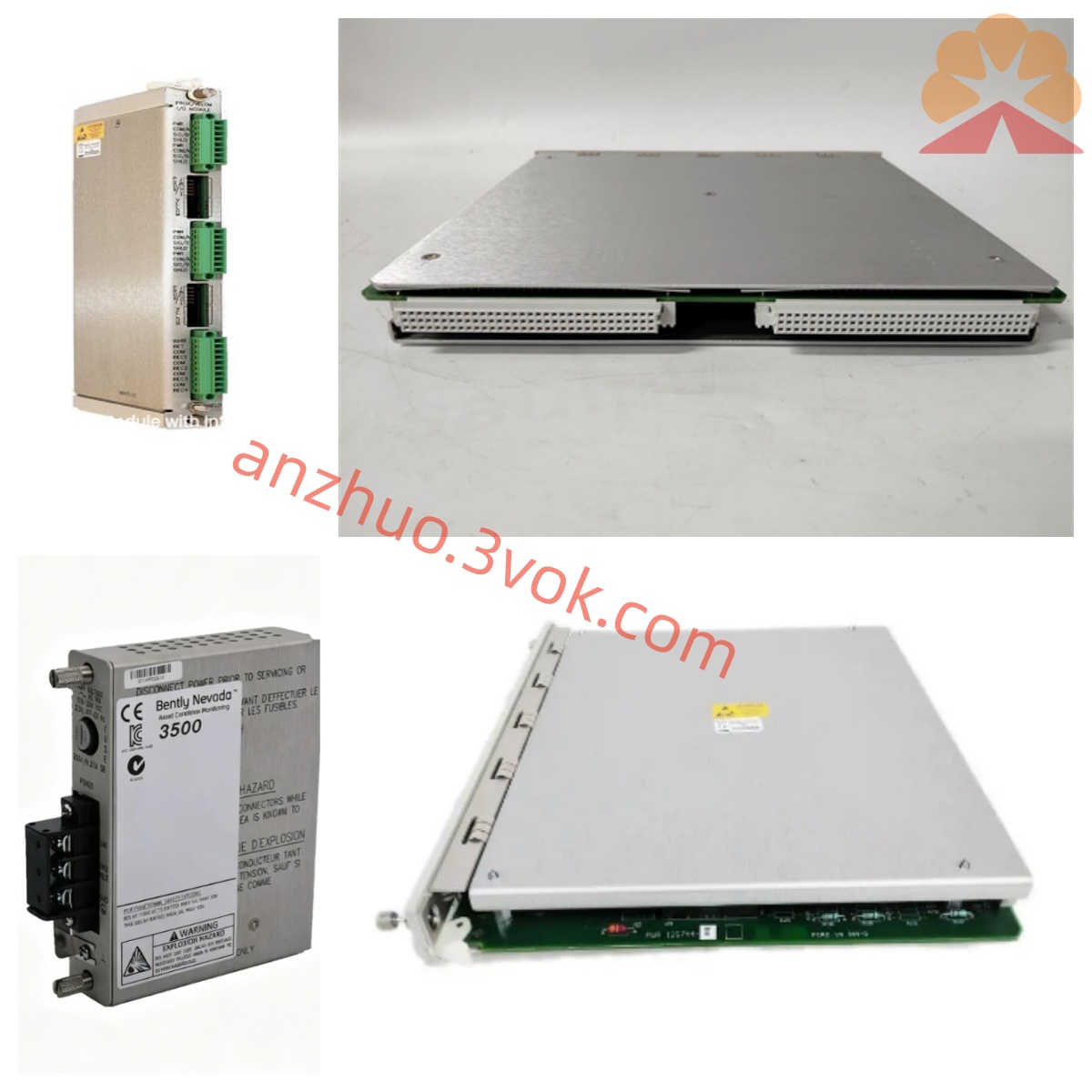
Bently Nevada 21501-00-36-10-02 Eddy Current Proximity Probe Product Specification
21501-00-36-10-02 is factory pre-calibrated front-mounted 5 mm eddy current proximity probe exclusively designed for Bently Nevada 7200 series transducer system. When assembled with original 2155/00 proximitor preamplifier and factory-calibrated 75-ohm matched extension cable, the complete set forms a full non-contact measurement system complying with API 670 industry standards for critical rotating machinery protection. Based on eddy-current induction principle, the probe converts minor clearance variations between its sensing tip and conductive metallic rotor target into linear analog voltage signals. These analog signals are transmitted to 7200 or 3500 rack-mounted monitoring modules to realize continuous online measurement of shaft radial vibration, short-stroke axial displacement and Keyphasor rotational pickup pulse signals. Widely applied on small-size steam turbines, high-speed gas turbines, miniature centrifugal compressors and high-speed turbo-generators across power, petrochemical and metallurgical industries, it provides over-limit alarm trigger and emergency shutdown interlock signals to guarantee unit safe running. Every finished probe undergoes full-range linearity calibration, high-low temperature cyclic aging test and full hermetic epoxy encapsulation inspection before factory delivery to keep stable measuring accuracy under harsh field conditions including high internal temperature of bearing housings, pervasive lubricating oil mist and complex electromagnetic interference generated by high-current power cables and variable frequency drive equipment.
Description
Bently Nevada 21501-00-36-10-02 Eddy Current Proximity Probe Product Specification
1. Product Overview
21501-00-36-10-02 is factory pre-calibrated front-mounted 5 mm eddy current proximity probe exclusively designed for Bently Nevada 7200 series transducer system. When assembled with original 2155/00 proximitor preamplifier and factory-calibrated 75-ohm matched extension cable, the complete set forms a full non-contact measurement system complying with API 670 industry standards for critical rotating machinery protection. Based on eddy-current induction principle, the probe converts minor clearance variations between its sensing tip and conductive metallic rotor target into linear analog voltage signals. These analog signals are transmitted to 7200 or 3500 rack-mounted monitoring modules to realize continuous online measurement of shaft radial vibration, short-stroke axial displacement and Keyphasor rotational pickup pulse signals. Widely applied on small-size steam turbines, high-speed gas turbines, miniature centrifugal compressors and high-speed turbo-generators across power, petrochemical and metallurgical industries, it provides over-limit alarm trigger and emergency shutdown interlock signals to guarantee unit safe running. Every finished probe undergoes full-range linearity calibration, high-low temperature cyclic aging test and full hermetic epoxy encapsulation inspection before factory delivery to keep stable measuring accuracy under harsh field conditions including high internal temperature of bearing housings, pervasive lubricating oil mist and complex electromagnetic interference generated by high-current power cables and variable frequency drive equipment.
2. Part Number Definition Breakdown
All coding segments follow Bently’s unified part coding specification for 7200 series front-installed proximity probes. Base code 21501 represents core product series of standard 5-millimeter diameter front-thread proximity probe tailored for the 7200 transducer platform; segment 00 defines fixed internal coil construction and factory-locked original calibration parameters without customized electrical modification and zero exposed unthreaded tip length; segment 36 stands for medium-long threaded body dimension designed for medium-depth mounting holes on regular and moderately thick bearing pedestals; segment 10 refers to factory pre-molded integral coaxial cable with fixed 1.0-meter length permanently bonded to the probe main body during manufacturing; the final suffix 02 specifies standard miniature male coaxial terminal connector fitted at the cable end for plug-and-play connection with certified original extension cable. Probes with altered numerical segments feature different mechanical dimensions or calibrated electrical properties and cannot be randomly substituted on-site; improper replacement invalidates full-loop factory calibration and leads to measurement drift or unintended protective tripping of the monitoring channel.
3. Core Functional Characteristics
The probe’s threaded housing and sensing tip are precision fabricated from high-strength corrosion-resistant stainless steel, offering outstanding resistance against lubricant erosion and corrosive vapor trapped inside sealed bearing compartments. The internal induction coil is fully potted with high-temperature resistant epoxy resin to eliminate internal air gaps, effectively preventing coil displacement and inter-turn short-circuit faults caused by prolonged equipment vibration and fluctuating ambient temperature. The attached 1.0-meter integral cable adopts standard 75-ohm controlled-impedance coaxial design with dense tinned copper braided shielding exceeding 95% coverage to suppress external electromagnetic crosstalk throughout field signal transmission. On-site cutting, splicing or arbitrary replacement of the original integral cable and end connector is strictly prohibited, as any physical alteration permanently voids the factory preset calibration data of the complete transducer set. The medium-long front screw-in mounting design is optimized for medium-depth pre-drilled mounting holes and conventional medium-thickness bearing pedestal structures. Built-in open-circuit and short-circuit fault diagnostics identify abnormal wiring via noticeable output voltage deviation to streamline routine field troubleshooting. Consistent linear measurement performance of the whole system can only be preserved through genuine original matching of this probe, calibrated extension cable and designated 2155/00 proximitor preamplifier.
4. Electrical and Metrological Specifications
The matching 2155/00 proximitor provides regulated negative DC supply ranging from -17.5 VDC to -26 VDC, with -24 VDC defined as the standard nominal operating voltage for field application. Factory-set calibrated sensitivity is 7.87 V/mm (200 mV/mil) calibrated against standard AISI4140 carbon steel target material, and full-range linearity deviation is restricted within ±5% per API 670 specification requirements. The valid linear measuring range spans 0 mm to 1.27 mm, satisfying routine radial vibration and short-travel axial clearance measurement for small-diameter high-speed industrial rotating shafts. Effective frequency response covers DC up to 10 kHz, enabling synchronous acquisition of low-frequency static thermal expansion drift and high-frequency dynamic shaft vibration signals. The recommended pre-installation gap is positioned near the midpoint of the linear range to maintain a stable bias operating point for long-term uninterrupted equipment service.
5. Environmental Working Parameters
The sensing portion allows continuous operating temperature from -35°C to +120°C to accommodate high-temperature installation adjacent to heated bearing housings and turbine casings. Storage temperature for spare units is maintained between -55°C and +85°C within a dry non-condensing environment; applicable operating relative humidity ranges from 5%RH to 95%RH without dew condensation accumulating on the probe housing and cable outer jacket. The probe withstands regular industrial mechanical vibration ranging from 10 Hz to 2 kHz generated by nearby operating rotating equipment. Long-term continuous exposure or immersion in corrosive liquid, acid mist and persistent high-temperature steam is forbidden to avoid outer casing corrosion and premature aging of internal insulating materials. For installation sites above 1000 meters altitude, the regular inspection cycle shall be appropriately shortened.
6. Installation and Routine Maintenance Guidance
Disconnect full power of the entire monitoring loop before on-site installation, screw the medium-long threaded probe into pre-reserved medium-depth threaded holes of bearing pedestals or custom mounting fixtures, adjust pre-set installation clearance to rated design value and fasten the lock nut securely to prevent loosening induced by long-running operational vibration. During cabling work, route the probe signal cable separately away from high-current AC power lines and inverter output wiring to reduce cross electromagnetic coupling interference. Avoid sharp small-radius bending, excessive stretching and heavy mechanical squeezing on the cable body to prevent inner conductor fracture and abnormal impedance shift. Within scheduled maintenance cycles, periodically inspect the cable outer sheath for oil corrosion, abrasion and cracking, and verify the locking tightness of the end terminal connector. In case of probe failure requiring replacement, only spare parts with identical full part number 21501-00-36-10-02 are permitted for direct swap. All replacement probes complete full electrical performance testing and alternating temperature aging screening before factory delivery to guarantee full interchangeability within the original vibration monitoring measurement loop.
Get a Quote