
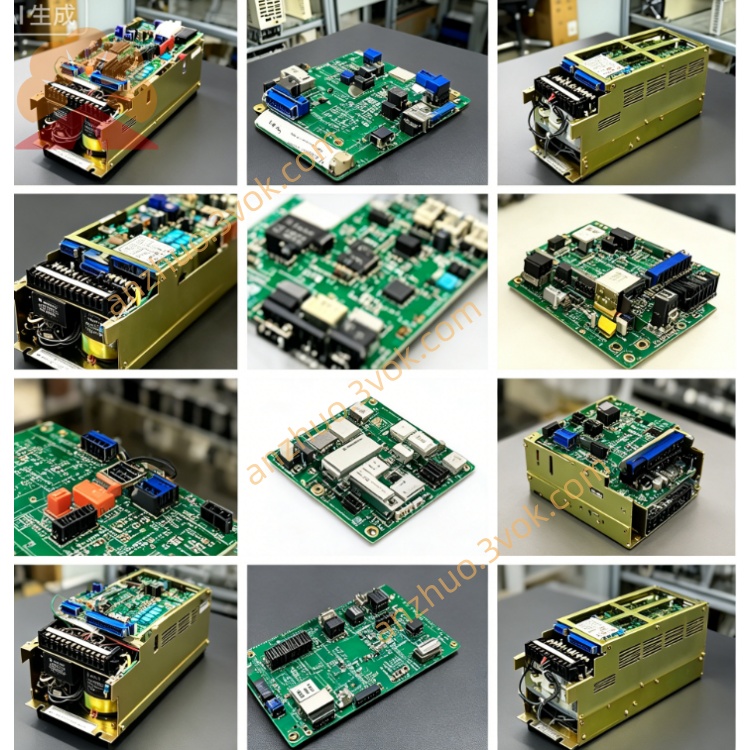
CACR-SR12TB6AF
CACR = Yasnac VS800 full digital AC servo amplifier for CNC automation equipment
SR = Multi-control mode: ±10VDC analog speed/torque + optional pulse position control via parameter setup
12 = Rated matching motor power 1.2kW, AC200V class, continuous rated output current:11.7Arms
T = Standard general CNC mainboard layout, non-robot dedicated PCB design
B = Dual command input hardware: ±10VDC analog signal + differential line driver pulse position input dual interface
6 = Standard factory preset control circuit, universal standard parameter firmware (non-OEM locked, all standard parameters editable)
A = Standard incremental encoder feedback circuit for USAMED/USAFED series Yaskawa servo motors
F = General standard universal firmware, no customized parameter lock, full parameter modification available for user onsite debugging
Description
1. MODEL CODE EXPLANATION
CACR = Yasnac VS800 full digital AC servo amplifier for CNC automation equipmentSR = Multi-control mode: ±10VDC analog speed/torque + optional pulse position control via parameter setup12 = Rated matching motor power 1.2kW, AC200V class, continuous rated output current:11.7ArmsT = Standard general CNC mainboard layout, non-robot dedicated PCB designB = Dual command input hardware: ±10VDC analog signal + differential line driver pulse position input dual interface6 = Standard factory preset control circuit, universal standard parameter firmware (non-OEM locked, all standard parameters editable)A = Standard incremental encoder feedback circuit for USAMED/USAFED series Yaskawa servo motorsF = General standard universal firmware, no customized parameter lock, full parameter modification available for user onsite debugging
2. ELECTRICAL SPECIFICATIONS
Main power input: 3-phase AC200V~230V, voltage tolerance -15%~+10%, 50/60Hz industrial frequency compatible.Control power follows standard VS800 circuit design, no customized power modification.Continuous rated output:11.7Arms; 150% overload sustainable for 60s, 300% peak overload limited within 3s for startup acceleration.DC bus normal working voltage DC280V~DC320V; terminal P & BN reserved for external regenerative braking resistor connection for frequent rapid deceleration & heavy-duty stop.Adopts IGBT sine-wave PWM modulation, max output frequency 300Hz.Net unit weight approx 3.5kg.
3. INSTALLATION & AMBIENT REQUIREMENT
Operating ambient temperature: 0℃ ~ +55℃; storage temperature: -20℃ ~ +70℃.Relative working humidity:5%~80%RH without dew condensation, IP20 protection grade, vertical upright installation inside electrical cabinet required.Installation altitude below 1000m; output derating needed for installation over 1000m elevation.Vibration resistance: 10~55Hz, single amplitude 0.5mm under continuous running status.
4. CONTROL PERFORMANCE & MAIN FEATURES
Speed adjustment range 1:5000, full-load speed fluctuation ≤±0.01% rated speed. Built-in digital notch filter to eliminate mechanical resonance and low-speed creeping during frequent start-stop operation.B-type dual input allows free switching between analog speed command and differential pulse position command by changing internal user constants.Complete auto motor parameter identification function available (unlike customized M suffix model), user can run full auto-tuning for motor loop gain matching on site, all standard gain parameters freely adjustable without write protection.Onboard RS422 serial communication supports parameter reading/writing, runtime data monitoring and fault history inquiry. No locked OEM parameters, full parameter backup & restore available via communication cable.
5. TERMINAL & CONNECTOR DEFINITION
R/S/T: 3-phase main AC power input terminals; U/V/W: servo motor 3-phase power output terminals.P / BN: External regenerative braking resistor connection terminals.CN1: Optocoupler isolated digital I/O terminal block, standard factory I/O definition, all signal assignment editable via parameters.CN2: Exclusive incremental encoder feedback connector for motor encoder wiring.7-segment digital LED display on front panel for real-time status and fault code indication.
6. BUILT-IN PROTECTION FUNCTIONS
Full protection list: overcurrent protection, DC bus overvoltage/undervoltage protection, drive overheat protection, encoder wire breakage protection, motor overload protection, CPU operation fault protection.Servo automatically stores last 10 groups of historical fault codes for maintenance check; all fault records can be cleared manually via parameter setting.Standard built-in dynamic braking circuit for regular deceleration energy dissipation; install external regenerative resistor between P-BN under long-term heavy load & frequent emergency stop condition.
7. PARAMETER & REPLACEMENT INSTRUCTION
CACR-SR12TB6AF is standard universal version, no factory-locked parameters, can directly replace CACR-SR12TB0AF / CACR-SR12TB5BM after reset parameters and redo motor auto-tuning (different preset original factory settings between models).Parameter reset procedure: power on, enter initialization constant Cn-xx, execute factory default reset, then complete motor auto identification before machine trial run.
8. DAILY MAINTENANCE SPECIFICATION
Check tightness of RST, UVW power cables and CN1/CN2 connectors before equipment startup to avoid poor contact alarm.Clean radiator fin dust every 3~6 months to guarantee heat dissipation and prevent overheat trip.Cut off all AC power and wait minimum 15min for internal DC bus capacitor full discharge before opening drive housing for maintenance to avoid electric shock risk.
9. COMMON FAULT TROUBLESHOOTING
Overheat alarm: radiator dust blockage, cabinet poor ventilation or continuous overload; clean cooling system or reduce load.
Encoder error alarm: loose CN2 plug, broken feedback cable or encoder damage; check wiring and replace faulty parts.
Overvoltage alarm during rapid deceleration: add external regenerative resistor on P-BN terminals.
Overload alarm: mechanical jamming or overloading; inspect transmission structure and lower operating load.
10. FAULT CODE TABLE (Main Alarm Codes on LED Display)
1: Overcurrent fault; 2: Main circuit power abnormal; 3: Overvoltage; 4: Undervoltage; 5: Overheat; 6: Encoder disconnection;7: Motor overload; A: CPU abnormal; B: Parameter error; C: External emergency stop input; F: Brake circuit fault
Get a Quote