
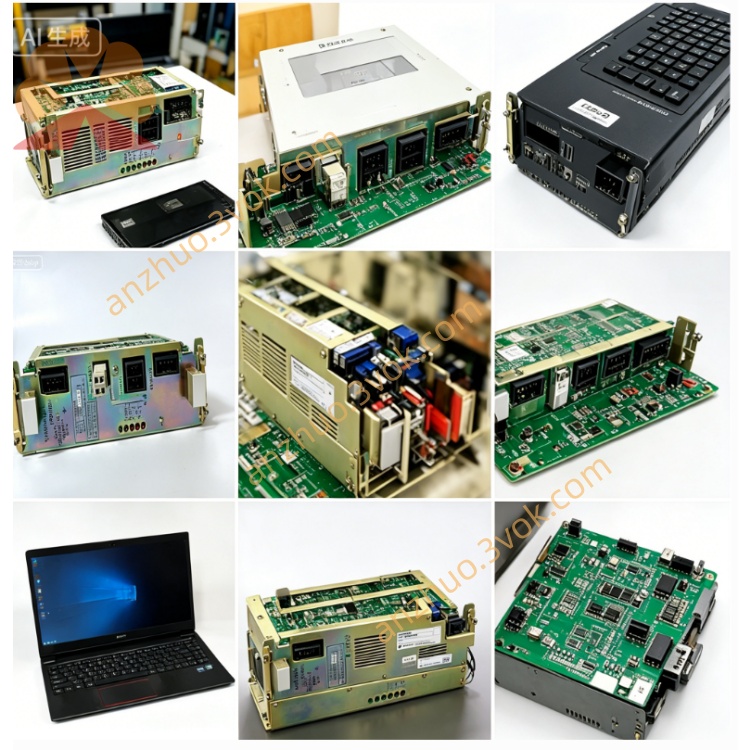
CACR-PR05BCAF
CACR-PR05BCAF is a DIN rail mounted AC servo drive from YASKAWA classic CACR-PR series with rated power of 0.5kW. It is a discontinued legacy digital positioning servo unit designed to cooperate with YASKAWA USA-series incremental encoder servo motors including USAMED, USAFED and USASEM models. The drive adopts integrated power and control circuit design and is equipped with front digital display and status indicator lamps for real-time operating status check and fault code reading. After being equipped with optional CPCC-PP100 positioning module, it can build an independent point-to-point positioning system without additional external PLC or pulse controller. With complete built-in safety protection circuits, the servo unit features stable dynamic performance and serves as a common original replacement spare part for maintenance and retrofit of aging CNC machines, packaging equipment and various automated production machinery.
Description
1. Product Brief Introduction
CACR-PR05BCAF is a DIN rail mounted AC servo drive from YASKAWA classic CACR-PR series with rated power of 0.5kW. It is a discontinued legacy digital positioning servo unit designed to cooperate with YASKAWA USA-series incremental encoder servo motors including USAMED, USAFED and USASEM models. The drive adopts integrated power and control circuit design and is equipped with front digital display and status indicator lamps for real-time operating status check and fault code reading. After being equipped with optional CPCC-PP100 positioning module, it can build an independent point-to-point positioning system without additional external PLC or pulse controller. With complete built-in safety protection circuits, the servo unit features stable dynamic performance and serves as a common original replacement spare part for maintenance and retrofit of aging CNC machines, packaging equipment and various automated production machinery.
2. Model Code Definition
CACR is the general series code of YASKAWA AC servo amplifier. PR stands for rack-mounted servo with built-in positioning control function and standard DIN35 rail installation. The number 05 represents rated output power of 0.5kW. Letter B defines three-phase AC200V power input specification and optimized internal hardware layout for cabinet installation. Letter C refers to matching standard 1500P/R incremental encoder for USA series servo motors. AF indicates dedicated hardware revision, terminal definition and internal protection configuration for this specific model.
3. Technical Parameters
Electrical Parameters
Input power is three-phase AC200V to 230V at 50/60Hz, rated output power is 0.5kW and rated output current is 4.8A. It applies sine wave PWM vector control with dual closed-loop control of speed and position, and matches servo motors with 1500P/R incremental encoder feedback.
Environmental & Mechanical Parameters
Operating ambient temperature ranges from -10℃ to +55℃, storage temperature ranges from -20℃ to +60℃. Applicable working humidity is 20%~80%RH without condensation and corrosive gas. The protection class is IP20 for indoor cabinet installation, and the maximum allowable installation altitude is below 1000 meters. The unit is fixed on standard DIN35 mounting rail.
4. Interface and Communication Configuration
Main power terminals include L1/L2/L3 for three-phase power input, U/V/W for motor power output and PE for protective earthing. CN1 control connector contains multi-channel digital input terminals for servo enable, fault reset and mode switching, digital output terminals for ready signal and fault alarm, as well as ±10V analog speed command input port. CN2 is the dedicated encoder connector for A/B/Z phase feedback and encoder power supply connection.For communication, standard RS422 serial port is equipped with exclusive YASKAWA private protocol at optional baud rates of 4800bps and 9600bps for parameter setup and equipment debugging. The drive has no built-in Modbus or CANopen support, and extended positioning bus function needs external CPCC-PP100 positioning module.
5. Core Functions
It supports dual working modes of speed regulation and fixed positioning which can be switched via external control terminals. With CPCC-PP100 module connected, the drive completes standalone point positioning without upper pulse command. Multiple protection functions cover overcurrent, overvoltage, undervoltage, overload, overheat, encoder disconnection and output short circuit; the servo stops output and shows corresponding fault code once abnormal condition occurs. The auto-tuning function automatically identifies motor parameters to improve low-speed smoothness and dynamic response. Adjustable torque limit function effectively avoids mechanical crash caused by overload, and the onboard self-diagnosis system helps quick fault checking via front digital display.
6. Application Scenarios
This servo drive is widely used for feed axis driving of old CNC lathes and milling machines, positioning control of food and pharmaceutical packaging machinery, transmission and winding axis control of textile equipment, precision conveying drive for electronic component assembly machines, as well as spare replacement and renovation of obsolete imported automation production lines and legacy small precision semiconductor processing equipment.
7. Operation and Maintenance Instructions
Mount the servo inside ventilated control cabinet away from dust, corrosive gas and damp environment to guarantee effective heat dissipation. Double check all wiring of power cable, control cable and encoder cable before powering on to prevent damage from wrong wiring. Set relevant operation parameters according to matched motor specification and actual mechanical load during initial commissioning. Cut off main power supply before any daily inspection or disassembly maintenance work. Regularly tighten loose terminals and clean accumulated dust on drive surface periodically. Once fault code appears, cut off power supply first and inspect relevant circuits and mechanical parts according to fault information before restarting the equipment.
Get a Quote