
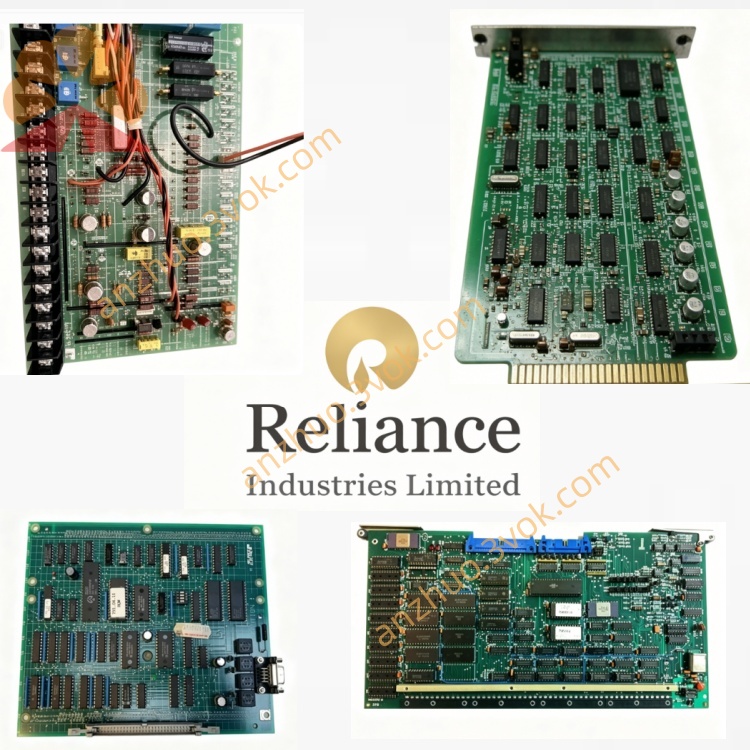
RELIANCE 78094-33R original Reliance Electric internal circuit accessory
78094-33R is an original Reliance Electric internal circuit accessory engineered for legacy AC and DC variable speed drives. It functions as an intermediate power and signal conditioning board installed inside drive cabinet, constructed with industrial electronic components to withstand vibration, temperature shift and electromagnetic interference in heavy industrial operating conditions. This component connects main power assembly and master control board to stabilize inner circuit operation of matched drive units.
Description
1.Product Overview
78094-33R is an original Reliance Electric internal circuit accessory engineered for legacy AC and DC variable speed drives. It functions as an intermediate power and signal conditioning board installed inside drive cabinet, constructed with industrial electronic components to withstand vibration, temperature shift and electromagnetic interference in heavy industrial operating conditions. This component connects main power assembly and master control board to stabilize inner circuit operation of matched drive units.
2.Model Definition
78094 represents fixed base part number for Reliance drive auxiliary circuit board product family with fixed PCB outline and baseline circuit design. 33 stands for specified circuit revision and internal component configuration standard. R denotes revised upgraded version, featuring improved surge suppression and component layout against original standard non-revision model. No additional suffix characters indicate standard general-purpose specification without customized factory modification.
3.Technical Specifications
Standard rated operating supply voltage is 24VDC allowing ±10% input voltage deviation. Continuous working ambient temperature covers -20℃ to +70℃. Dielectric withstand voltage between power circuit and signal circuit is 1200VAC for one minute. Built-in miniature overcurrent protective fuse with rated current 3.15A. Protection rating is IP20 for in-cabinet embedded mounting. Internal signal circuits adopt discrete isolation components to suppress switching surge from power semiconductor modules.
4.Interface and Communication Configuration
Interconnection relies on board-to-board plug pin sockets for hard connection with main control and power boards, no external fieldbus or serial communication ports equipped. All power and feedback signal transmission is realized via internal hard wiring inside drive enclosure. Test pins are reserved on PCB surface for maintenance measurement and circuit fault detection. Every pin position is printed with standardized coding to separate auxiliary power, input feedback and output signal terminals.
5.Core Functions
Distributes split auxiliary control power supply for partial inner drive small-signal loops. Filters and regulates feedback signals transmitted from power module to master controller to restrain high frequency switching noise and voltage spikes. Delivers branch short-circuit and overcurrent protection to isolate faulty local circuits and avoid damage to upper mainboard. Performs signal level conversion to match voltage criteria between high-power loop and low-voltage logic control circuit.
6.Application Scenarios
Mainly configured on traditional Reliance DC drives and early generation AC inverters deployed in papermaking equipment, metallurgical rolling mills, textile production lines, cement transmission machinery and mine conveyor control systems. Commonly used as replacement spare part for aging drive maintenance and on-site automation upgrade of obsolete Reliance drive cabinets in chemical continuous process workshops and water treatment drive systems.
7.Operation and Maintenance Instructions
Cut off full input power of corresponding drive before dismounting or replacement to prevent electric shock and component burnout. Inspect plug pins for rust, bending or poor contact during installation to guarantee tight insertion matching with main board sockets. Conduct routine maintenance every eight months by blowing accumulated PCB dust with dry compressed air. Immediately halt equipment operation and replace the component if excessive heating, burnt traces or unstable signal faults emerge during runtime. Keep unused spare boards stored in dry constant-temperature environment far from moisture and corrosive industrial gas.
Get a Quote