
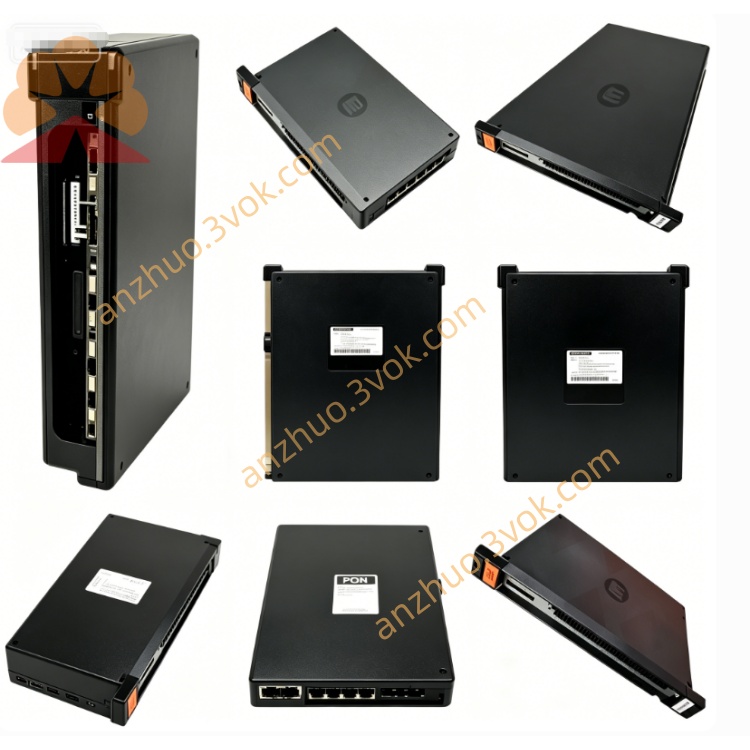
RELIANCE 61C613 16-channel low-level differential analog input module
61C613 is a 16-channel low-level differential analog input module under Reliance AutoMax/AutoMate 61C rack I/O product line, designed for acquiring tiny millivolt-level signals from thermocouples and low-voltage transmitters in legacy industrial distributed control systems. Original manufacturer production has been permanently discontinued, and available supplies in the market mainly consist of unused factory surplus inventory and fully calibrated refurbished modules, widely used for spare part replacement and cabinet renovation of outdated DCS5000 automation equipment in chemical, metallurgy, thermal power and papermaking industries. The module must be matched with external termination panels including 61C614 thermocouple/voltage terminal base or 61C615 RTD terminal base to complete field wiring connection via dedicated flat cables.
Description
Product Introduction
61C613 is a 16-channel low-level differential analog input module under Reliance AutoMax/AutoMate 61C rack I/O product line, designed for acquiring tiny millivolt-level signals from thermocouples and low-voltage transmitters in legacy industrial distributed control systems. Original manufacturer production has been permanently discontinued, and available supplies in the market mainly consist of unused factory surplus inventory and fully calibrated refurbished modules, widely used for spare part replacement and cabinet renovation of outdated DCS5000 automation equipment in chemical, metallurgy, thermal power and papermaking industries. The module must be matched with external termination panels including 61C614 thermocouple/voltage terminal base or 61C615 RTD terminal base to complete field wiring connection via dedicated flat cables.
Model Definition
61C stands for the unified series coding of Reliance rack-mounted analog and digital I/O modules. Numeral 613 defines fixed specification of 16-channel low-level differential analog input without version suffix. It follows unified mechanical outline size and backplane bus pin definition of all 61C series modules to support random mixed slot installation with other AI/AO/DI/DO modules on the same control rack.
Technical Specifications
Equipped with 16 fully differential independent measuring channels, supporting multiple input signal types including J,K,E,T,B,R type thermocouples and multi-range low voltage signals covering 12.5mV,25mV,50mV,100mV,1.25V,2.5V,5V,10V ranges. Onboard hardware cold junction compensation and automatic thermocouple curve linearization function are embedded for temperature conversion. A/D resolution can be switched between 12-bit and 14-bit via upper computer programming; single channel maximum conversion time is 45ms for 12-bit mode and 75ms for 14-bit mode, full 16-channel minimum scanning cycle reaches 110ms. Channel-to-ground maximum common-mode withstand voltage is 1000VDC, channel-to-channel withstand voltage is 200VDC, minimum common-mode rejection ratio reaches 100dB under 60Hz working frequency. Working power is entirely obtained from rack backplane bus with +5V rated operating current at 1250mA; working ambient temperature ranges from -20℃ to +55℃, storage temperature from -40℃ to +85℃, applicable humidity 5%~95% non-condensing environment. Built-in open-circuit diagnosis for thermocouple wiring, supporting temperature data output in Celsius or Fahrenheit format by software configuration.
Interface and Communication Configuration
Rear side is equipped with double gold-plated edge backplane connectors for plugging into standard AutoMax rack slots, realizing digital data upload and parameter configuration command interaction with rack main CPU through proprietary internal backplane bus protocol. Front panel reserves two dedicated 50-core flat cable sockets, connecting with 61C614 or 61C615 field termination panel via matched 50-wire flat cables to realize field sensor signal access; one module running status indicator LED is arranged on front panel without independent channel fault indicator lamps. No external RS485, Modbus or other general serial communication interfaces are reserved, all data transmission is completed through internal rack backplane bus only. Side-mounted DIP address setting switches are available for slot address definition without removing module from rack.
Core Functions
Collect weak millivolt-level analog signals from field thermocouple and low-voltage sensors, complete hardware cold junction compensation, signal filtering and differential noise suppression inside circuit board, then finish high-precision A/D conversion and built-in thermocouple linear calculation to generate standard digital values. Cyclically transmit converted digital temperature and voltage data to upper AutoMax main controller via backplane bus in real time. Automatically detect open-circuit fault of each input channel and upload corresponding fault diagnostic codes to control system for remote alarm notification. Support flexible parameter configuration including signal type, measuring range and resolution through upper computer programming software, and allow mixed installation with other 61C series I/O modules to build large-scale multi-point distributed analog acquisition system.
Application Scenarios
Mainly used for dense multi-point temperature measurement of industrial furnace body in metallurgical industry, reactor and pipeline distributed temperature monitoring of chemical production lines, boiler hearth and flue multi-point temperature collection of thermal power plants, as well as drying equipment roller temperature inspection of papermaking workshops. It serves as standard replacement spare part for transformation and maintenance of old DCS5000 centralized control cabinets requiring massive scattered field low-level signal collection away from central control room.
Operation and Maintenance Instructions
Cut off the whole rack power supply and wait over 15 minutes for internal capacitor residual electricity complete discharge before pulling out module or disconnecting flat cable and field terminal wiring. Conduct semi-annual routine maintenance to check flat cable plug tightness, clear dust accumulated on front panel sockets and termination panel terminals with dry compressed air, inspect terminal pins for oxidation and corrosion. When status LED keeps off or abnormal measuring data appears on upper system, firstly check field sensor damage, cable breakage and termination panel wiring fault before module replacement. Strictly prevent overvoltage surge signal accessing input terminals to avoid internal amplifier and conversion chip burnout; implement full-channel precision calibration once per year for modules under long-term continuous operation via calibration reserved terminals on matched termination panel to guarantee long-term measuring precision stability.
Get a Quote