
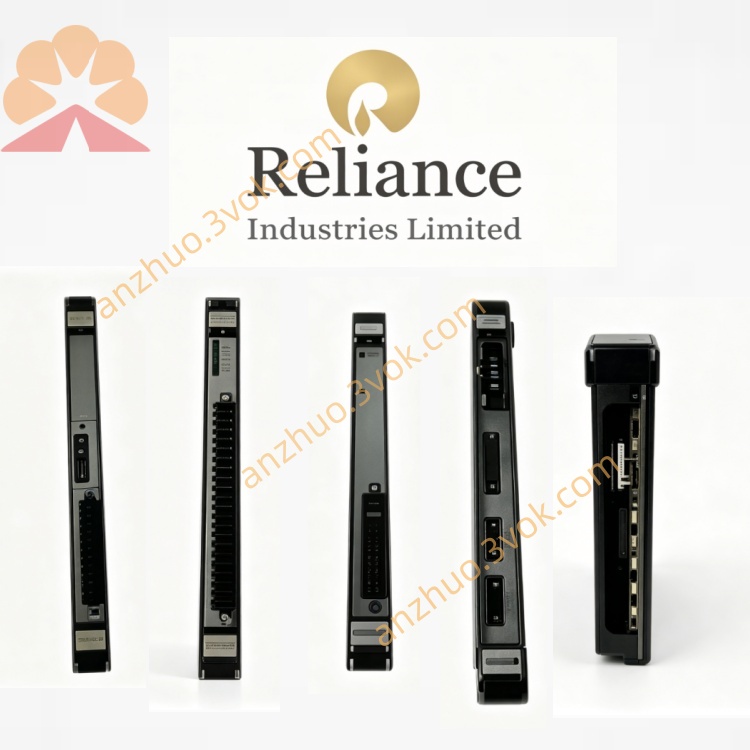
RELIANCE 57C435A main processor control module
57C435A is a main processor control module manufactured by Reliance Electric for AutoMax series distributed control system. It acts as the core operation unit of rack-based PLC control system, responsible for program storage, logic operation and internal bus data scheduling. This module is widely matched with various I/O and auxiliary modules of AutoMax platform to build industrial automation control units for driving equipment motion and process interlock control.
Description
Product Introduction
57C435A is a main processor control module manufactured by Reliance Electric for AutoMax series distributed control system. It acts as the core operation unit of rack-based PLC control system, responsible for program storage, logic operation and internal bus data scheduling. This module is widely matched with various I/O and auxiliary modules of AutoMax platform to build industrial automation control units for driving equipment motion and process interlock control.
Model Definition
57C stands for the general product series code of Reliance AutoMax controller module. 435 represents the specific hardware version of central processor card. A indicates the revised hardware iteration version of this processor unit with optimized circuit layout and component specification compared to original release.
Technical Specifications
The module runs on standard rack supply voltage of 5VDC with allowable working voltage fluctuation range between 4.75VDC and 5.25VDC. Internal built-in RAM is used for real-time running data storage, and external memory expansion interface supports matched storage accessory for user control program backup. Operating ambient temperature ranges from 0 degree Celsius to 60 degree Celsius, storage temperature spans minus 20 degree Celsius to 70 degree Celsius. It follows industrial grade anti-interference design to resist common electromagnetic interference generated by on-site frequency converter and motor equipment. The module adopts standard vertical plug-in structure matching AutoMax system installation rack with fixed slot size specification.
Interface and Communication Configuration
It is equipped with internal backplane bus interface to realize high speed data exchange with adjacent I/O modules and power modules inside the rack. One dedicated programming communication port is reserved for connecting upper computer programming device to download control logic program and upload running fault data. The onboard auxiliary communication channel supports interconnection with other AutoMax controller racks to finish multi-rack distributed data interaction. All communication circuits carry isolation design to avoid signal damage caused by field ground potential difference.
Core Functions
It executes compiled user ladder logic and sequential control programs in real time to complete digital logic judgment, arithmetic operation and closed-loop parameter calculation. It collects operating status signals from each connected I/O module via backplane bus and sends out corresponding control instructions according to preset program rules. It monitors internal module operating state continuously and generates fault alarm flag once abnormal power supply or communication disconnection happens. It realizes program data retention after short term power failure relying on built-in backup power component to prevent program loss under instantaneous power cut condition.
Application Scenarios
The product is mainly applied in traditional heavy industry automatic production lines including metallurgical rolling equipment, large printing machinery, textile production assembly line and material conveying system. It is also used for pump group and fan interlock control of water treatment and chemical auxiliary workshop, as well as transformation project of old generation Reliance drive matching control system.
Operation and Maintenance Instructions
Before installation, check surface circuit board for obvious component damage or pin deformation, insert the module into specified rack slot and lock fixed buckle firmly to avoid poor contact during equipment operation. Complete program download and parameter configuration via matched upper computer programming software before formal startup, carry out no-load debugging to verify normal communication with peripheral modules. During daily maintenance, regularly clean dust accumulated on module surface and ventilation gap under power-off state. Do not plug or pull out the module when the control rack is powered on to prevent backplane circuit burnout caused by instantaneous short circuit. Replace internal backup battery regularly following recommended cycle to guarantee effective program data preservation, stop operation and isolate power supply for professional overhaul once recurring communication failure or random program crash occurs.
Get a Quote