
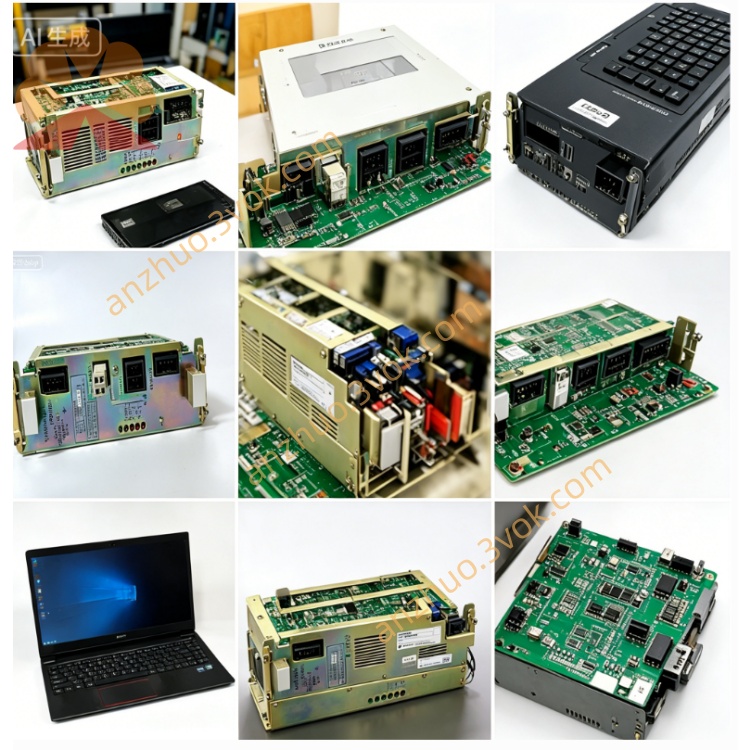
JARCR-XEB01
JARCR-XEB01 is Yaskawa Motoman original external axis expansion option board designed for XRC/MRC robot controller system. It adopts backplane plug-in structure and works with MCP series main CPU board and MSV servo control board to expand extra servo drive channels for external auxiliary axes such as robot sliding base, positioner, rotary table and fixture servo axes. This expansion card is widely equipped on XRC/MRC robots for automatic welding lines and flexible handling stations, serving as common spare replacement part when customers add external servo axes for old robot cabinets. The product passes industrial anti-vibration and EMC interference tests and meets CE industrial safety standards for long-time continuous production operation.
Description
1. Product Overview
JARCR-XEB01 is Yaskawa Motoman original external axis expansion option board designed for XRC/MRC robot controller system. It adopts backplane plug-in structure and works with MCP series main CPU board and MSV servo control board to expand extra servo drive channels for external auxiliary axes such as robot sliding base, positioner, rotary table and fixture servo axes. This expansion card is widely equipped on XRC/MRC robots for automatic welding lines and flexible handling stations, serving as common spare replacement part when customers add external servo axes for old robot cabinets. The product passes industrial anti-vibration and EMC interference tests and meets CE industrial safety standards for long-time continuous production operation.
2. Core Functional Introduction
This board receives motion command data from main CPU via cabinet internal backplane bus, converts digital motion instructions into dedicated servo drive control signals for external axis servo amplifiers, meanwhile collects real-time encoder position feedback from each external axis motor and sends feedback data back to main control board to build closed-loop position control loop for auxiliary axes. Standard configuration supports up to four independent external servo axes expansion, which can be freely assigned as linear sliding axes or rotary positioning axes according to on-site process requirement. It carries independent fault monitoring circuit to detect external axis servo overcurrent, encoder disconnection, cable short circuit and communication loss; once abnormal happens, fault code will be uploaded to teach pendant for alarm display. Besides servo signal transmission, reserved digital interlock I/O channels are available for auxiliary equipment ready signal and fault feedback signal between external positioner and robot main body to realize coordinated automatic start-stop linkage.
3. Electrical Specifications
Power source is DC24V ±10V supplied directly from cabinet backplane slot, average working power consumption is around 6W with rated operating current lower than 400mA. Onboard is fitted with dedicated slow-blow fuse for overcurrent protection against external wiring short-circuit to prevent PCB damage. All servo feedback circuits adopt differential signal transmission design to strengthen anti-interference capacity for welding workshop high-frequency electromagnetic environment from welding power sources and inverters. External servo signal ports follow shielded cable wiring specification to reduce signal distortion during long-distance wiring between cabinet and field external servo unit. No extra external power input terminal is required as all working power is obtained through backplane gold finger connection.
4. Ambient Working Condition
Continuous operating ambient temperature ranges from 0°C to +55°C, spare part storage temperature spans from -25°C to +70°C; applicable relative humidity keeps 30%~80%RH under non-condensing working environment. It is prohibited to install the board in locations with corrosive gas, conductive metal dust, welding spatter and strong electromagnetic radiation. The board is IP20 protection grade and can only be installed inside closed control cabinet rather than open damp outdoor space; applicable working altitude is below 1000 meters without power derating. Passive natural air cooling is adopted without onboard cooling fan.
5. On-board Connector Definition
Bottom gold finger connector inserts into vacant expansion slot of cabinet backplane to finish DC24V power supply and internal bus data exchange with main CPU and servo master board without additional external power wiring. Front panel is equipped with multiple dedicated servo communication connectors used for wiring connection to external axis servo drivers, each connector corresponds to one independent auxiliary servo channel. One small reserved pin header is only used for factory maintenance debugging and keeps unused during regular on-site running. All terminal connectors are equipped with locking buckles to avoid loose connection caused by long-term equipment vibration.
6. LED Indicator Description
Green PWR lamp keeps steady on when backplane DC24V input is normal; lamp off indicates blown onboard fuse or abnormal slot power supply. Green RUN lamp flashes periodically to show normal bus communication between XEB01 and main CPU; permanent off means backplane poor contact or internal communication circuit failure. Yellow AX lamp flashes synchronously with corresponding external axis servo motor operation; steady off stands for channel cable open or external servo driver power loss. Red ERR lamp lights steadily when corresponding external axis has encoder fault, short-circuit or channel hardware damage; intermittent flash mostly comes from temporary signal interference of field wiring.
7. Installation & Commissioning Steps
Cut off cabinet total AC power before disassembly and replacement work, wait no less than 15 minutes for internal high voltage capacitor full discharge to avoid residual voltage damaging electronic components. Align PCB gold finger with designated empty backplane slot and insert fully until lock buckle clicks in place, then connect each external servo cable to front panel terminals and fasten lock catch. After finishing wiring and restoring cabinet power supply, enter teach pendant system option setting page to activate external axis function and define axis parameter; finish origin zero calibration of each newly added external axis before test running.
8. Common Troubleshooting Guide
PWR lamp always off: check onboard fuse and backplane slot DC24V output voltage, replace damaged fuse and re-seat the board. RUN lamp off under normal power: clean gold finger with anhydrous alcohol to eliminate poor contact, replace board if problem remains. Single AX lamp permanently off and corresponding external axis alarm: inspect field servo cable breakage and external servo driver failure, replace board channel if peripheral wiring is intact. ERR steady lighting: check external encoder wiring short or open circuit first, confirm internal board damage after excluding peripheral faults.
9. Routine Maintenance Instruction
All maintenance and plugging operations must be executed under full cabinet power-off condition. Conduct semi-annual regular maintenance, wipe dust on PCB with dry soft cloth and check aging and looseness of all external servo cables. Whole-board replacement is recommended once hardware damage occurs; random disassembly of onboard discrete components for partial repair is forbidden. Keep cabinet interior dry and clean to prevent PCB corrosion caused by dampness.
Get a Quote