
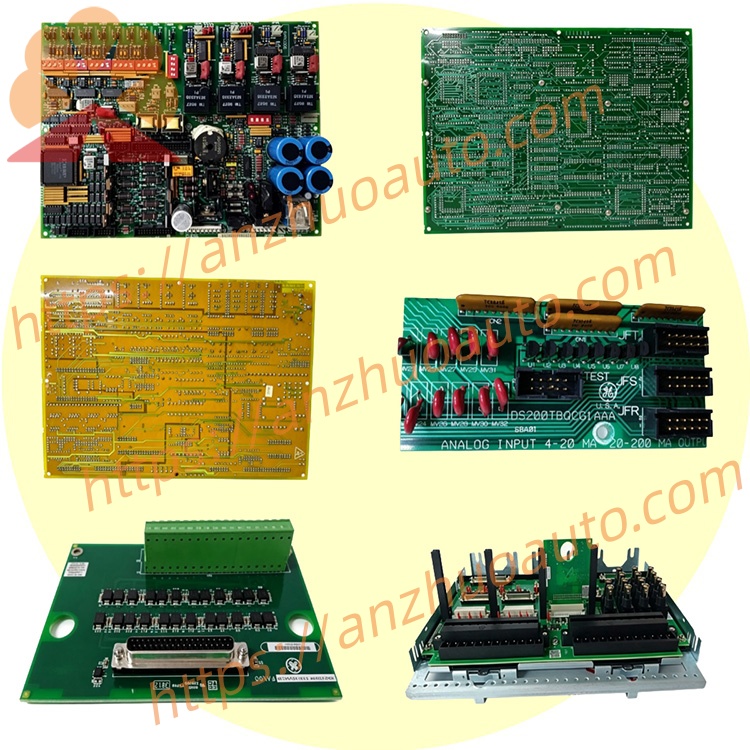
GE IS230SNIDH1A (SNID – Isolated Digital Input Pack)
Description
Model Interpretation
IS230: Mark VIe distributed I/O pack series
SNID: Safety Isolated Digital Input (32‑channel isolated input)
H: Hardware revision
1A: Firmware/configuration variant
Technical Parameters
Input Specifications
Channels: 32 isolated digital inputs, grouped into 4 banks of 8
Input Types: Dry contact (sink/source) or 24 VDC wet contact
Input Voltage Range: 18–32 VDC; logic “1” ≥18 VDC, logic “0” ≤5 VDC
Isolation: 2500 Vrms channel‑to‑backplane; 500 Vrms between banks
Response Time: <1 ms typical
Debounce: Software‑configurable per channel (0–255 ms)
Communication
Ethernet: 2 × 10/100 Mbps RJ45 (redundant IONet)
Protocols: IONet, SRTP; supports redundant controller architectures
Data Update: 10 ms minimum scan rate
Electrical
Power: 24 VDC (18–32 VDC) from backplane
Power Consumption: ~6 W typical
Mechanical & Environmental
Dimensions (H×W×D): 82.6 × 38.1 × 133.4 mm (3.25 × 1.5 × 5.25 in)
Weight: ~0.36 kg (0.8 lb)
Operating Temperature: −25°C to +70°C
Storage Temperature: −40°C to +85°C
Humidity: 5–95% non‑condensing
Protection: IP20; conformal coated; fanless
Certifications: CE, UL, CSA, Class I Div 2; SIL 3 capable
Indicators
LEDs: Power, Run, Fault, Network Link/Activity
Per‑bank status LEDs for quick fault identification
Core Functions
32‑Channel Isolated Monitoring: Captures discrete status from field devices with high noise immunity.
Safety‑Rated Inputs: Suitable for ESD and safety interlock circuits in Mark VIeS SIS.
Redundant Network Support: Dual Ethernet ports enable seamless failover in TMR/DMR systems.
Diagnostics & Fault Reporting: Open/short‑circuit detection; fault logging via ControlST.
Hot‑Swap: Online replacement without system shutdown.
Configuration Flexibility: Debounce, polarity, and bank grouping set via software.
Applications
Power Generation: Gas/steam turbine auxiliary status (valve limits, lube oil pressure, trip signals).
Safety Systems (SIS): Emergency shutdown (ESD), fire & gas, and safety interlock monitoring.
Oil & Gas: Compressor stations, offshore platforms, and hazardous‑area discrete sensing.
Heavy Industry: Petrochemical, pulp & paper, and metallurgical plant critical status monitoring.
Usage & Maintenance Instructions
Installation: Plug into Mark VIe I/O rack; secure faceplate screws; ensure airflow clearance.
Wiring: Use shielded cable for field inputs; separate low‑voltage I/O from high‑voltage wiring.
Configuration: Assign channels in ControlST; set debounce and input polarity.
Maintenance: Inspect connectors and LEDs monthly; clean vents annually; update firmware as needed.
Compatibility: Works with Mark VIe/VIeS controllers (e.g., IS420UCSB); mates with standard terminal boards.
Get a Quote