
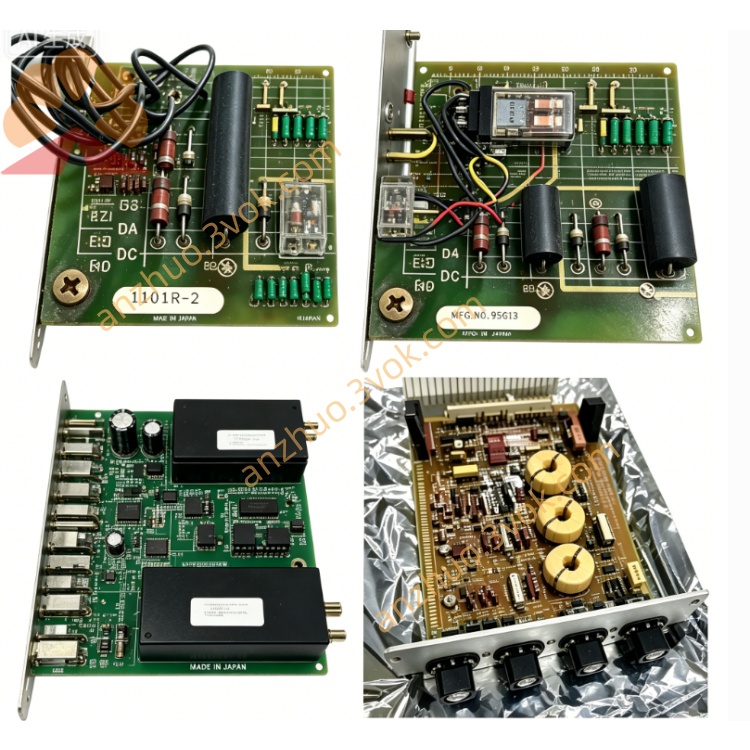
RELIANCE 57C410B high‑performance four‑channel isolated analog output module
Description
Product Overview
Model Definition
Technical Parameters
Channels:4 independent, galvanically isolated analog output channels.
Output Types:Voltage ±5 V, ±8 V, ±10 V;current 4–20 mA.
Resolution:12‑bit for voltage;11‑bit for current.
Accuracy:±0.1% of full scale at 25°C;±0.15% over temperature range.
Isolation:2500 V RMS between logic common and outputs, and channel‑to‑channel.
Filter:100 Hz first‑order low‑pass filter per channel.
Power:5 VDC @ 100 mA;24 VDC @ 120 mA (from backplane).
Operating Temperature:‑20°C to +70°C (extended range).
Storage Temperature:‑40°C to +85°C.
Vibration/Shock:1 g (10–500 Hz);10 g (11 ms) (enhanced).
Protection Class:IP20 (dust and splash resistant).
Dimensions:102 mm × 60 mm × 30 mm.
Weight:Approx. 0.22 kg.
Interface and Communication Configuration
Rear Edge Connector:Interfaces with the rack backplane for power and high‑speed data communication via the AutoMax proprietary bus protocol.
Front Panel:Screw terminals for field actuator wiring;each channel has status LEDs for real‑time monitoring.
External Ports:No additional communication ports;all signal interaction occurs through the backplane.
Core Functions
Converts digital control commands into precision analog signals for regulating valves, variable frequency drives, and other field devices.
Reinforced 2500 V isolation protects the main control system from external electrical faults and electromagnetic interference.
Built‑in 100 Hz filtering ensures stable, noise‑free output for precise process control.
Real‑time channel status monitoring and fault diagnostics enable timely anomaly reporting to the system.
Each channel supports user‑configurable voltage/current ranges for flexible application.
Enhanced ruggedness and extended temperature range support deployment in extreme industrial conditions.
Application Scenarios
Operation and Maintenance Instructions
Disconnect system power before installation or removal.
Insert the module into the designated rack slot and ensure secure backplane connection.
Route field cables to the correct terminals per wiring diagrams and verify polarity.
Maintain a clean, dry, well‑ventilated environment;avoid dust, moisture, and corrosive substances.
Regularly inspect terminal connections and status LEDs.
Do not disassemble or modify the module;internal components are not user‑serviceable.
Replace with the identical model promptly if faults occur to ensure uninterrupted system operation.
Get a Quote