
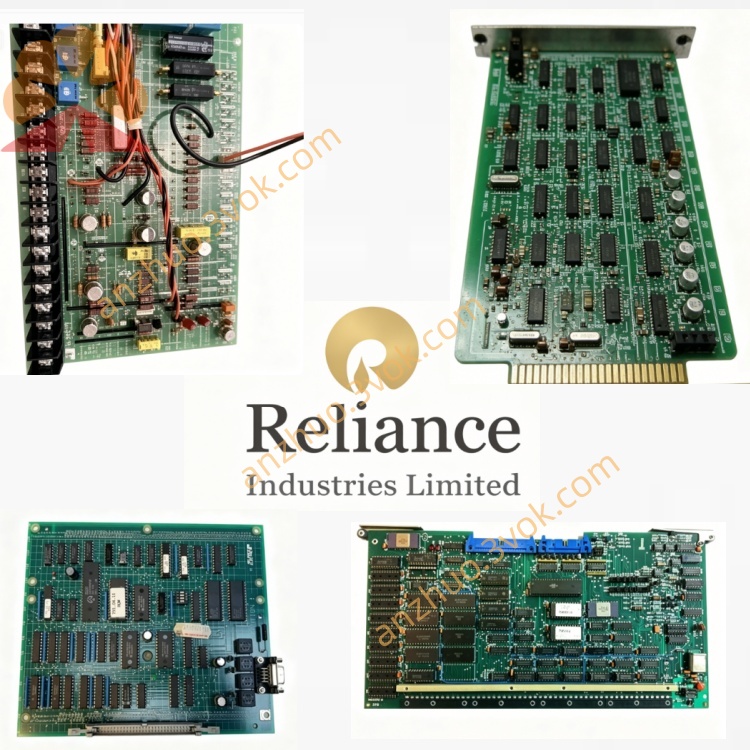
RELIANCE 57C409 2-channel analog input module
The RELIANCE 57C409 is a 2-channel analog input module designed for the AutoMax industrial control system. As a key component of the AutoMax I/O series, it adopts a single-slot rack-mounted structure, responsible for acquiring analog voltage/current signals from field sensors and converting them into digital signals for the controller. It provides high-precision data acquisition for industrial process monitoring and closed-loop control, featuring strong anti-interference ability and stable performance to adapt to harsh industrial environments.
Description
Product Overview
The RELIANCE 57C409 is a 2-channel analog input module designed for the AutoMax industrial control system. As a key component of the AutoMax I/O series, it adopts a single-slot rack-mounted structure, responsible for acquiring analog voltage/current signals from field sensors and converting them into digital signals for the controller. It provides high-precision data acquisition for industrial process monitoring and closed-loop control, featuring strong anti-interference ability and stable performance to adapt to harsh industrial environments.
Model Definition
RELIANCE is the brand of industrial control products. 57C represents the series of I/O modules and supporting components for the AutoMax platform. 409 is the specific model code for the 2-channel analog input module. It is also known as 0-57C409 in some naming systems, compatible with AutoMax PLC and DCS 5000 systems.
Technical Parameters
It has two independent analog input channels with software-selectable voltage ranges of ±1V, ±5V, ±10V or ±20V, and supports 4-20mA current input. The input impedance is 10MΩ, with a conversion accuracy of ±0.1% full scale and 12-bit resolution. The update rate is configurable from 500 microseconds to 32.767 seconds. Operating temperature ranges from 0°C to 60°C, storage temperature from -40°C to 85°C. It is powered by the rack backplane with a power consumption of 25W, featuring a standard single-slot size and a weight of approximately 2.45kg.
Interface and Communication Configuration
The rear connector connects to the AutoMax system rack backplane for power supply and data communication with the main controller. The front end is equipped with dedicated analog input terminals for connecting field sensors such as temperature, pressure, flow and level transmitters. All data transmission follows the AutoMax Multibus protocol, with no additional external network interfaces, realizing signal acquisition and data transmission through the rack backplane.
Core Functions
It accurately collects analog signals from field devices and converts them into high-resolution digital signals for the controller. It supports software configuration of input ranges, filter parameters and sampling rates to adapt to different sensor types and process requirements. Built-in signal filtering and isolation circuits suppress electromagnetic interference and ensure stable signal acquisition. It monitors channel status in real time and feeds back fault information such as signal overload and open circuit to the system.
Application Scenarios
This module is widely used in automation projects based on the AutoMax/DCS 5000 control system, especially in scenarios requiring precise analog signal acquisition. It covers industries such as steel manufacturing, papermaking, chemical processing, power generation and water treatment. It is mainly used for monitoring and controlling process parameters such as temperature, pressure, flow, liquid level and vibration.
Operation and Maintenance Instructions
Disconnect the system power supply before installing or removing the module to avoid electrical damage. Insert the module into the designated slot of the AutoMax rack and ensure the backplane connection is firm. Connect sensor cables to the corresponding terminals strictly in accordance with the wiring specifications and check for short circuits or poor contact. Keep the installation environment clean, dry and well-ventilated, avoiding dust, moisture and corrosive substances. Regularly check terminal connections and module status indicators, and verify signal accuracy periodically. Do not disassemble or modify the module without authorization. Replace it with the same model promptly when a fault occurs.
Get a Quote