
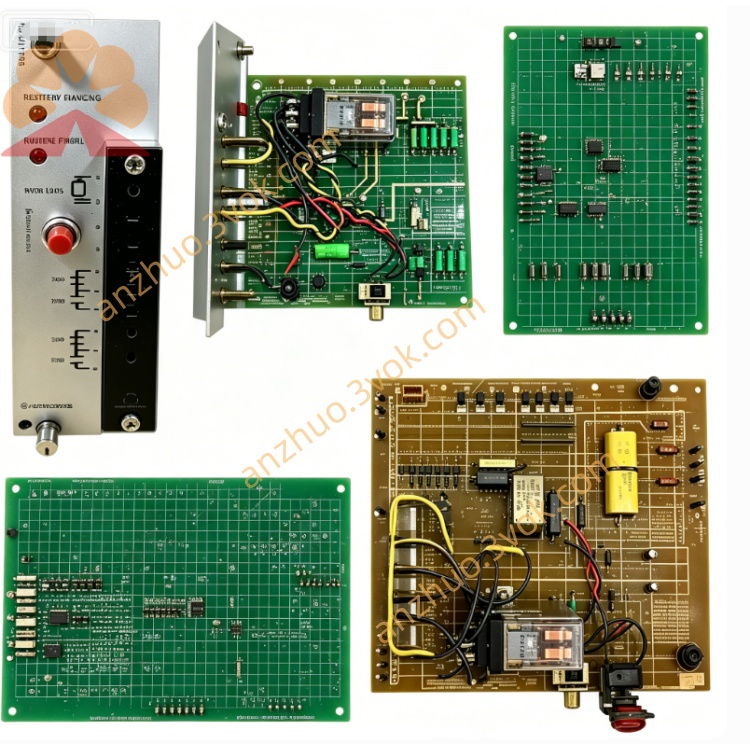
RELIANCE 57C406 rack-mounted drive controller module
The RELIANCE 57C406 is a rack-mounted drive controller module designed for the AutoMax industrial control system. As a core component for drive regulation in the AutoMax platform, it adopts a single-slot installation structure and integrates drive control logic and signal processing circuits. It is responsible for receiving control commands from the main controller and outputting drive signals to regulate the operation of on-site drive equipment, delivering high stability and reliability for industrial drive control scenarios.
Description
Product Overview
The RELIANCE 57C406 is a rack-mounted drive controller module designed for the AutoMax industrial control system. As a core component for drive regulation in the AutoMax platform, it adopts a single-slot installation structure and integrates drive control logic and signal processing circuits. It is responsible for receiving control commands from the main controller and outputting drive signals to regulate the operation of on-site drive equipment, delivering high stability and reliability for industrial drive control scenarios.
Model Definition
RELIANCE is the brand of industrial control products. 57C represents the series of I/O modules and supporting components for the AutoMax platform. 406 is the specific model code for the drive controller module. This model is also known as 0-57406-K under different naming conventions, and is compatible with multiple versions of the AutoMax system.
Technical Parameters
It operates with a working temperature range of 0 degrees Celsius to 60 degrees Celsius, adapting to conventional industrial environments. Powered by the rack backplane, it complies with AutoMax bus specifications for stable power supply and data transmission. It is equipped with built-in drive signal conditioning circuits and over-current, over-voltage protection mechanisms to ensure safe and stable operation. The module has a standard single-slot size and a weight of approximately 0.86 kilograms, facilitating installation and replacement.
Interface and Communication Configuration
The rear connector connects to the AutoMax system rack backplane to obtain power and complete data interaction with the main controller. The front end is equipped with dedicated drive signal output terminals for connecting to on-site drive devices such as variable frequency drives and servo drives. All data transmission follows the AutoMax proprietary bus protocol, with no additional external network interfaces, and all control signal transmission is realized through the rack backplane.
Core Functions
It receives precise control commands from the main controller and converts them into drive signals that can directly act on on-site drive equipment. It monitors the operating status of drive equipment in real time and feeds back fault information and operating parameters to the system. The built-in protection circuits can quickly respond to abnormal conditions such as over-current and over-voltage to protect the drive equipment and the module itself. It supports closed-loop control adjustment to ensure the accurate operation of drive equipment and meet the requirements of industrial process control.
Application Scenarios
This module is widely used in automation projects based on the AutoMax control system, especially in scenarios requiring precise drive control. It covers industries such as steel manufacturing, papermaking, chemical processing, power industry and mechanical equipment production. It is mainly used for controlling on-site drive equipment such as variable frequency drives, servo motors and actuators.
Operation and Maintenance Instructions
Disconnect the system power supply before installing or removing the module to avoid electrical damage. Insert the module into the designated slot of the AutoMax rack and ensure the backplane connection is firm and reliable. Connect the drive equipment cables to the corresponding terminals strictly in accordance with the wiring specifications and check the signal polarity. Keep the installation environment clean, dry and well ventilated, and avoid exposure to dust, moisture and corrosive substances. Regularly check the terminal connections and the module's operating status indicators. Do not disassemble or modify the module without authorization. Replace it with the same model promptly when a fault occurs to ensure the normal operation of the drive control system.
Get a Quote